Consider the humble chickpea. A hardy, water-efficient “pulse crop,” meaning a legume that is harvested for its seeds, like beans, lentils, and peas, chickpeas are among the earliest-known cultivated vegetables and have been grown for sustenance since 8,000 B.C. Today, they are a primary source of protein and iron for more than 1 billion people around the world, most of them in India.
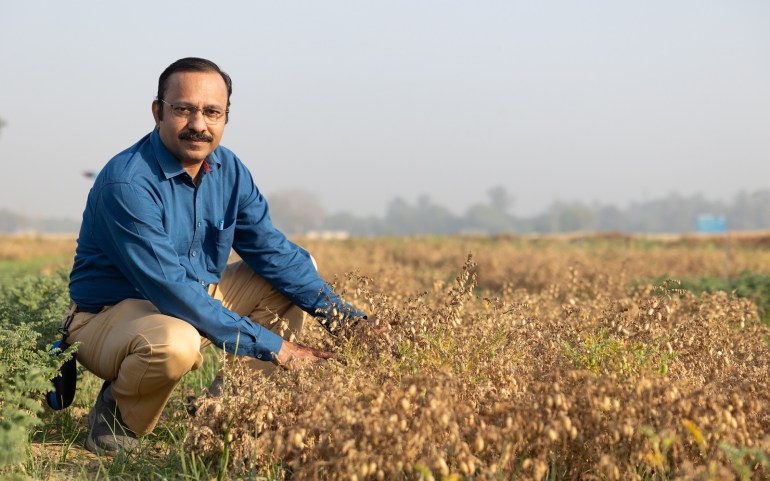
“Chickpeas aren’t just a pulse crop,” says Prof. Chellapilla Bharadwaj, an agricultural scientist who’s been working with chickpeas for 27 years and counting. “They are the pulse of the nation of India, the pulse of the soil, and the pulse of many human beings.” As the principal chickpea breeder at the ICAR-Indian Agricultural Research Institute (ICAR), that works alongside ICARDA & ICRISAT, two of thirteen global centers within CGIAR, a global agriculture research network, Prof. Bharadwaj is at the forefront of developing high-yielding, climate-resilient chickpea varieties that can better withstand drought, pests, and other stresses.
Bharadwaj is especially interested in helping smallholder farmers increase their chickpea yields and their family incomes. Because chickpeas can readily grow on marginal land and improve that land’s fertility by boosting nitrogen levels in the soil, they are a key crop for millions of smallholder farmers, both across India and around the world. “Large farmers with hundreds of acres may require different interventions,” he says. “I’m working to help the small farmers, who will be the biggest losers of climate change otherwise.”
Already, increasing droughts are threatening to halve global chickpea yields, especially in South Asia, where nearly three-fourths of the world’s chickpeas are cultivated. For Bharadwaj, the sense of urgency among farmers is palpable. “Whether it’s India, Africa, or Asia,” he says, “small farmers are being most affected by the changing climate. That’s who I want to help.”
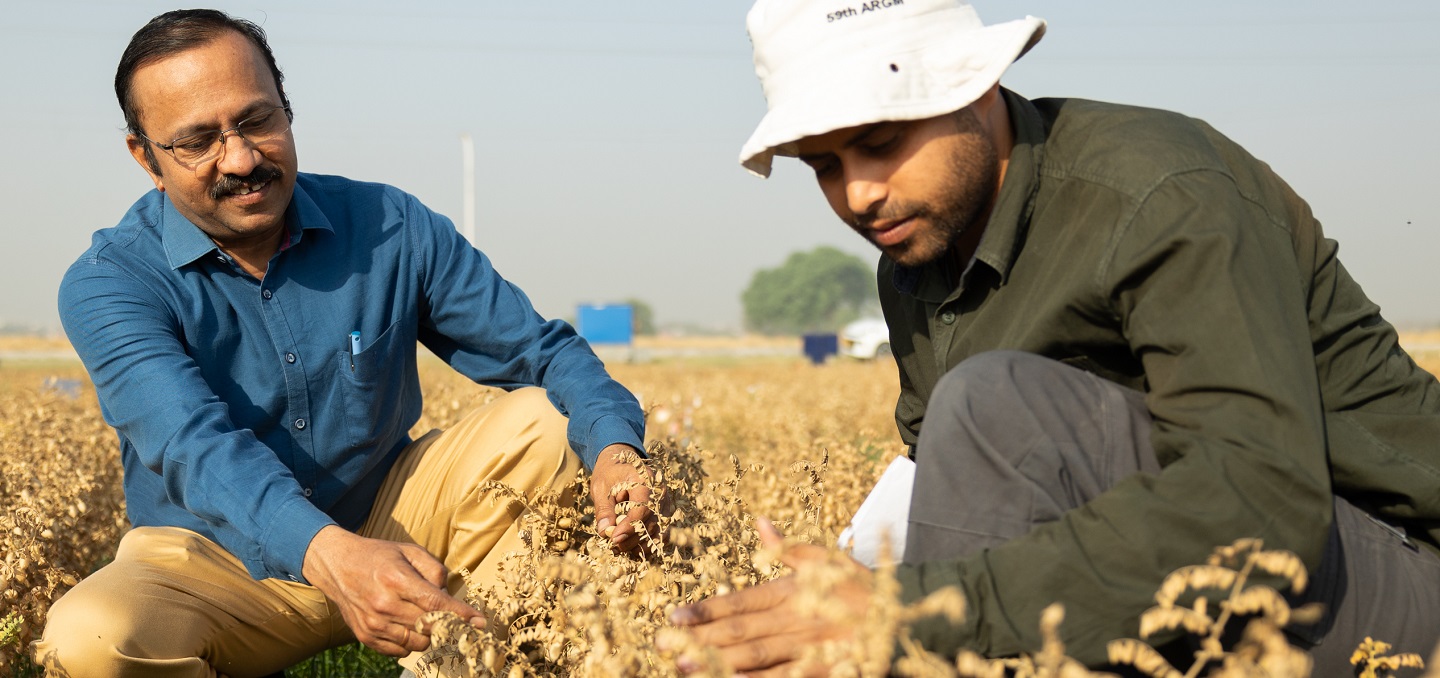
“[Chickpeas] are the pulse of the nation of India, the pulse of the soil…”
– Prof. Chellapilla Bharadwaj
Roots of a researcher
Bharadwaj did not expect chickpeas to be his life’s calling. As a young man, he aimed to go into medicine or veterinary science. But that all changed after he spent a summer accompanying his uncle, a block development officer in India, to his job helping tribal communities in southern India improve their food and income security. “I was really fascinated,” Bharadwaj recalls. “My uncle would show farmers how to produce good, healthy, organic food for their children. So when it came time to pick a career path, I chose agriculture as a subject.”
Since central India both produces and consumes the most chickpeas in the world, it seemed a natural choice for Bharadwaj to focus on developing better chickpea varieties in his homeland. Since he began his work at ICAR-IARI, chickpea yields in central India have increased by more than 25%, and varieties he developed make up roughly a third of the chickpeas grown there. “I’m very happy that some of my varieties greatly contribute,” he says.
Another big benefit of his work: It was through his agricultural research that Bharadwaj met his future wife, who now serves as Director of the Indian Institute of Millets Research in Hyderabad. Improving crops, he notes, is the family business.
Making a mightier chickpea
So how did Bharadwaj create these new climate-resilient varieties? As he’ll tell you, it was slow going until innovative genomic technologies helped bring new levels of precision to his work.
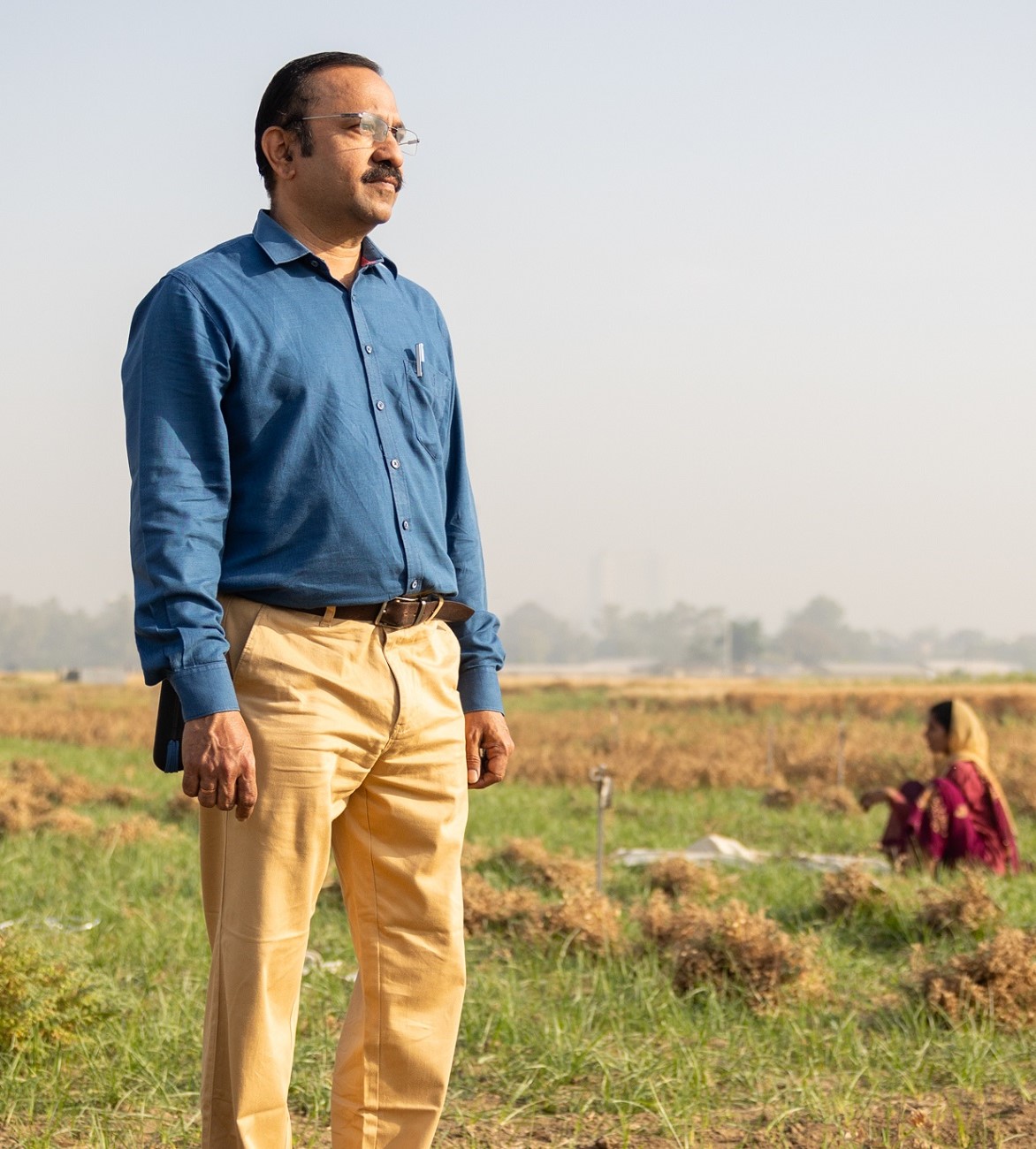
Step 1: Search for the right traits.
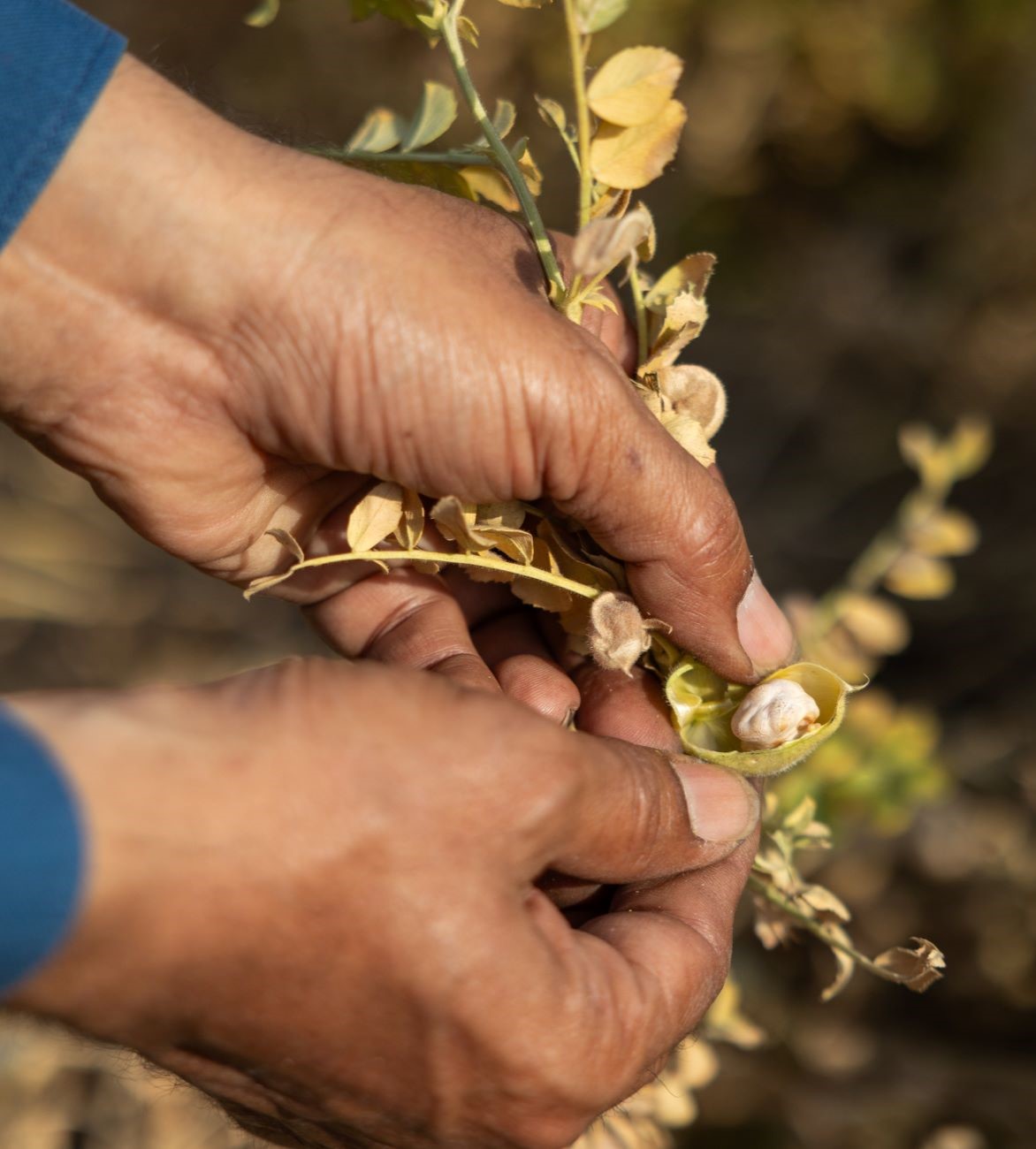
First, he needed to identify a good source for the chickpea traits he wanted to cultivate—namely, drought resistance and higher yields. To do that, he worked with agricultural researchers, plant physiologists, and soil scientists to evaluate different strains of chickpeas around the world and figure out which had traits that could work in India. He also talked with farmers at home to discover what varieties were already working best for them.
Step 2: Get to the root of the problem.
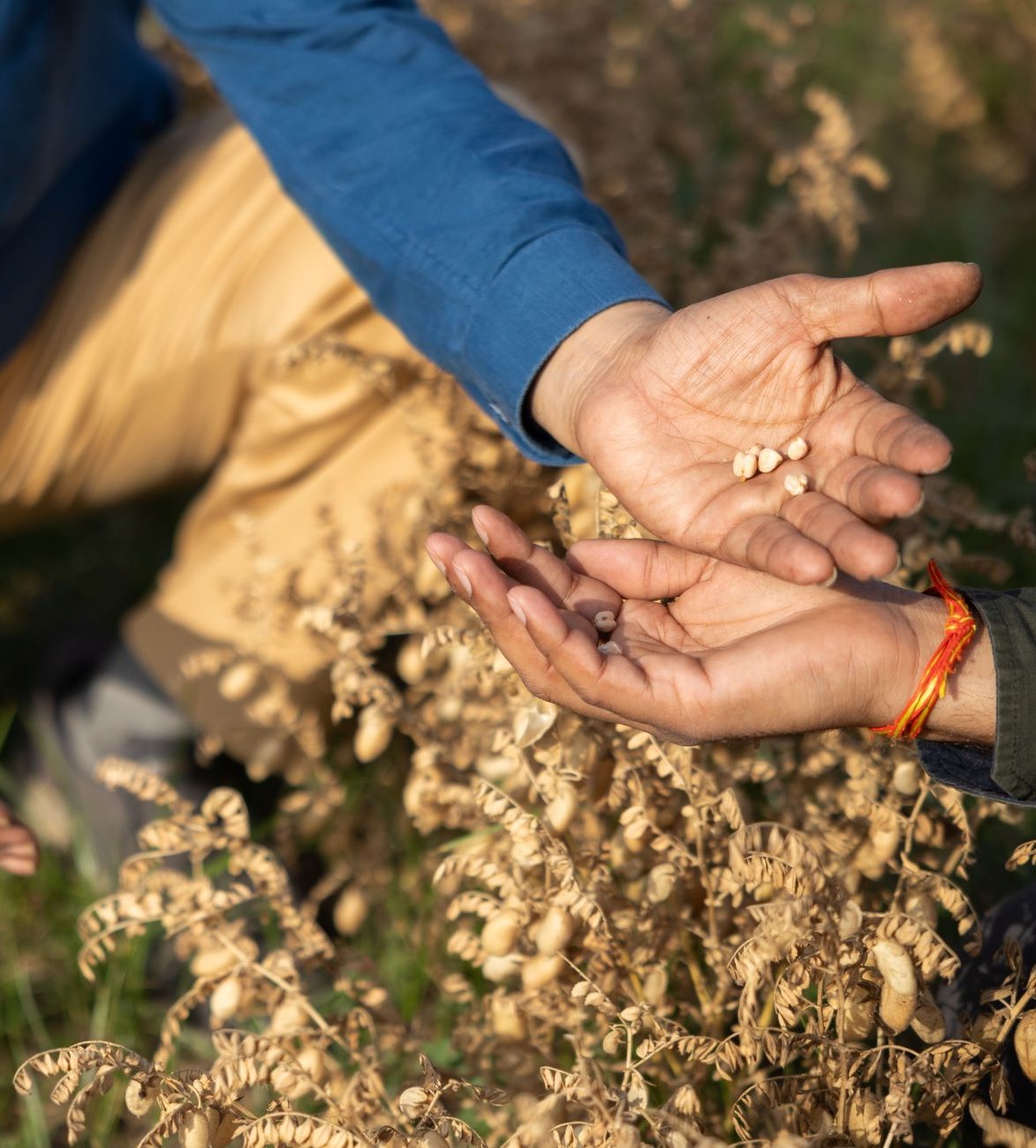
The key, Bharadwaj discovered, lay in the roots: Chickpea plants with stronger, deeper root systems were better at surviving drought conditions than other strains. So he identified chickpea lines with the robust root structure he was looking for.
Step 3: Mix and match the best traits.
Bharadwaj then cross-bred these strong-root strains with chickpea plants that had other key traits, such as increased biomass to improve yields and better resistance to devastating diseases like rot, blight, and wilt, a devastating chickpea disease. His hope was that subsequent generations would have all of these traits—deeper roots below, more chickpeas above, and resistance to disease throughout.
Step 4: Battle the hidden challenges.
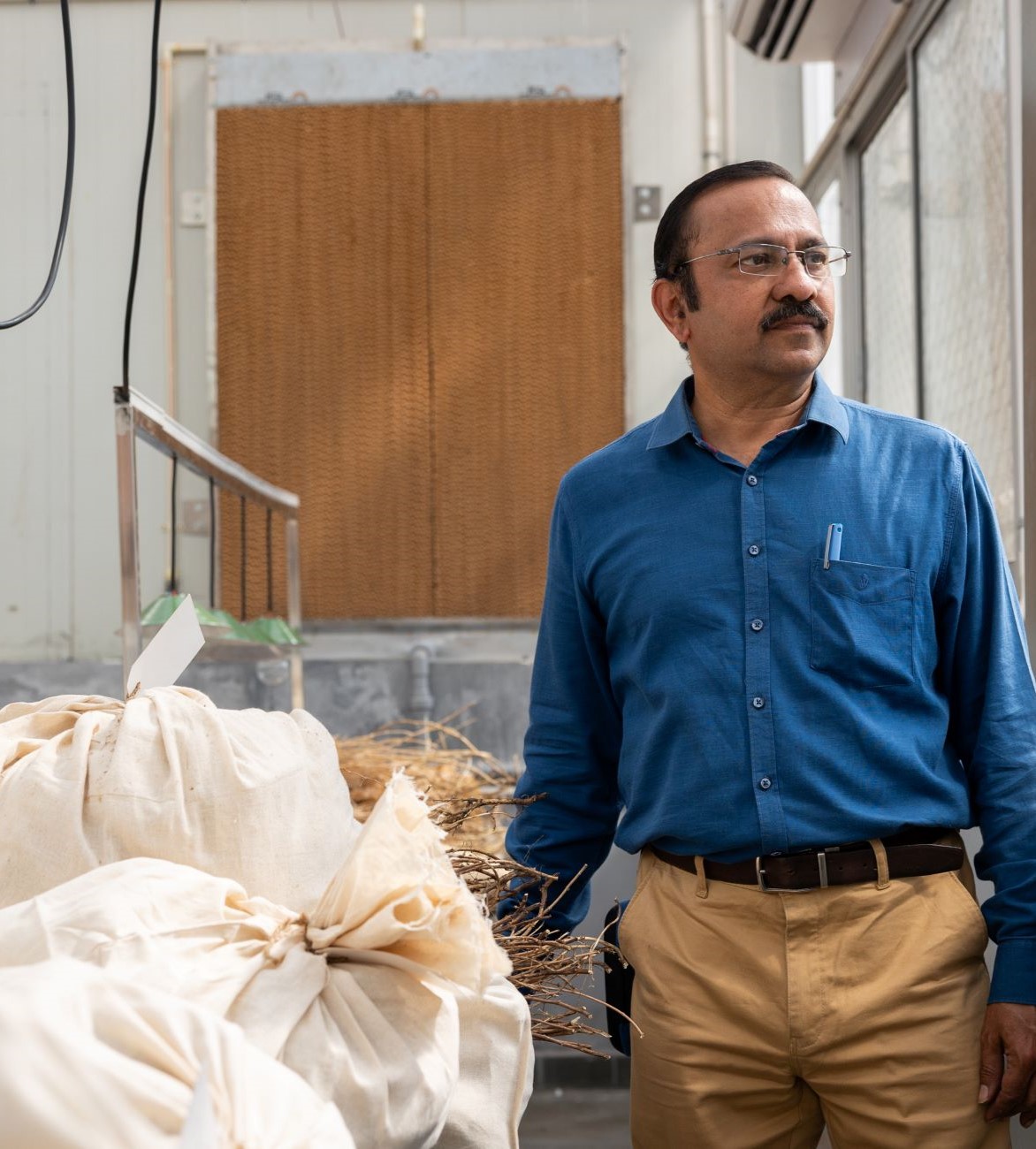
But conventional crop-breeding techniques posed some problems. For one, Bharadwaj couldn’t evaluate which plants had stronger roots without plucking them out of the soil and killing them. Nor could he be sure that the genes expressing the traits he wanted were carrying over to the new plants. “I could only go by visual and physiological metrics,” he recalls. “I used to see so many false positives. Maybe 90% of the new plants did not have the genes at all.”
Step 5: Take advantage of new technologies.
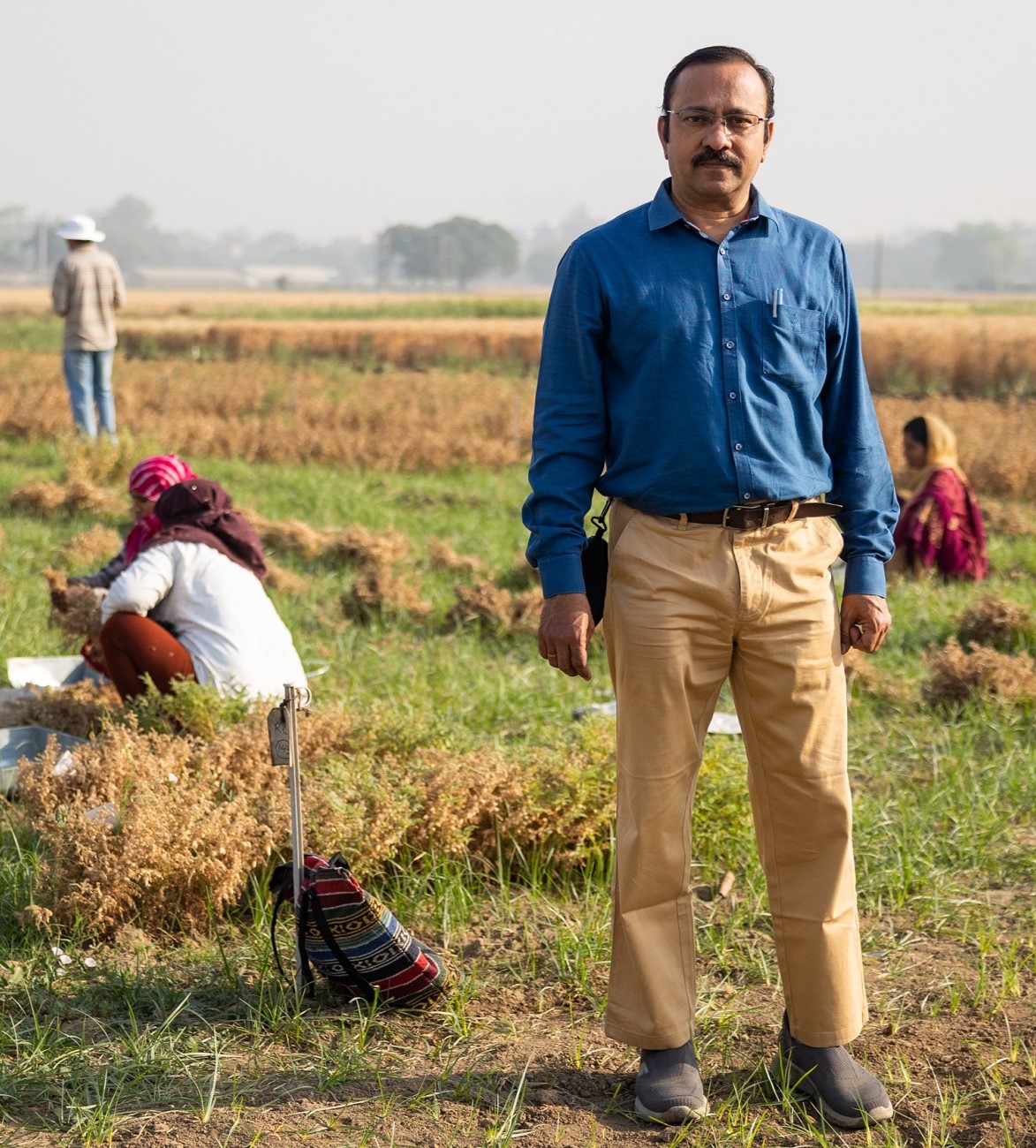
The solution came via the emerging technology of modern marker-assisted breeding, which allows agricultural researchers to operate with molecular precision. Using advanced molecular breeding techniques, Bharadwaj could pinpoint the exact “quantitative trait loci,” or sections of DNA, that expressed the traits he wanted and ensure that these “QTLs” were carried over to the next generation of chickpeas. “Now, instead of having 100 plants, of which maybe 10 had the right genes,” he says, “every plant was carrying the genes. I could advance them through the generations and do target-area evaluations much more quickly.”
The road ahead
With the help of modern molecular science, Bharadwaj’s new varieties began to flourish. In 2019, ICAR released Pusa Chickpea 10216, a variety that showed markedly better drought resistance and higher yields compared with common chickpea varieties in India. More recently, ICAR released Pusa Chickpea 20211, or Pusa Manav, which offers nearly three times the yields of older varieties and exhibits strong resistance to diseases like wilt and root rot.
While encouraging uptake of these new varieties, Bharadwaj and his team are continuing to use genomic tools to develop and release hardier and more productive chickpeas. He is also working on improving the nutritional quality of future chickpea strains. “These new technologies are universal in application,” he says. “They can help smallholder farmers everywhere, not just in India. As a global citizen, I believe they will have a tremendous impact.”
For Bharadwaj, helping smallholder farmers is what he values most about his work, and he’s pleased that the QTLs he identified to improve India’s chickpeas are suitable for varieties that can be grown the world over. As he notes, better chickpeas also mean more crops and income across the board. “If a farmer who once grew 10 acres of chickpeas can get the same yield from 3 acres, 7 acres are free now to grow something else. That means more food, more money, and more climate resilience for farmers going forward.”