Growing food has never been easy. Farmers make decisions every day on things they can’t completely control: Will the rain come on time? Will temperatures stay manageable? Will pests destroy the crops? Is the soil healthy?
There has always been uncertainty, but climate change is making many of those conditions harder to predict. And for farmers operating on small plots, whose work supports businesses and jobs far beyond the farm, those changes can mean smaller harvests and lower incomes.
For example, in sub-Saharan Africa, where around 80% of food is produced by smallholder farmers, the problem is especially pressing. But why does that matter for the rest of us?
How does climate change affect agriculture?
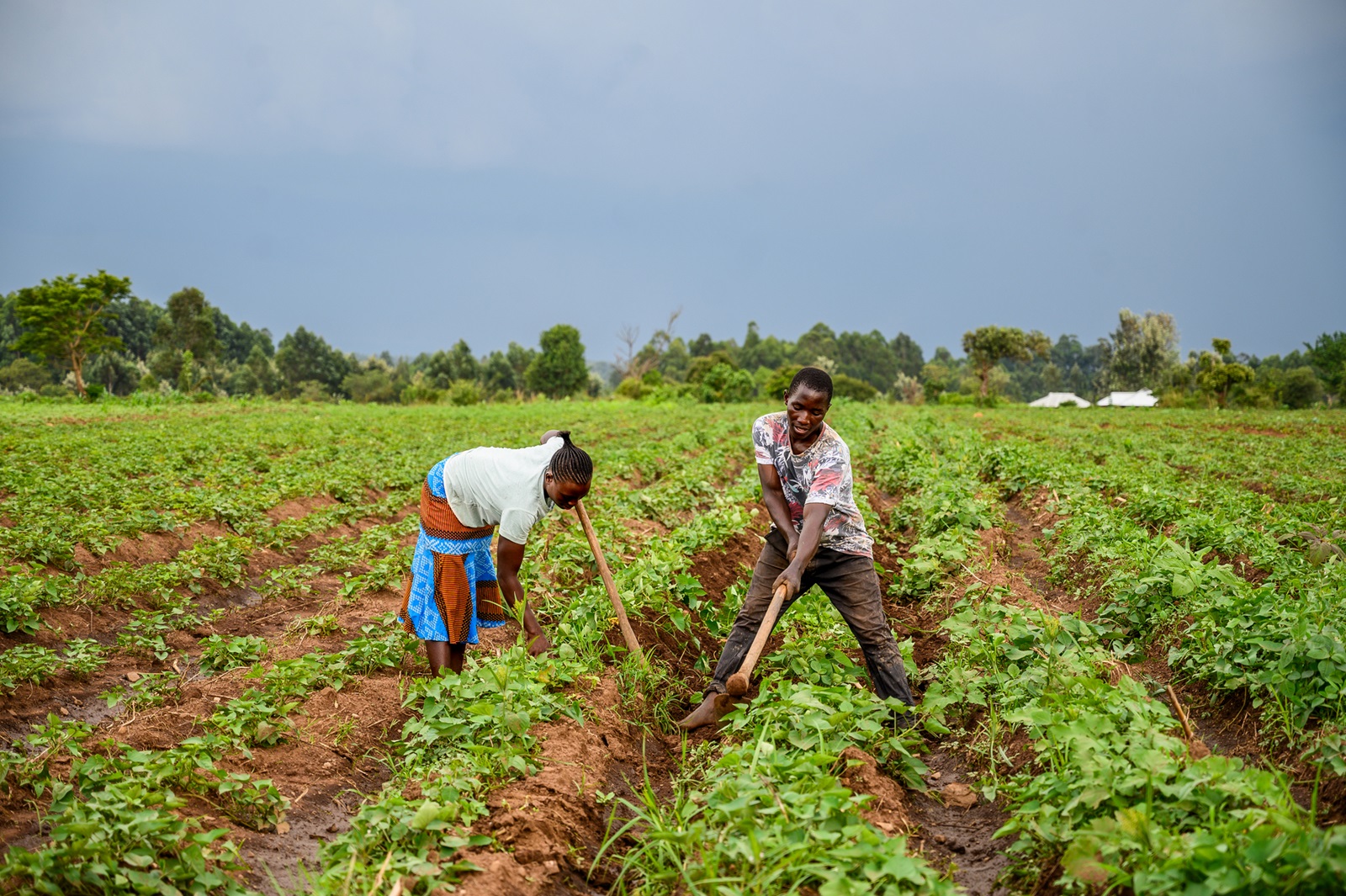
Climate change makes weather more extreme and less predictable, with more heat, drought, flooding, and shifting rainfall. Smallholder farmers often cannot afford tools to protect their crops and animals from floods and droughts. In parts of Africa, worn-out soil, scarce water, and expensive fertilizer can also lead to smaller harvests.
When farming gets harder, the effects don’t stop at the farm
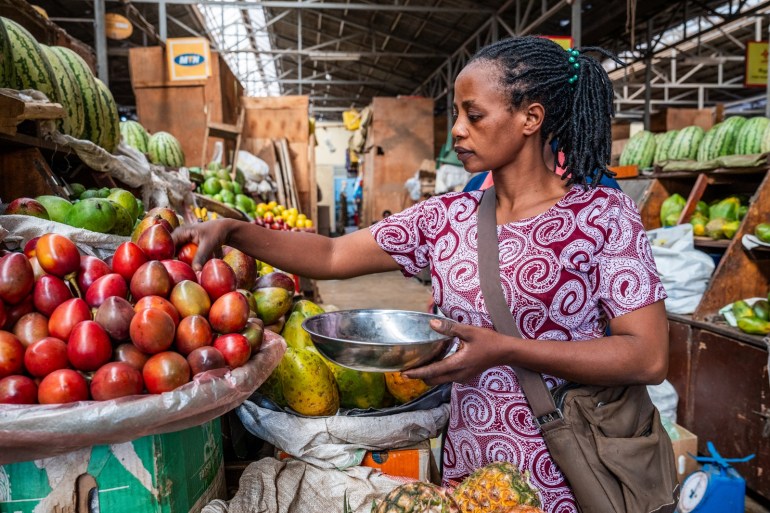
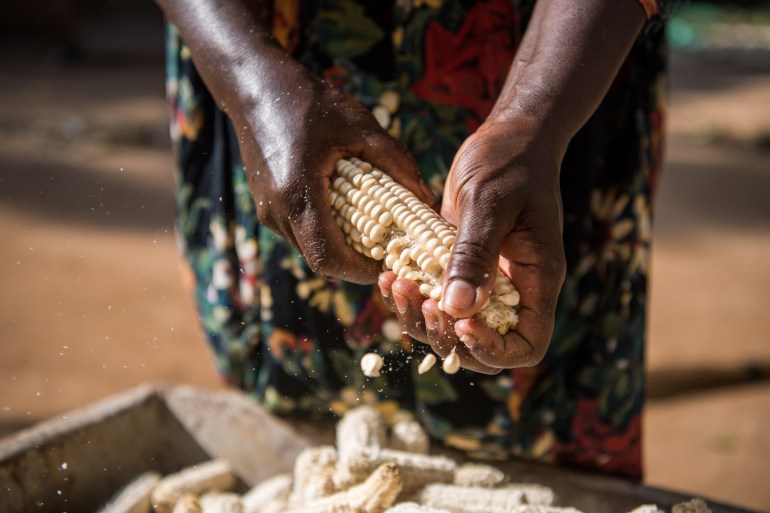
Farms are only the beginning of the food system. A harvest of maize, for example, might start on a farm, then might be sold to a distributor, then to a grocery store or market, and eventually make its way to someone’s kitchen. In fact, around 70–75% of the price consumers pay for food is created after it leaves the farm.
Multiply that journey by all the food we eat and you start to see what a food system really is: an entire network of people, businesses, processors, sellers, and consumers involved in getting food from farm to plate.
In parts of Africa, about half the population depends on primary agriculture — the process of growing crops and raising animals to produce food and other raw materials–for a living. When you include the wider agrifood system, it accounts for roughly two-thirds of all jobs.
So when a farmer has a difficult season, the consequences can ripple outward. The farmer has less food to sell and less income to spend. A trader has less to buy. A transporter has less product to move. Businesses throughout the local area can feel the effects. A shock to a small farm can be a shock to the entire community.
The reverse is also true: When farms become more productive and reliable, those gains can create more income and opportunity throughout the food system. A farmer who sells more can invest in the next season: better seed, a water pump, improved storage, or an extra pair of hands at harvest. Traders, transporters, and shops have more to buy, move, and sell. And across millions of farms, countries can grow more of the food they need and spend less importing it.
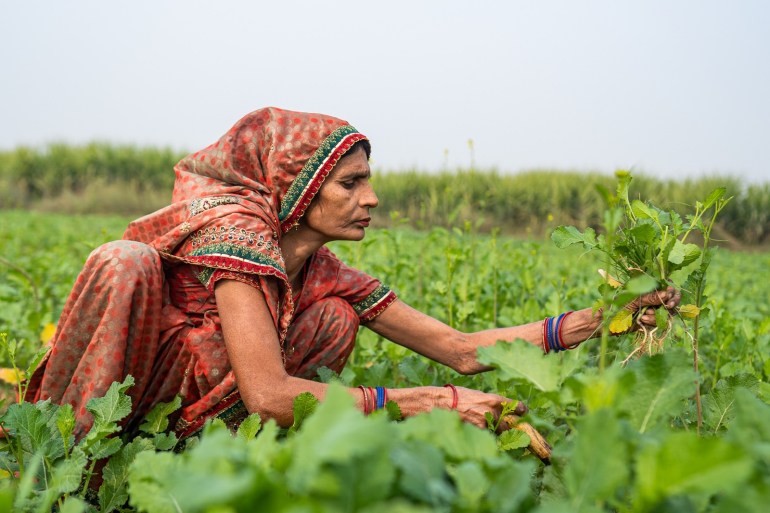
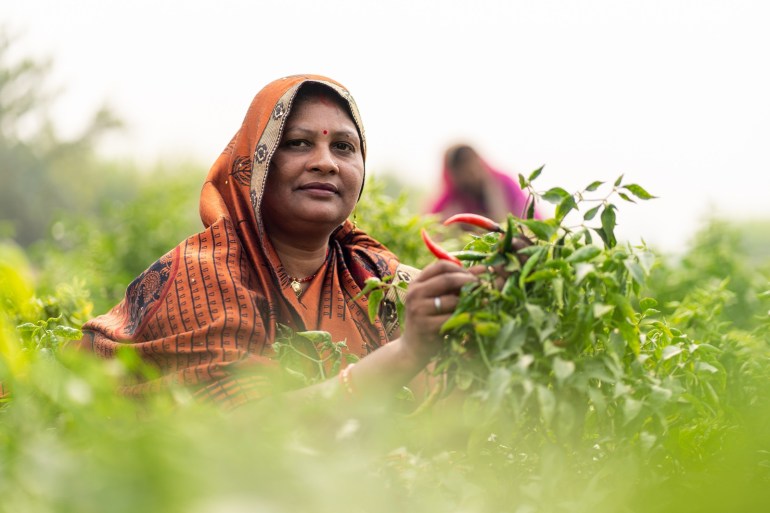
Women are especially important to these systems. In sub-Saharan Africa, 76% of working women are employed in agrifood systems. Yet women farmers can face additional barriers in accessing things like land, technology, financing, information, and markets, all of which can make adapting to changing conditions more difficult.
2.69B
In 2025, 2.69 billion people — nearly one-third of the world’s population — could not afford a healthy diet.
Ultimately, what happens on farms affects whether communities have reliable access to nutritious food. In 2025, 2.69 billion people — nearly one-third of the world’s population — could not afford a healthy diet.
Farmers are already finding ways to adapt
There isn’t one solution to helping farmers with climate adaptation. But new tools are making it possible for farmers to make better decisions, protect their harvests and income, and get more from the resources they already have. Here are three examples making a difference:
1 Better information about weather
Farmers have always watched the weather. Now, more precise forecasts can give them better information about what’s coming.
In Kenya, TomorrowNow and the Kenya Agricultural and Livestock Research Organization (KALRO) are making hyperlocal weather information available to more than 6 million farmers.
That information can help a farmer answer very practical questions like: Is rain likely this week? When is the right time to plant? Better information doesn’t eliminate the risk of a drought or flood. But it can give farmers more time to prepare and protect a season’s worth of income.
2 Crops that can handle tougher conditions
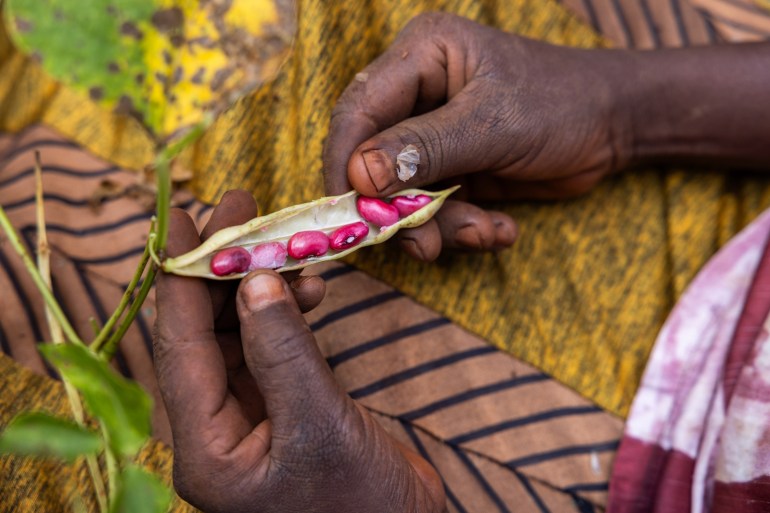
Another approach is developing crops that are better suited to the conditions farmers are experiencing now. Researchers are working with farmers to develop varieties that can better withstand challenges such as drought, heat, pests, and disease.
In Uganda, for example, scientist Dr. Clare Mukankusi at CGIAR, a global research partnership dedicated to a food-secure future, developed new bean varieties to thrive in drier conditions and poorer soil.
For a farmer, a hardier crop can mean the difference between losing most of a harvest and having enough to eat and sell.
3 Better information about soil
Healthy crops also depend on healthy soil. But farmers can’t always tell what their soil needs simply by looking at it. Soil-mapping tools can provide a clearer picture of what is happening beneath the surface and help farmers make more informed decisions about how to manage their land.
In Kenya, a tool called Virtual Agronomist uses digital soil maps to help farmers understand what their soil needs and make better decisions about fertilizer.
Combined with innovations designed to improve soil health, that information can help farmers use limited resources more effectively and keep their land productive.
A more resilient food system
No technology can make agriculture risk-free. But better forecasts, stronger crops, healthier soils, and other innovations, such as irrigation, can give farmers more options as conditions change.
The goal is simple: help farmers produce food more reliably and earn more from what they produce.
When that happens, the benefits can extend well beyond an individual farm. Families can earn more stable incomes. Local businesses can grow. Communities can have more reliable food supplies. And food systems can become better prepared for whatever comes next.
Growing food is becoming more difficult. But farmers, scientists, governments, and businesses are already finding ways to adapt—and getting those solutions into the hands of more farmers can help build a more resilient future for all of us.