
A case for women’s economic opportunity: An engine for global growth
The world is leaving trillions on the table. Prioritizing women’s economic development can change that.
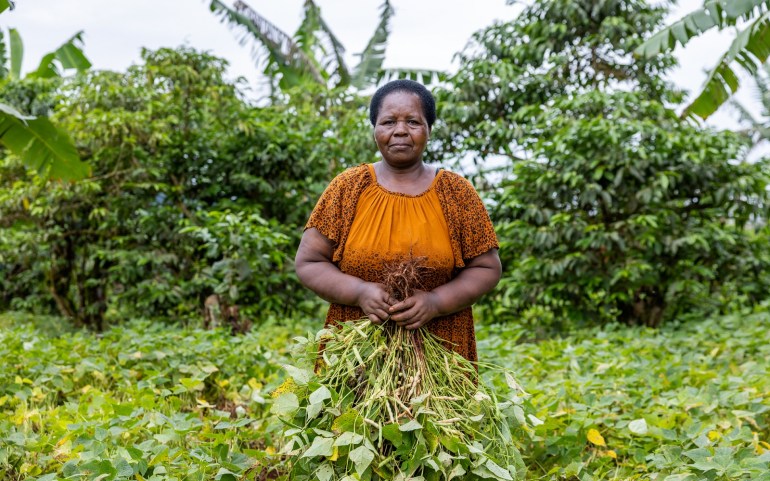
Imagine if countries had a resource that could reliably boost their economic output by as much as 20%. In many countries, that resource already exists. It’s hiding in plain sight, too often overlooked and underappreciated: the untapped economic potential of women.
Expanding women’s economic participation isn’t just a development goal—it’s one of the world’s most powerful drivers of job creation, innovation, and economic growth.
Women’s economic opportunity: central to a thriving world
Despite significant progress over the past century, the gap between women’s and men’s economic opportunities remains wide. Women still participate in the labor force at far lower rates than men, earn less for comparable work, and hold a disproportionately small fraction of leadership positions.
But closing the gender divide is about more than access to jobs and income. Advancing women’s economic opportunity means ensuring women can control their own earnings, secure access to the same financing opportunities that men have, and can access digital tools and services that help them participate in the modern economy—in other words, that women have economic power. Without these building blocks, even women who are employed remain economically constrained.
The cost of this inequality is staggering for women, and also for their families, communities, and entire economies. When women have access to the same economic opportunities as men, labor forces grow, production rises, tax revenues increase, and household incomes improve. If women’s employment reached the same level as men’s, long-term GDP per capita would increase by nearly 20%. In emerging markets, closing the gender gap in labor force participation could increase GDP by 23% on average.
No country can reach its full potential while leaving half its population behind.
Economic opportunity for women is the groundwork for global progress
The scale of the opportunity is so large that solving just one significant part of the problem represents trillions of dollars of global growth. Today, access to digital tools—including reliable internet, mobile banking, digital identity systems, and instant payments—is as essential to the modern economy as roads and electricity. In low- and middle-income countries, women have significantly less access to these resources than men. Closing this digital divide alone could boost global GDP by as much as $4.9 trillion.
Unlocking women’s economic power through digital public infrastructure
The benefits of ensuring greater economic equality between men and women would create greater ripple effects. Women-owned businesses would gain greater access to capital and become more productive. Women farmers would earn more and be better positioned to invest in their land and continue to grow their income. And across the board, time saved through using digital tools would translate into higher productivity and more economic opportunity.
Just under 50% of women participate in the global labor force and earn roughly 20% less than men on average.
The data behind women’s economic development: Closing key gaps
The numbers tell a consistent and sobering story. Today, just under 50% of women participate in the global labor force, compared to 73% of men. Women earn roughly 20% less than men on average and hold just under 30% of senior leadership roles worldwide.
In many low- and middle-income countries, women are disproportionately blocked from accessing the resources and opportunities they need to improve their livelihoods or grow their businesses. As a result, they are more likely than men to operate in the informal sector, often running very small or micro-businesses with little protection or access to opportunity.
Even when women start their own businesses, the barriers are steep because they often lack the basic requirements needed to access financing. More than 700 million women globally do not have a bank account. This number rises sharply in low- and middle-income economies, where 30% of women are unbanked (compared with 20% of men), and where women are 12% less likely than men to use mobile internet.
Across the globe, women-owned micro-, small, and medium-sized businesses face a $1.7 trillion global financing gap, meaning women entrepreneurs need roughly $1.7 trillion more in capital than they currently receive.
The consequences are particularly acute in agriculture. In low- and middle-income countries, women provide 43% of agricultural labor, yet account for less than 20% of agricultural landholders. Without land to their name, women farmers struggle to secure credit, leaving them unable to invest in their farms or weather difficult seasons.
The result is lost economic potential at scale. When women cannot overcome these barriers, entire economies miss out on the innovation, job creation, and economic growth they would generate.
20%
Women earn roughly 20% less than men on average
700M
Number of women globally who do not have a bank account
$1.7T
Global financing gap faced by women-owned businesses
Barriers to women’s economic opportunity
In our work across Africa and Asia, we see women’s ambitions consistently run headlong into structural and societal barriers.
The most persistent is women’s access to capital. These barriers go beyond whether women can open a bank account. They are about access to the financing that allows women to pursue their ambitions and build their futures. Without digital IDs, bank accounts, or credit histories, many women in low-income countries are invisible to the financial system. Without property in their own names, they have little to offer as collateral for the loans that can help them start or expand their business.
What makes this especially frustrating is that these barriers are often built on a false premise. In many countries, banks treat women as risky borrowers despite the evidence pointing firmly in the opposite direction. Research from M-KOPA, a digital micropayment company operating across Africa, found that women are 10% less likely than men to default on repayments. Yet bias, and sometimes outright discrimination, means women continue to be underserved by lenders. In Rwanda, women own 40% of businesses but are only 25% of borrowers. Even women with strong repayment records often find themselves locked out of better credit terms and offered a narrow set of financial products that don’t match their needs.
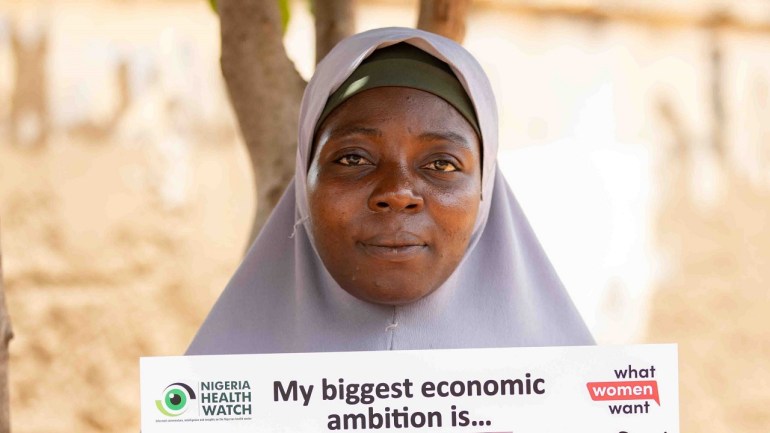
These barriers cut to the heart of what many women across low-income countries aspire to. In 2023, the Gates Foundation and our partners in Kenya and Nigeria surveyed 200,000 women about what stood between them and economic independence. Their No. 1 ambition was clear: to own a business, whether a clothing boutique, a restaurant, or an expanded farm. And their No. 1 barrier was a lack of start-up capital. In Kenya, 64% of women named it as their biggest obstacle. In Nigeria, 62% said the same.
Read the full report
What women want
Survey collectors asked 200,000 women in Kenya and Nigeria to share their economic desires for themselves, their family, and their future. Here’s what we learned, and what’s standing in their way.
Published Oct 2023
Another major barrier to women’s economic power is time, specifically the hours women spend caring for their families. Globally, women spend triple the time on unpaid care work than men. Without access to affordable, quality childcare, many mothers face an impossible choice: cut back hours, pass up opportunities, or leave the workforce entirely. In 44 of 190 economies tracked by the World Bank, childcare services for children under 3 remain entirely unregulated. In low-income economies, only about 1% of essential childcare support frameworks are in place.
How affordable child care leads to global economic impact →
Advancing women’s economic opportunity
Across the globe, efforts are underway to dismantle many of these barriers holding back women’s opportunities.
Investments in digital public infrastructure
New economic pathways open when women are able to create a digital identity, send and receive money securely, and access credit. Inclusive national digital infrastructure like India’s Aadhaar digital ID system and Brazil’s Pix payment system have brought hundreds of millions of lower-income people into the formal financial system and enabled millions of small businesses to grow. Similar initiatives are gaining traction across Africa, helping millions of women pursue new opportunities.
Take Rajesh, a resident in India. For years, she struggled with the structural barriers of a cash-based system and a lack of direct bank access just to manage her household finances and save money. India’s roll-out of digital infrastructure transformed her daily life. Today, Rajesh can securely receive, save, and manage her money, on her own terms. “I don’t have to ask anyone for money,” she says. Rajesh is one of millions of women across India relying on this interconnected ecosystem to claim their financial independence.
“By connecting people and making it easier to move money and share information, digital public infrastructure is in many ways the modern-day equivalent of the roads and bridges that reshaped economies in the 19th century,” writes Kanwaljit Singh, deputy director of Digital Public Infrastructure at the Gates Foundation.
The success of digital financial inclusion initiatives often requires efforts to boost financial literacy and build trust within local communities. Transitioning over to digital financial tools can be a major cultural shift. Rajesh’s successful adoption of digital banking underscores the importance of creating accessible, reliable platforms that reach people where they are. When digital tools are intuitive and trusted, they can empower individuals and help drive broader economic growth.
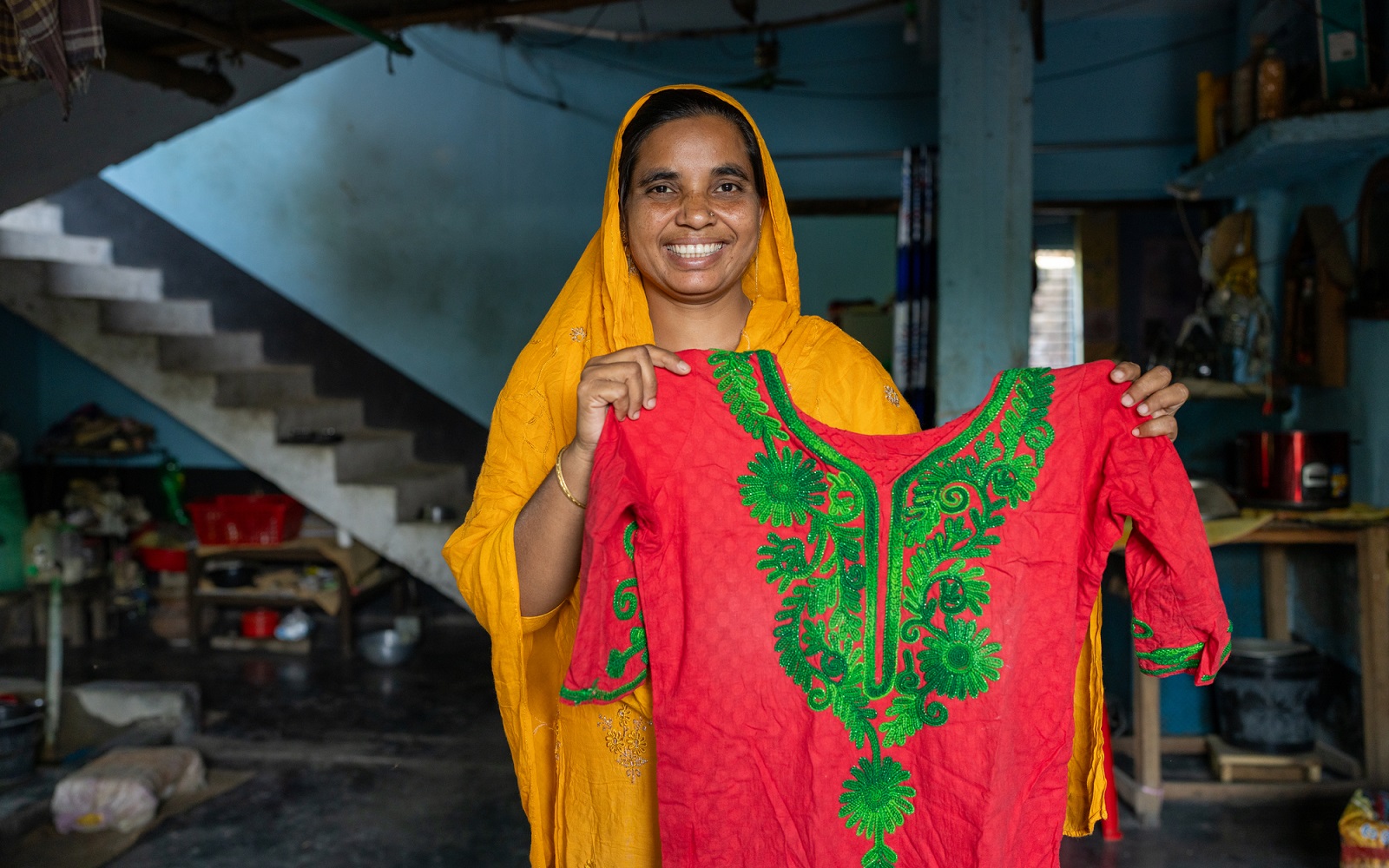
In Dhaka, Bangladesh, garment factory worker Sweety managed her hard-earned income entirely in cash for years, a method that was unsafe, prone to theft, and difficult to track. Without a formal digital account, she had no secure place to save or build her financial future. When her factory joined a national push to digitize worker access, her new mobile financial account changed everything. Sweety is now able to track her spending through a monthly budget, protect her earnings, and securely build up savings in a formal bank. Today, Sweety joins millions of women in Bangladesh using digital payments to gain a stable foothold in the formal economy.
Building an affordable childcare infrastructure
Launched in 2022 with support from our foundation and other partners, the World Bank’s Invest in Childcare initiative is building the first large-scale global platform for expanding affordable, quality childcare in low- and middle-income countries. Rather than a single model, it supports a portfolio of country-led programs tailored to local labor markets and childcare needs.
In Ghana, for instance, childcare centers with quality standards have been built directly on work sites for public works programs, making it convenient for working mothers to participate in these jobs. In Kenya, childcare has been added to a national youth employment initiative, expanding the pipeline of trained childcare workers while improving the quality of services. In Jordan, a childcare program combines an online platform connecting families and providers with grants for expanding childcare centers, and subsidies for low-income households, strengthening both supply and affordability.
There is no version of global progress that does not include women having a seat at the table.
Jackie Jones, director of the Women in Leadership portfolio and Adolescent and Youth Learning Agenda at the Gates Foundation
Women’s economic opportunity benefits everyone
At a moment when global growth is sluggish, global aid is declining, and demographic pressures are intensifying, leaving women on the economic sidelines is a costly mistake. A vast body of research shows that when women work, lead, and innovate, economies become more productive, companies perform better, and societies grow more resilient.
“There is no version of global progress that does not include women having a seat at the table,” says Jackie Jones, director of the Women in Leadership portfolio and Adolescent and Youth Learning Agenda at the Gates Foundation. “When we invest in women, we unlock talent, innovation, and leadership potential the world cannot afford to leave behind.”
In some regions, expanding women’s economic opportunity may be the single most powerful lever available for accelerating growth. It strengthens labor markets, drives productivity, and fuels economic dynamism that benefits everyone.
“The beauty of our fight for gender equality is that every human being will gain from it,” says our foundation’s co-founder Melinda French Gates. “We must seize this moment to build a better, more equal future.”
Latest articles
-
A mother’s mission to prevent spina bifida in Ethiopia
From hospital corridors to policy discussions, an Ethiopian mother is making families’ voices heard and advancing efforts to prevent birth defects.
-
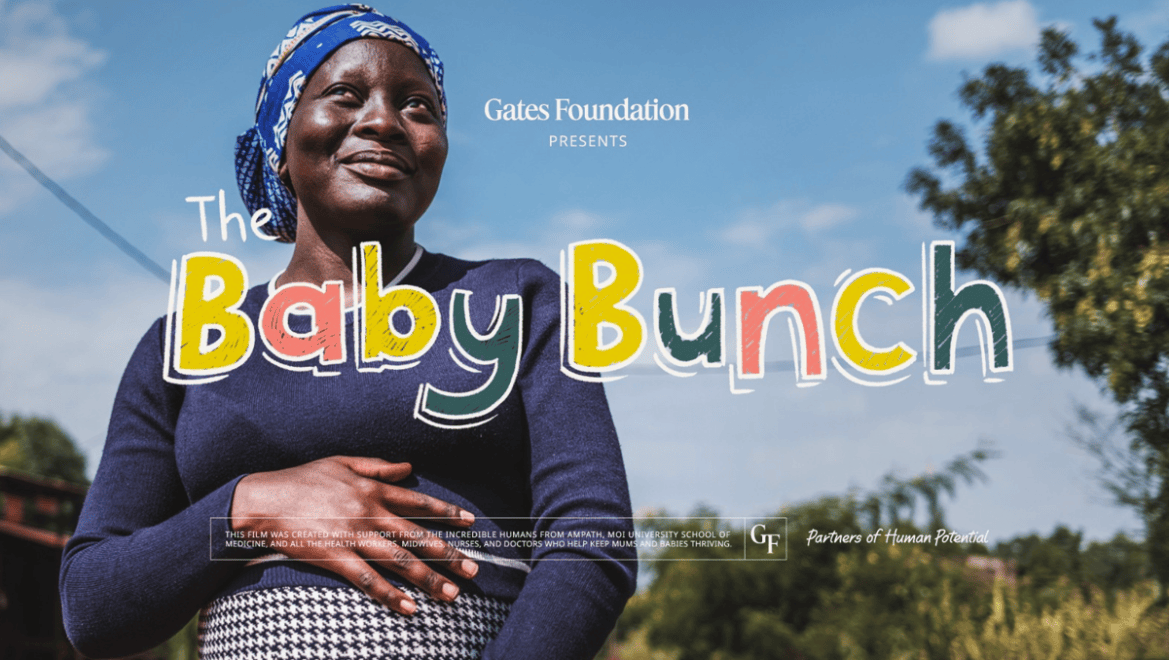
How POCUS is changing pregnancy care in Kenya
The partnerships making it possible A handheld device may be small, but getting it into the hands of a trained health worker takes a much larger partnership. This work is…
-
MTN Group Foundation and Gates Foundation Launch First-of-Its-Kind Maternal Health Multiplier Platform to Expand Access to AI-enabled Maternal Health Care in Nigeria
Partnership aims to help 500,000 women in Nigeria access higher-quality maternal health care by 2030 NEW YORK (September 22, 2026) — MTN Group Foundation (MTN) and the Gates Foundation today…
Get the Optimist newsletter
Join 300,000 readers who see the world differently. Subscribe for hopeful stories about the people and partnerships improving lives around the world — every other week.
By submitting your email to subscribe, you agree to the Gates Foundation’s
Privacy & Cookies Notice.