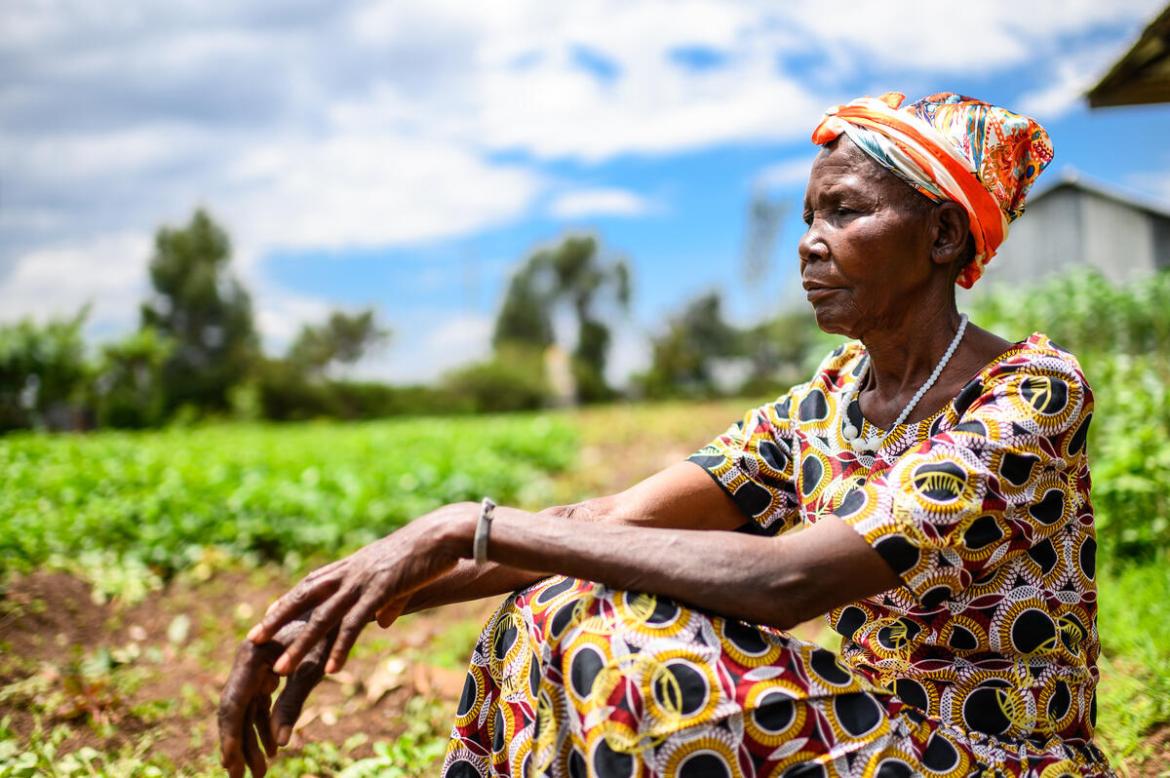
“Climate change is not the end of everything,” Phoebe Mwangangi says.
A smallholder farmer in Kenya, Mwangangi has seen climate change reshape her land and livelihood. Unpredictable rains, shrinking yields, and droughts made it clear: her community had to adapt or risk losing everything.
Mwangangi chose to adapt. She joined a local training program on climate-smart agriculture and began testing new techniques. The results were transformative. “To combat climate change I’ve used rainwater harvesting, deep tillage, minimal soil disturbance, use of certified seeds, timely planting, and mulching to retain the moisture,” she says. She also began planting climate-resilient crops—millet, sorghum, and pigeon peas—that could survive on less rain.
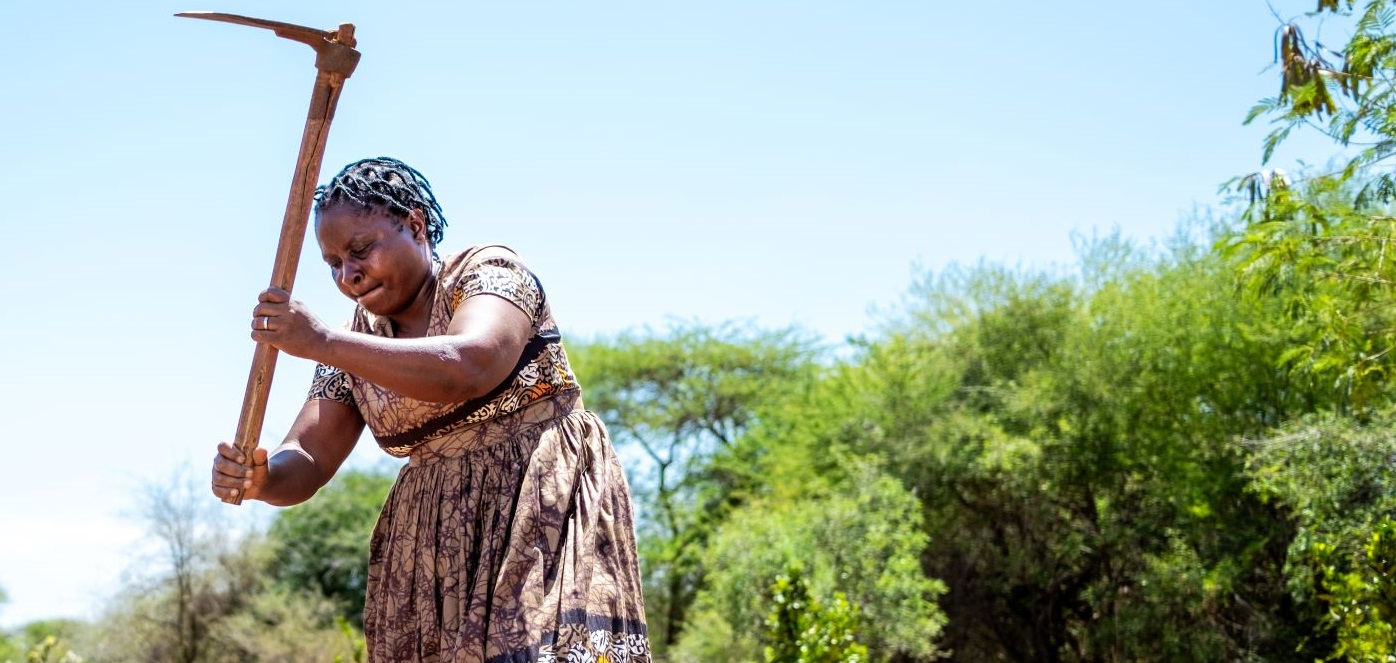
“Women need to be resilient, like the crops they grow.”
-Phoebe Mwangangi
These changes helped her grow more food and build a more resilient farm—one that could feed her family and generate income. “Once we harvest sorghum, we can use it for preparing cookies, cakes, and the porridge they used to prepare. We can also grind it into a powder to make flour to be sold to others,” she says.
But Mwangangi’s vision didn’t stop at her own plot. She saw an opportunity to bring others along. She started small, educating ten neighbors. At first, not everyone was convinced. “Persuading other farmers to learn new techniques wasn’t an overnight success,” she says. “It required a mindset shift.”

The Garden of the Future
Over five seasons and with the support of CGIAR, a global agriculture research network, Mwangangi’s trainings evolved into something much bigger. Today, she has trained more than 500 farmers across the region. More than 75 percent of those she mentors are women.
Mwangangi finds satisfaction in teaching others. She knows the physical demands of farming—and the power of community and expert support. She also helps address the financial barriers many women face. “Women in my community need capital,” she says. “We have a savings and credit cooperative or SACCO, where we put our savings together, so you can get a loan during the planting season, buy the seeds, pay the workers and begin farming.”
To expand her reach, she’s placed five lead farmers in different areas to share techniques and serve as local role models. For Mwangangi, leadership means collaboration, empowerment, and continuous learning. She encourages women to lead—because when women are empowered, communities benefit.
“Women need to be resilient, like the crops they grow,” she says, reflecting the strength she sees in the women around her.
Mwangangi dreams of a food-secure future—where farmers are economically independent, politically engaged, and protected from exploitation. She believes the path begins with local, climate-smart food systems and continues through shared knowledge and collective effort.
Her story is one of resilience and commitment—a reminder that even in a changing climate, solutions exist and progress is possible.