“The rain refuses to come.”
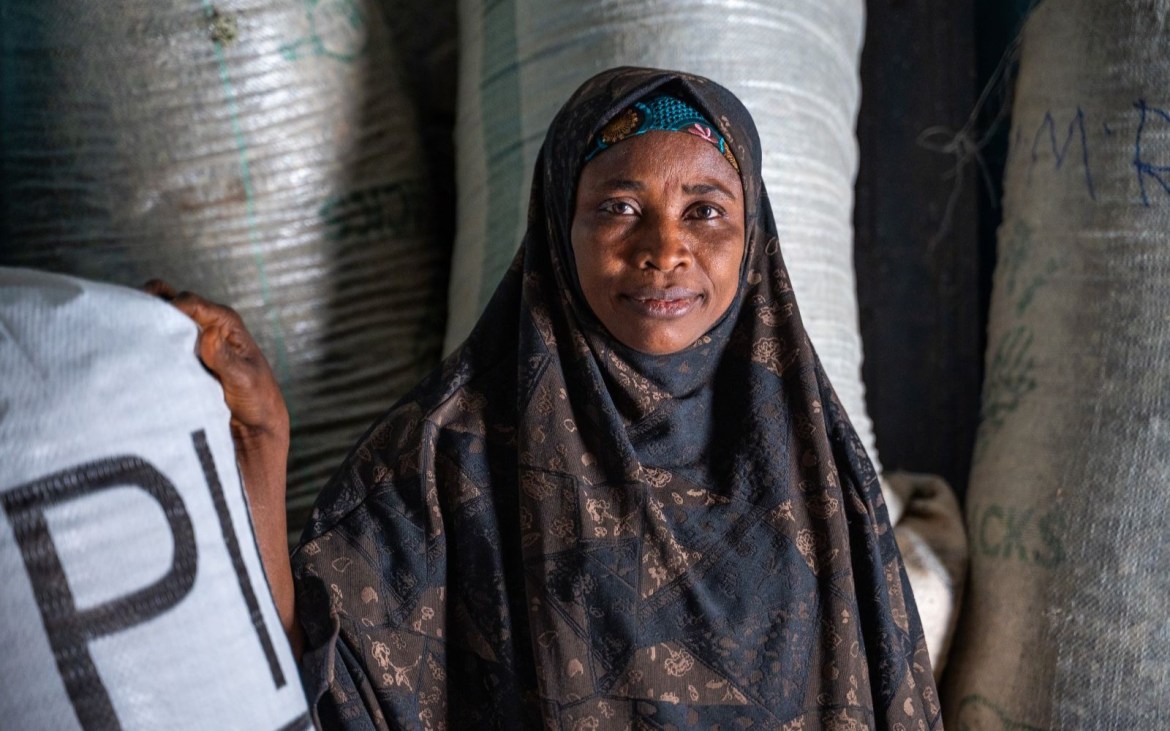
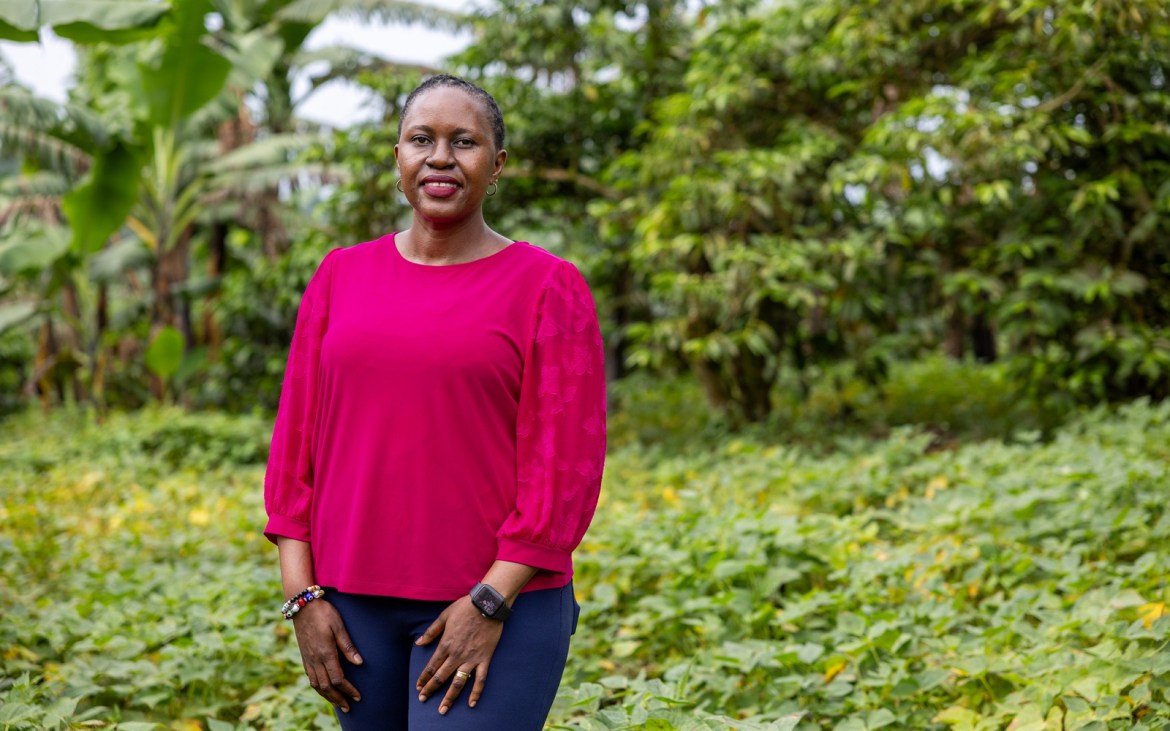
Clare Mukankusi hears this every time she visits farmers in Uganda. For the country’s smallholder farmers—most of them women—unpredictable weather isn’t just a setback; it’s a threat to their livelihoods. Their crops are their income, and a failed harvest could mean more than just lost food—it could mean missed school fees, financial hardship, or falling into debt.
As an agricultural scientist under CGIAR, a global research partnership dedicated to a food-secure future, Mukankusi is racing against climate change to create a future where farmers aren’t left guessing—where planting a seed isn’t an act of hope, but a path to stability.
A seed of curiosity
For Mukankusi, the plight of farmers is personal. Her grandparents and great-grandparents were bean farmers, and her sister currently maintains a farm outside of Kampala.
As a little girl growing up in Entebbe, Uganda, she helped on her family’s small garden plot, which was heavy on beans. She was the second youngest of five, and while she wasn’t always helpful in the field, she loved being with the plants. “I was there because I love to see what was going to happen if you planted something – I wanted to go and check how far [the plant] had grown, whether it died [and] what is happening,” she recalls. “For me, it was a curiosity.”
She followed this passion when she joined her school’s agriculture club. “I [loved] it, because at the end of the day, you see the product of your efforts,” she says of those days planting and taking care of animals. “You’ve planted something, and [then] you harvest it—you have a yield. And wow, just from that seed, I was able to get [so much].”
Mukankusi’s mother, a schoolteacher, passed away when she was six, leaving her father to raise five children on his own while working as a lab technician at the Uganda Virus Research Institute. During childhood visits to the clinic where he worked, Mukankusi admired the nurses and initially dreamed of one day going into medicine. Her father, a scientist himself, encouraged her curiosity—an early spark that would eventually lead her to a career in agricultural science.
Subscribe to The Optimist to get weekly updates on the latest in global health, gender equality, education, and more.
By submitting your email to subscribe, you agree to the Gates Foundation’s Privacy & Cookies Notice.
Becoming a plant scientist against the odds
By the time Mukankusi reached university, her love for plants was more than just a childhood passion—it was the beginning of her life’s work. But during a time when her only focus should have been her studies, her first year of college was marked by profound loss. Her father passed away, leaving her and her siblings orphaned. She had to find a way to stay in school without his support. While classmates went home to see their families on school breaks, she stayed behind on campus, taking whatever jobs she could get—ushering events, working in a bar, even modeling—just to make ends meet and finish her degree.
Mukankusi initially thought she’d be an agricultural extension worker, bringing research-based farming techniques directly to farmers to help them work their land more effectively. But a respected college mentor, recognizing her passion and perseverance, encouraged her to pursue a master’s degree in plant pathology. Once again, Mukankusi followed her curiosity, and through her advanced studies, she discovered her true passion: beans.
When the climate changes—so must the beans
Legumes, and especially beans, are central to Uganda’s kitchen tables and economy. Inexpensive and nutritious, beans are the primary source of plant protein in the Ugandan diet and an important staple across East Africa. So, in 2003 when Mukankusi began a job assisting a plant pathologist at the International Center for Tropical Agriculture (CIAT), she knew beans would become her focus.
But everywhere she went—her husband’s village in Rukungiri, her sister’s farm outside Kampala—she heard the same concern about this important crop: it wouldn’t grow. For Uganda’s women farmers, a failed harvest isn’t just about food—it’s about economic stability. Most rent the land they farm, making them especially vulnerable to climate shocks like drought, excessive rainfall, or disease-prone soil. Mukankusi knows this all too well.
“If a crop fails, it means that kids will not go to school,” she says, because their parents cannot afford the school fees.
The crop that had sustained her family for generations and fed millions of Ugandans every day, was under existential threat. Mukankusi knew that to fight this growing crisis, something needed to change. She couldn’t control the rain or the soil—but maybe she could change the beans.
Mukankusi’s job: build a better bean
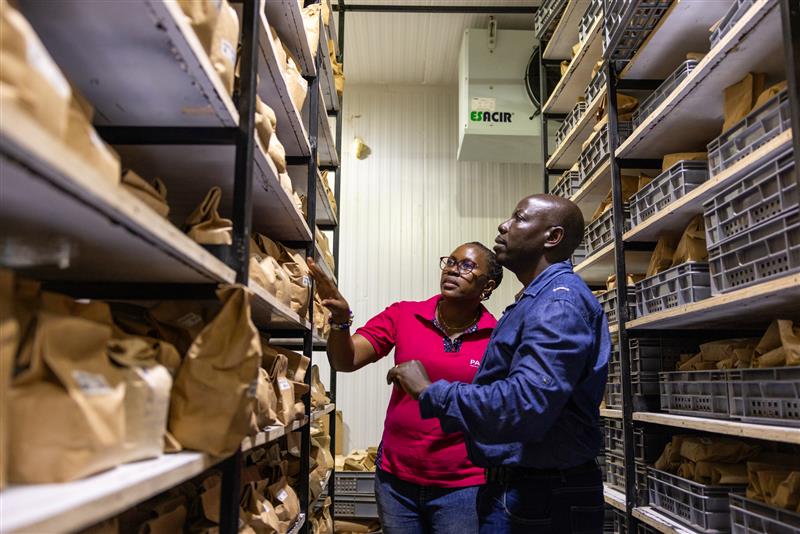
Mukankusi’s job is to ensure that farmers can grow foods that feed their families, fuel their livelihoods, and build more resilient food systems. In her current role as the Global Breeding Lead at CIAT, she’s creating the beans of the future. She meets regularly with farmers and other important players in the bean supply chain to ensure the beans she develops aren’t just climate-resilient but also align with what people actually want to grow, cook, and sell.
From these conversations, she and her colleagues have identified three important priorities for next-generation beans:
- Faster maturity – so they can be harvested before drought conditions occur.
- Resilience in poor soil – since many farmers lack the financial resources to purchase fertilizer.
- Higher nutrition – one of her projects is to breed a bean that with 15 percent more iron and 10 percent higher zinc content.
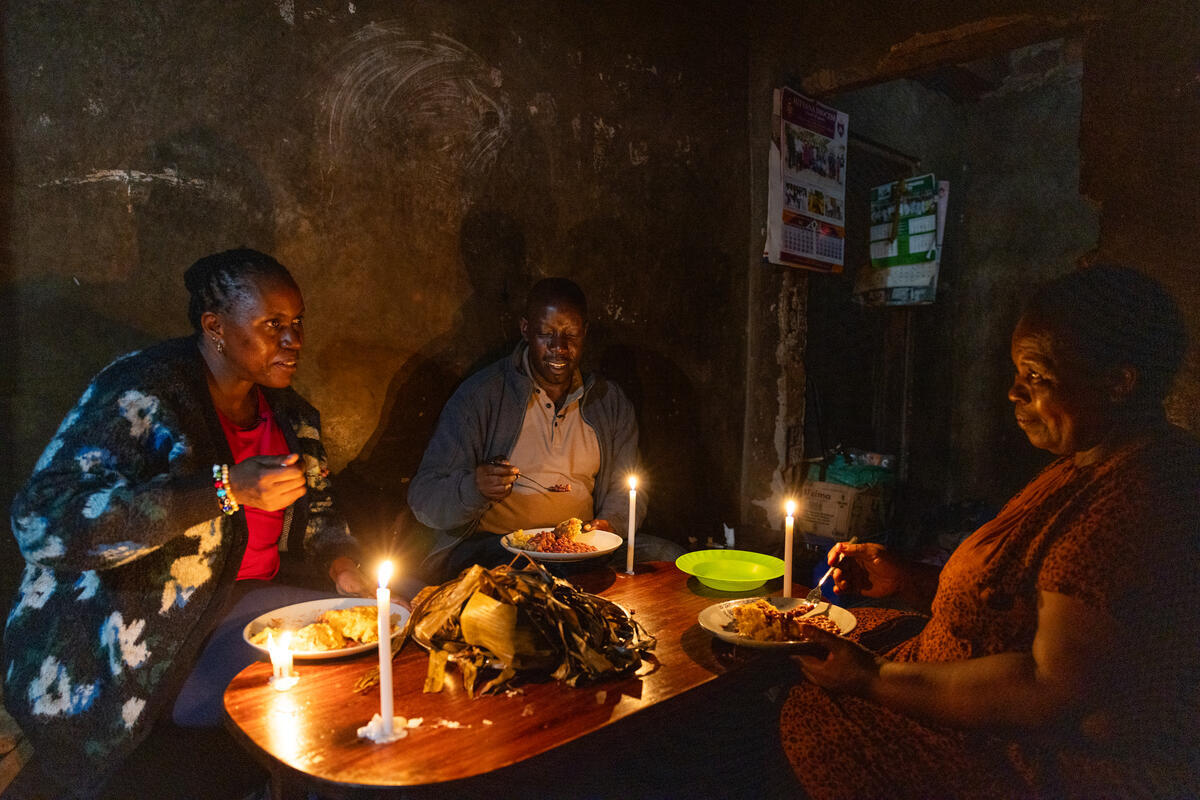
These new beans even cook faster than existing varieties, meaning families don’t have to spend as much money on cooking materials like coal or firewood.
Mukankusi likes to think of herself as a matchmaker—pairing beans with the best traits to create the ultimate climate-resilient crop. She tests them for yield, disease resistance, and cooking time, refining them over generations until she finds the perfect fit. And she even tastes them herself.
(Her favorite recipe? Fried sugar beans with onions, tomatoes, and a little curry powder.)
When she’s eventually satisfied with her new bean, she sends it to national agriculture agencies.
“They always have a continuous flow of new beans” to share, she says, “but they’re also ensuring that the beans coming up in the next cycle are better than the previous ones.”
Growing opportunity for Uganda’s women farmers
The constant development of climate adaptable and higher-yielding beans gives Mukankusi hope. Better beans mean more Ugandan farmers earning enough to buy their own land, expand into more lucrative markets, or even access tech tools that improve their harvests.
This vision for the future is what drives Mukankusi every day. She takes great pride in helping her fellow Ugandans build climate resilience, supporting women farmers in growing their livelihoods, and nourishing her community. She knows that when the bean crops thrive, so do the farmers who grow them—and the people who eat them.
“I’m proud of the opportunity to do that, because it’s really very fulfilling, when you hear the stories of these women,” she says. “And even myself, when I’m eating the beans – I know where the beans came from, and I can tell my children, ‘This is how it was developed.’ ”