
With the launch this week of Tazama, a free, open-source software system that organizations can use to monitor financial transactions to detect potential fraud and money laundering in real time, we asked Konstantin Peric, our in-house expert on inclusive financial platforms, why it was needed and why the foundation supported its development and rollout.
Kosta: We have seen a welcome increase in financial access over the past 10 years. Three out of four people worldwide now have an account at a financial institution or mobile money provider, which is 2.5 billion more people than a decade ago. That’s great news—it means that many, many more people can now save, access credit, participate in their country’s economic growth, and lift their families out of poverty.
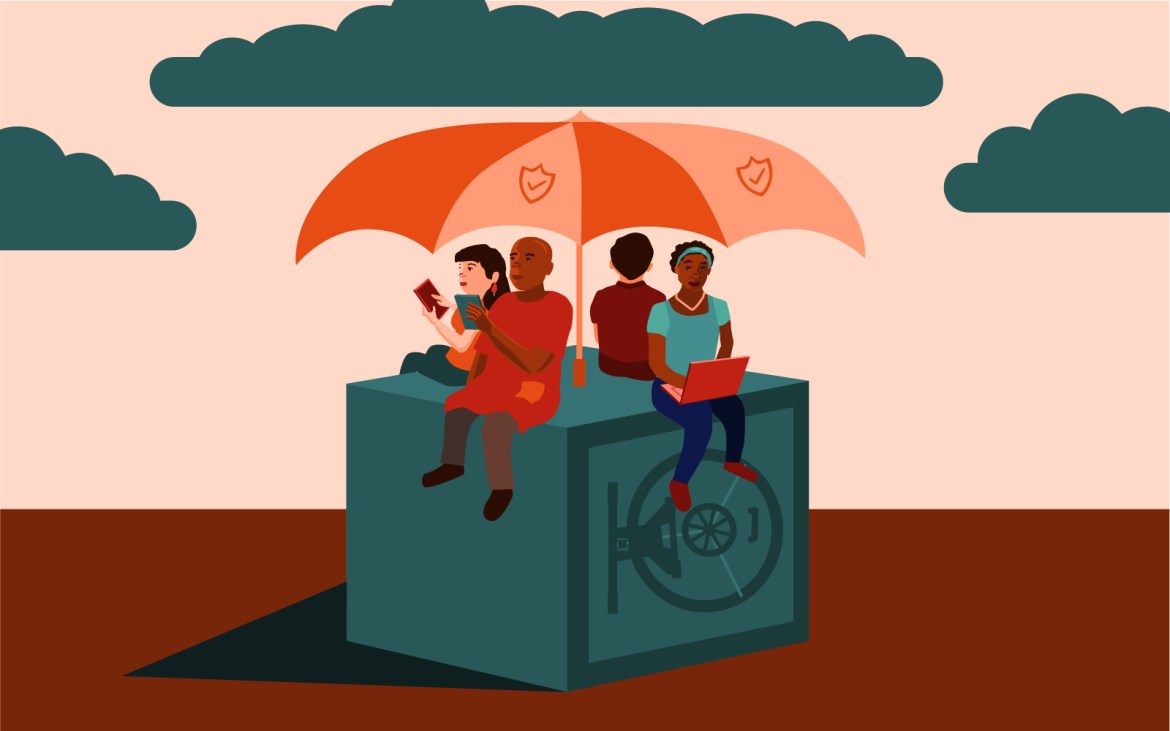
That said, folks who are new to banking are often less cognizant of what is and isn’t done within formal financial system, making them potentially ripe targets for fraudsters. According to the Global Anti-Scam Alliance, one in four people were scammed, at a cost of over a trillion dollars, in 2023 alone.
People who are new to banking are more likely to have their lives completely disrupted if they are scammed, because they don’t have a lot of money to start with. Rampant fraud also obviously undermines trust in the entire financial system and discourages people from using it. So we feel it’s particularly critical to protect new entrants because so much work has been done to get them into the formal financial system.
Financial inclusion means that individuals and businesses have access to useful and affordable financial products and services, like payments, savings, credit, and insurance. It is a key driver for reducing extreme poverty and boosting prosperity. (The World Bank)
Kosta: Our goal is to help connect the roughly 1.4 billion people around the world who remain unbanked to obtain financial accounts and financial literacy so they can take advantage of all the benefits and prosperity that can come with financial access to banking, savings, credit, and more. To help make that happen, we support the creation of open-source digital public goods like Tazama that countries and institutions can use to build out their digital public infrastructure (DPI) and improve financial inclusion in their regions and communities.
Tazama is the third such product that our foundation has supported. Previously, we supported the creation of Mojaloop, an open-source digital payments system, and MOSIP, which helps provide digital IDs to those who need them. Since payment systems and digital IDs are two of the cornerstones of DPI, we focused on those first. But we’ve also been concerned from the start about protecting people from fraud, for all the reasons I noted above. That’s especially true because commercial anti-fraud and anti-money-laundering software tends to be quite expensive and thus out of reach for the low- and middle-income countries we partner with.
With Tazama’s launch, central banks and other financial institutions now have access to a cost-effective open-source software solution that they can use to protect their customers and ensure accountability and integrity in banking transactions. Tazama’s architecture also prioritizes data protection and respects data privacy, allowing for a more transparent and more secure digital financial system overall.
Kosta: As I said, many commercial approaches exist for fraud protection as well as digital payments and IDs, but they are often expensive. We’re contributing to a library of digital public goods that can be used free of charge, much like certain public utilities. Because these products are open source, everyone can see the code, download the software, and modify it for their own needs. It also means that experience from early adopters gets passed on to newcomers. Neither our foundation nor anyone else profits from these open-source systems in any way—they are intended solely as public resources to promote financial inclusion.
That’s why Tazama is housed at the Linux Foundation, which has always been a leader in the open-source community. In that spirit, I hope that development and fraud management experts from around the world will take a look at Tazama and continue to improve financial products and services, to make it as useful and effective as possible.
For example, Tazama can currently handle around 2,300 financial transactions per second. That’s a solid start, but to become truly scalable, the software will need to be able to handle considerably more, and we hope the larger open-source community can help solve this technical challenge. That’s the beauty of the open-source approach and why it’s considered one of the best ways to develop software: because everyone can help make it better and there’s always full transparency.
Kosta: Ultimately, we want to help remove the many barriers that low-income countries face in creating inclusive financial systems for their individuals and businesses. One of those barriers is technological expertise—after all, these digital financial systems need to run 24/7, 365 days a year, without any downtime. So, along with creating cost-effective digital resources like Tazama, we help facilitate access to technical expertise when and where it’s needed, to help get these open-source systems up and running.
We also support many partners and stakeholders, such as AfricaNenda, who provide training so countries or banks can take ownership of these assets and not depend on outsiders to run the technology. And we try to get the word out that these digital public goods are free to use and encourage the relevant financial institutions to take advantage of them.
In the case of Tazama, the Central Bank of West African States, which serves as the central bank for the eight countries of the Western African Monetary Union, is adopting it. The Common Market for Eastern and Southern Africa, which includes 21 nations, has also issued a request for proposals for supporting Tazama in several of its member states. We’re thrilled to see Tazama start out with this kind of reception, and we’re very excited to see what comes next.