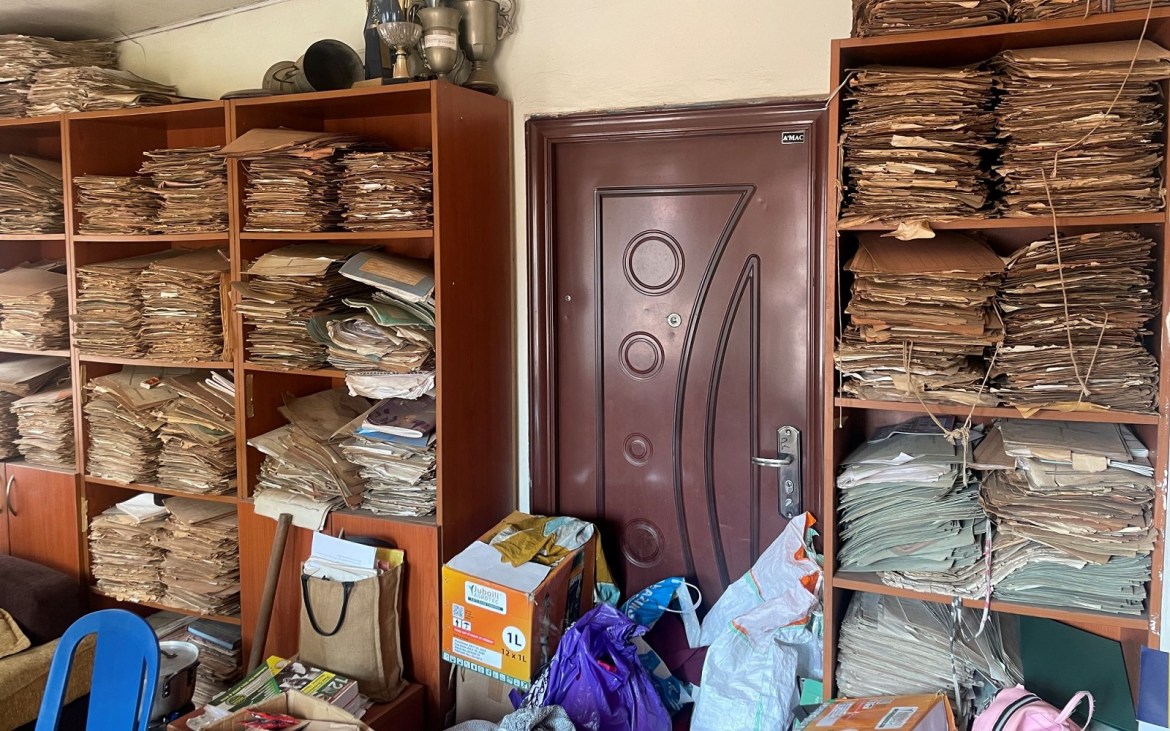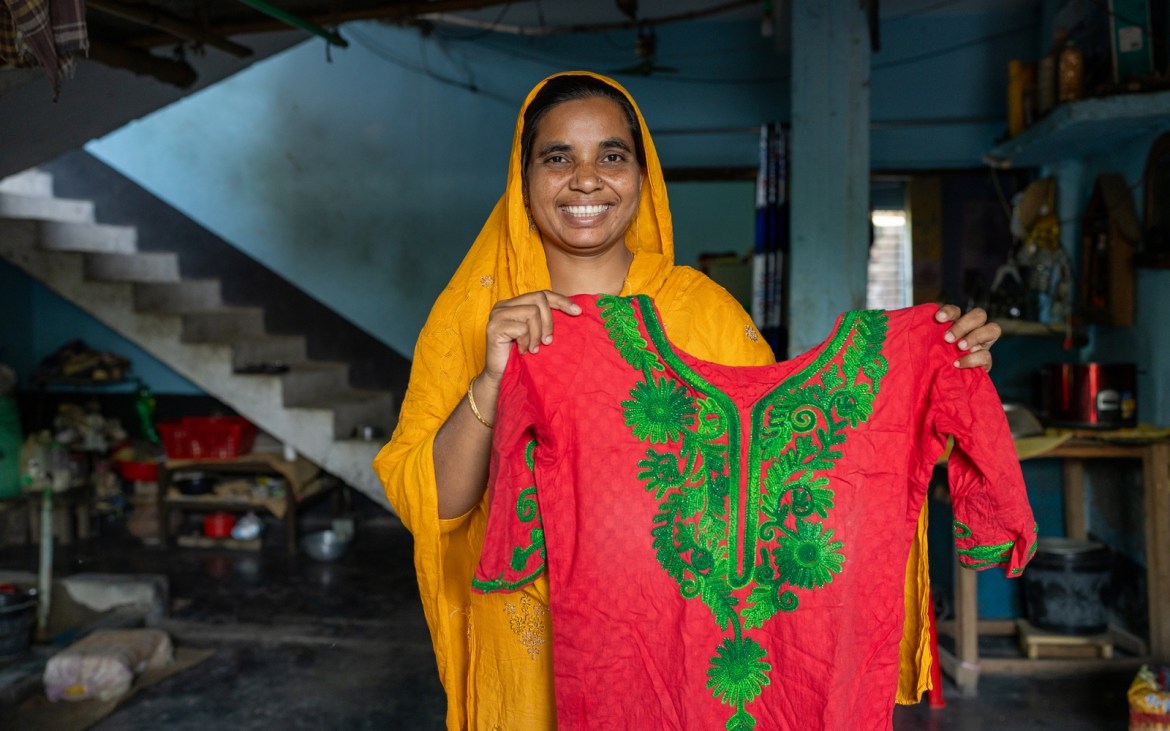

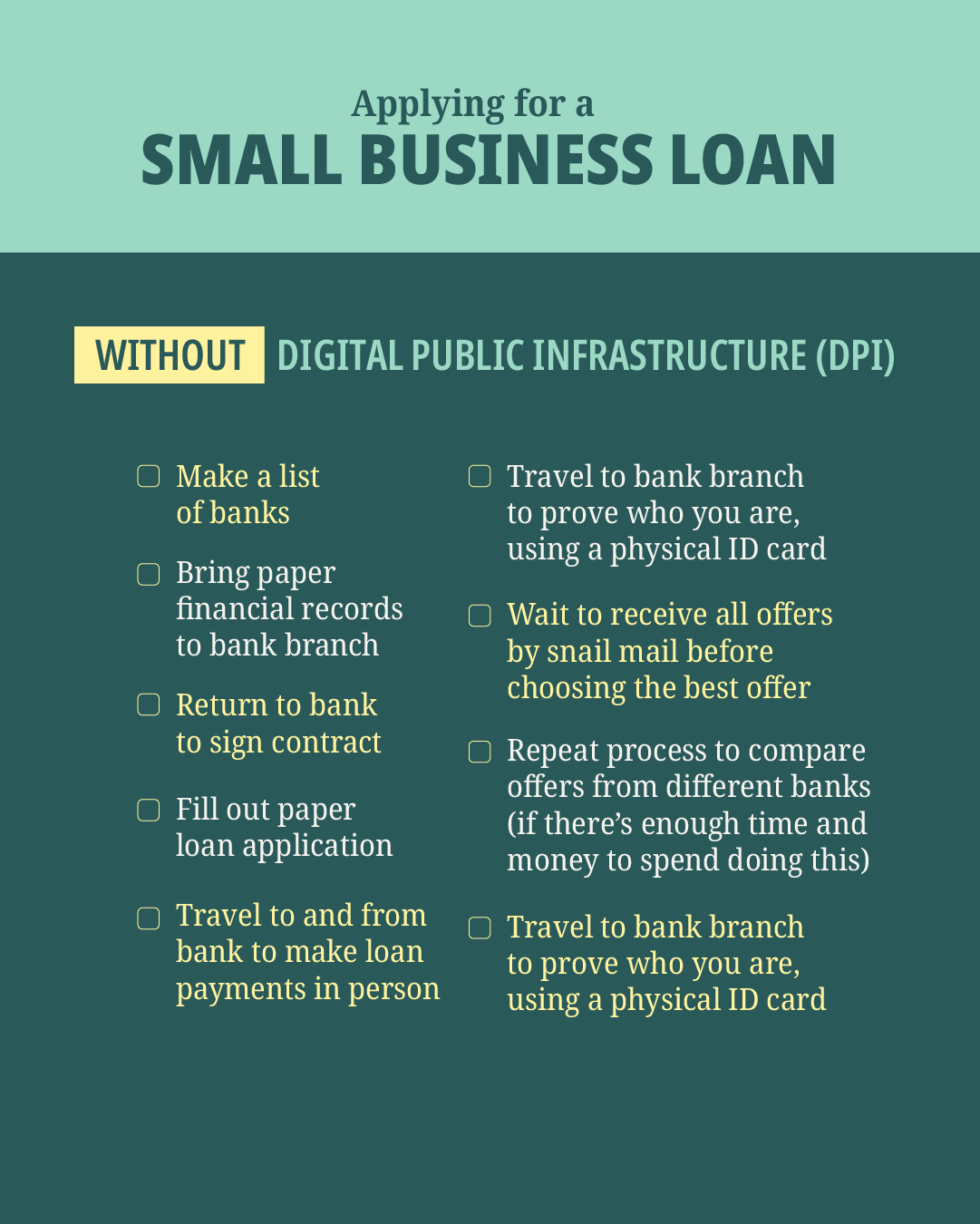
Not long ago in India, a small business owner applying for a loan would need to bring her physical ID and paper financial records to a bank branch, fill out an application by hand, and wait for a loan offer to arrive in the mail. To compare offers from multiple banks, she would have to repeat the same process over and over.
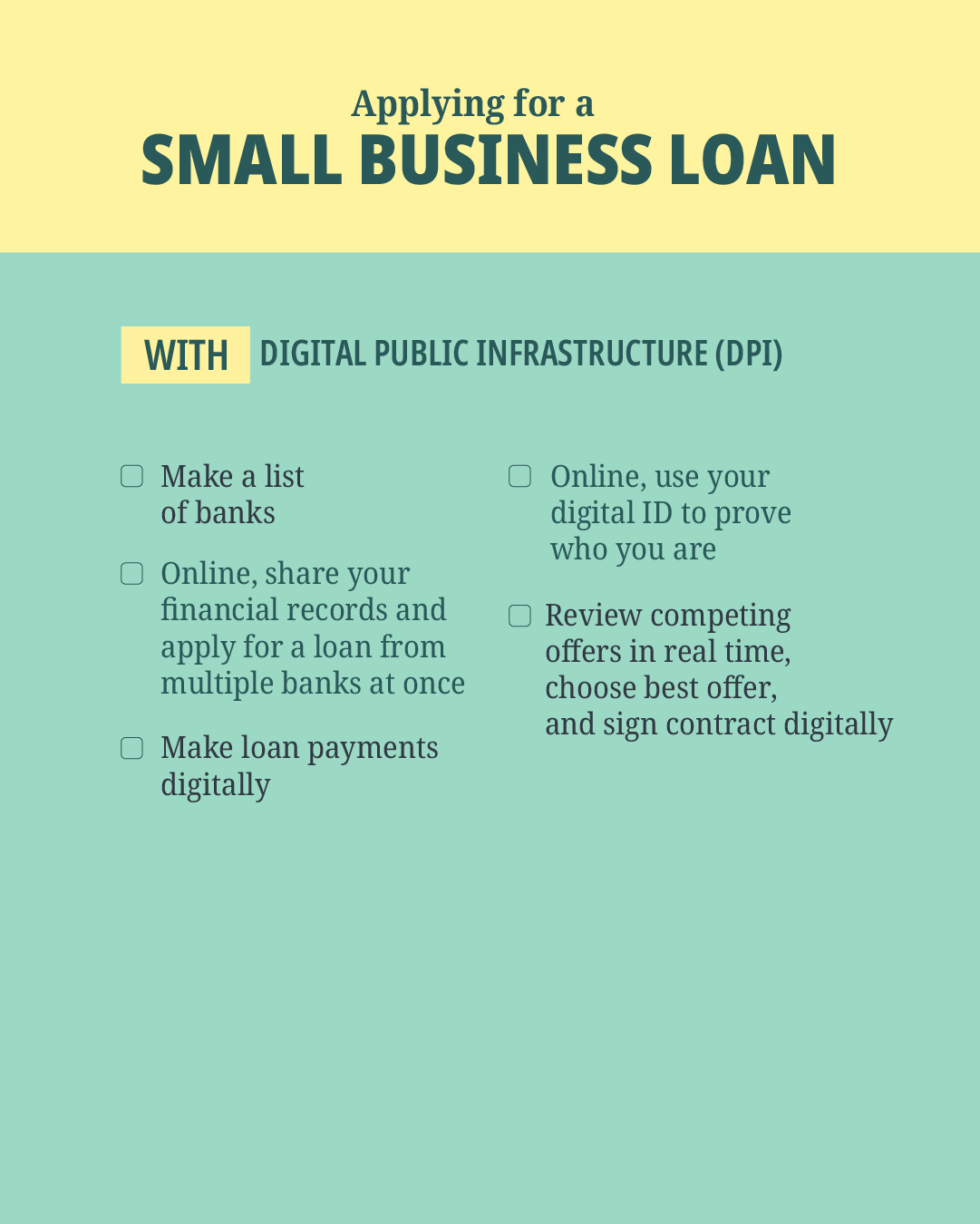
Today, she can do it all from home. Using her digital ID, she can securely share her financial data with multiple banks at once, review competing offers in real time, sign a loan agreement digitally, and begin making payments directly, all within minutes.
No single company or app caused this transformation—it was made possible by India’s investment in safe, inclusive digital public infrastructure (DPI).
Why DPI, and why now?
What is digital public infrastructure?
Services that transform lives, provide pathways out of poverty, and spur economic growth.
As countries navigate tighter budgets in a time of shrinking development aid, many are turning to DPI as a way to shape their digital and economic futures—on their own terms.
DPI crisscrosses the economy, connecting people, data, and money in the same way that roads connect people and goods. It is a set of shared, interoperable building blocks that sit on top of basic connectivity like broadband or wireless networks, allowing people to prove who they are, send and receive money, and share information securely.
These building blocks—including systems for digital ID, payments, data exchange, and consent—form the backbone of modern service delivery.
Governments can build, adapt, and govern this flexible set of tools for the public benefit. When designed well and surrounded by strong regulations and safeguards, DPI can serve as the rails for an entire economic system.
Without DPI vs with DPI: Applying for a loan
A quiet shift with big implications
Today, more countries than ever have the capability to build these systems in ways that are faster, cheaper, and better aligned with their needs. Importantly, this approach is becoming more accessible thanks to open-source digital public goods like MOSIP and Mojaloop, which allow countries to deploy robust ID and payment systems at lower cost and tailored to national priorities.
In this context, DPI offers three critical advantages that support sustainable economic growth: It expands inclusion and participation, supports fairer and more dynamic markets, and reduces costs and duplication.
1. Expands inclusion and participation
For many people, being excluded from formal systems reduces their access to economic opportunities. This can happen in many ways, such as by being unable to prove who they are, receive money securely, or access government services. DPI lowers these barriers. When the cost of reaching and serving people falls, governments and businesses can do more, and they can do it more equitably.
Nigeria, for example, is positioned to make major strides in this area. It was among the first African countries to deploy an interoperable payments system and has begun rolling out components of a digital ID system. If Nigeria connects its ID and payments systems—and invests in making both of them safe and inclusive—it has the potential to dramatically expand opportunities for people to improve their lives.
2. Supports fairer and more dynamic markets
DPI allows more businesses to access new customers and markets. When there’s a shared digital foundation—essentially a public utility layer that prevents private monopolies from taking control—digital services providers and entrepreneurs can innovate and launch new businesses on top of it.
Brazil’s Pix system is a striking example. Developed by the Central Bank of Brazil, Pix provides instant, 24/7 payments that work across banks and digital wallets. Since its launch in 2020, it has been adopted by over 153 million individuals and supported by more than 900 financial institutions, including small banks, cooperatives, and fintechs.
Combined with Brazil’s open finance policies, Pix has helped unlock innovation and growth in the private sector while reducing reliance on cash and costly middlemen.
3. Reduces costs and duplication
Traditionally, a single government agency would build its own digital system—such as a health ID or agricultural payment system. Nigeria, for example, until recently had 13 ID systems.
In contrast, countries that are building DPI create shared platforms that multiple agencies—and the private sector—can use. This saves the government time and money and ensures better delivery of services to its people.
India’s experience is illustrative. The Aadhaar digital ID system cost roughly US$1.5 billion to implement, but it enabled the government to save more than US$42 billion through reduced fraud, error, and leakage in public benefit programs. In banking, the cost of verifying a customer’s identity fell from US$10–$12 to about US$0.20—making it feasible to serve millions more people, especially in low-income and remote settings.

Getting DPI right
To realize the full potential of DPI, successful efforts tend to follow a few key principles:
- Reusability. Platforms are designed to be used across sectors, not by just a single program or agency.
- Interoperability. Data and systems can work together, based on shared formats and protocols.
- Country ownership. Governments decide how DPI is used, adapted, and governed—not outside vendors or donors.
- Accountability. DPIs are designed with safety and inclusivity in mind.
Countries are already leading the way. But momentum alone isn’t enough. DPI must be supported with thoughtful, flexible collaboration. Donors should coordinate investments around shared platforms and open standards that multiple countries can benefit from.
Many practical tools and support mechanisms are available to help. Initiatives like Co-Develop, the Centre for Digital Public Infrastructure, and the 50-in-5 campaign bring together technical guidance, funding, and peer learning to help countries implement DPI with speed and confidence. The United Nations’ Universal DPI Safeguards Framework provides a roadmap for responsible implementation.
What’s next?
In a time when development aid is declining and debt burdens are rising, governments need tools that conserve resources while delivering lasting value. DPI offers just that: It includes more people in the formal economy and creates the conditions for growth—all while keeping costs under control.
But perhaps most importantly, DPI supports a shift in development itself. Instead of relying on a patchwork of donor-driven projects, countries are building platforms they can own, govern, and improve over time.
By investing in DPI, countries will have a stronger foundation to lead and a fairer shot at building economies that work for everyone.