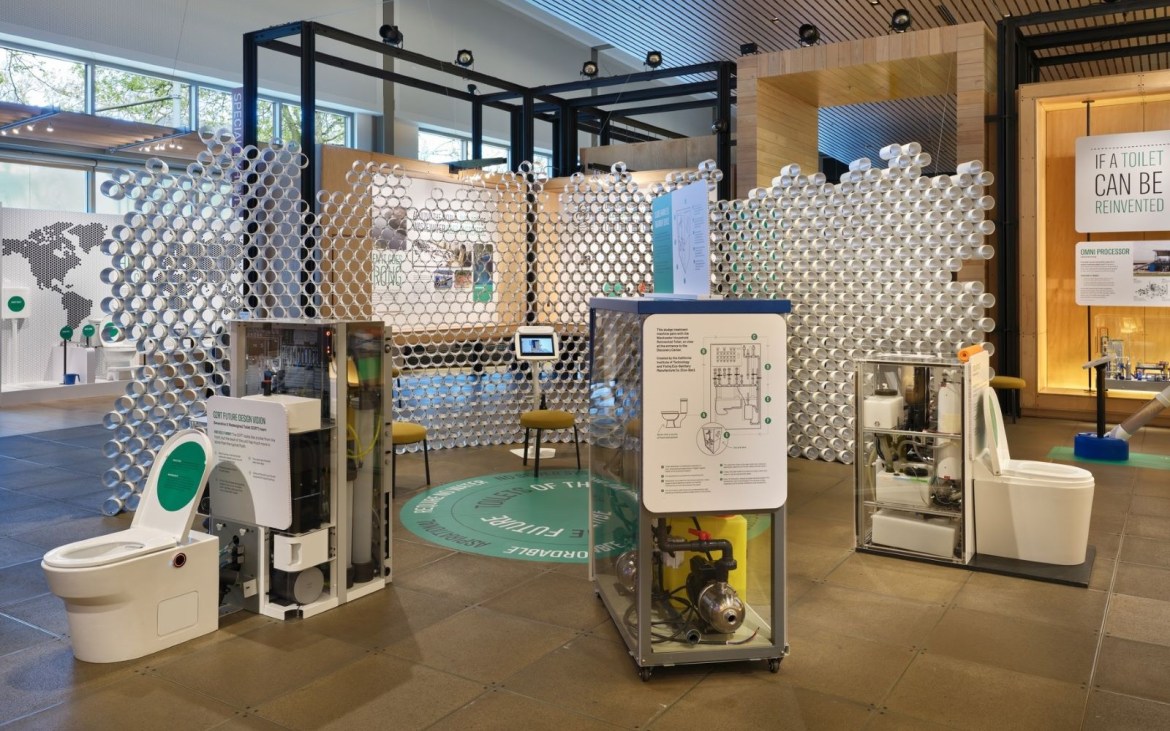

About 3.5 billion people—half of the world’s population—lack access to safe sanitation. In low- and middle-income countries especially, poor sanitation is a massive risk to human health, disrupting education and reducing economic productivity, particularly for women and girls. Meanwhile, in higher-income countries, existing sanitation systems use large volumes of clean water, which can be a scarce resource.
Climate change is an accelerating factor in both situations. Extreme weather events like droughts and floods intensify the effects of poor sanitation and overwhelm existing systems, putting more people at greater risk of contracting diseases like cholera, diarrhea, and typhoid. Growing populations and rapid urbanization also mean that traditional sanitation solutions, including sewers and septic tanks, are often not feasible or sustainable because they rely on robust infrastructure and reliable water sources.
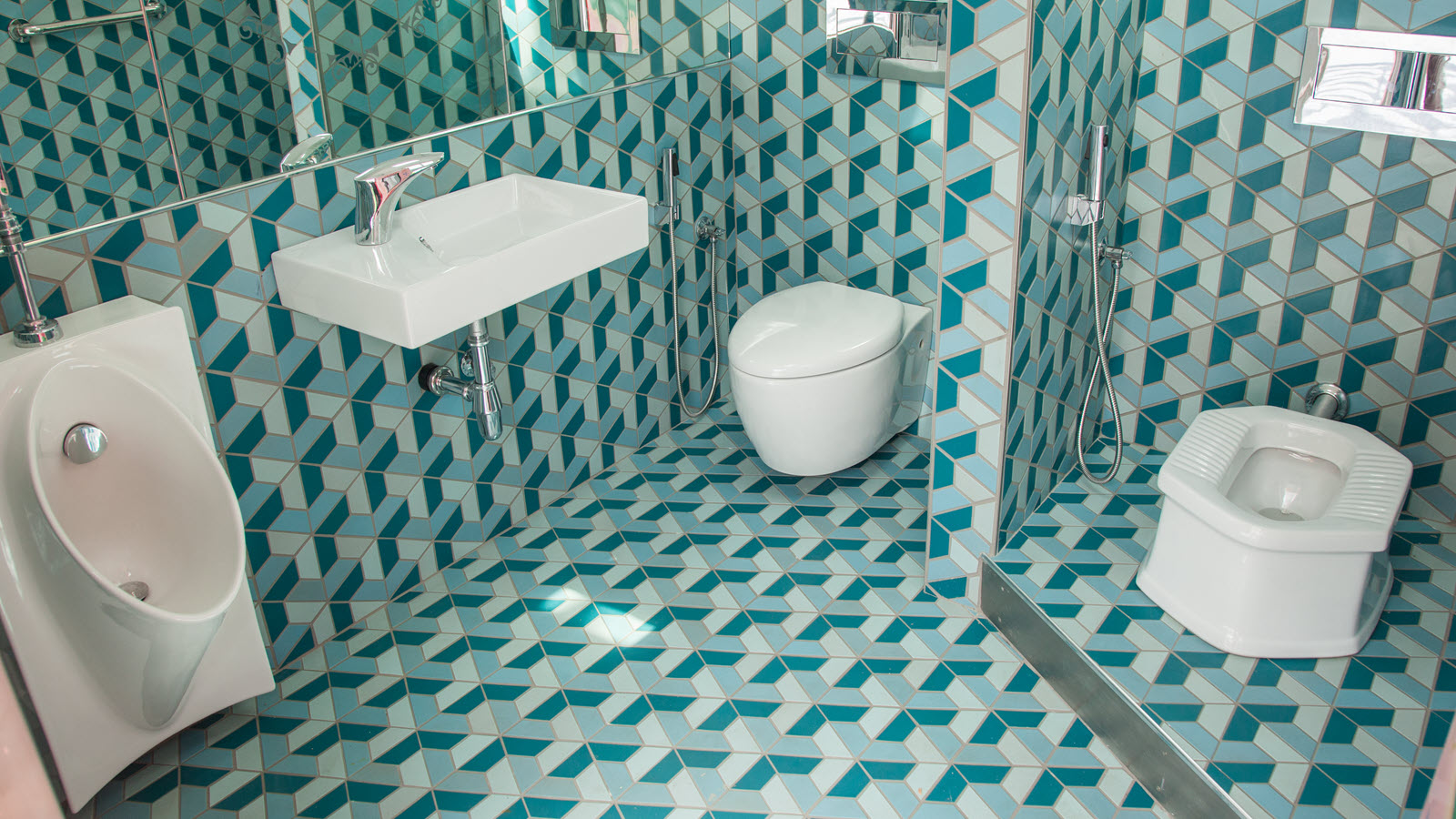
Reinvent the Toilet Challenge: A brief history
This is why our foundation, along with our partners, has been on a journey for nearly 15 years to rethink sanitation by supporting the development of reinvented toilets and other sanitation solutions that can safely meet the needs of diverse communities, are water efficient, and are more resilient to changes in the climate.
Successes and challenges in improving sanitation
Along the way, we’ve had many successes but have also faced many challenges. Our successes include seeing safe sanitation grow in international importance, as evidenced by global goals such as the United Nations Sustainable Development Goal 6.2 and national mandates like China’s Toilet Revolution and Rural Revolution and India’s Swachh Bharat Mission. We’re also seeing more resources being directed toward making sanitation systems safer and more accessible for everyone. Already, 25 innovations related to reinvented toilets that we have supported are available for licensing, production, and commercialization.
The challenges we’ve faced include the fact that every community has unique and dynamic sanitation needs that cannot be addressed with a one-size-fits-all system or service. We’ve also found that without clear public-sector mandates to provide safe sanitation services to everyone, governments, regulators, and utilities in many countries are not motivated to find or invest in new solutions.
The biggest challenge, however, is that no matter the approach or innovation, the cost of reinvented toilets and other water-efficient sanitation technologies is way too high to reach the people who need them most.
This sobering fact has led us to refine our focus. If we truly want to make a radical difference in sanitation, we have to help ensure that governments and people can afford these transformative technologies.
Take the Toilet Quiz
Can you get six out of six on the Toilet Quiz? Most people miss at least one!
Our strategy to lower the cost of reinvented toilets
To bring down the costs more quickly, we must take a proven product development approach: focus on markets that have the resources and motivation to adopt new, more expensive technologies. This, in turn, will lead to greater demand and large-scale manufacturing and ultimately drive down the product cost for all markets.
Working closely with our partners, we are pursuing a three-pronged strategy:
First, we are working to ensure that our grantmaking focuses on water-efficient reinvented toilet technologies, ensuring new sanitation solutions that can be configured to meet the needs of any household or community and can treat either all wastewater (water contaminated in any way) or only blackwater (water contaminated specifically by human waste). Examples include:
A single household toilet, either pedestal style or with a squat plate, that has a treatment system attached to the back:
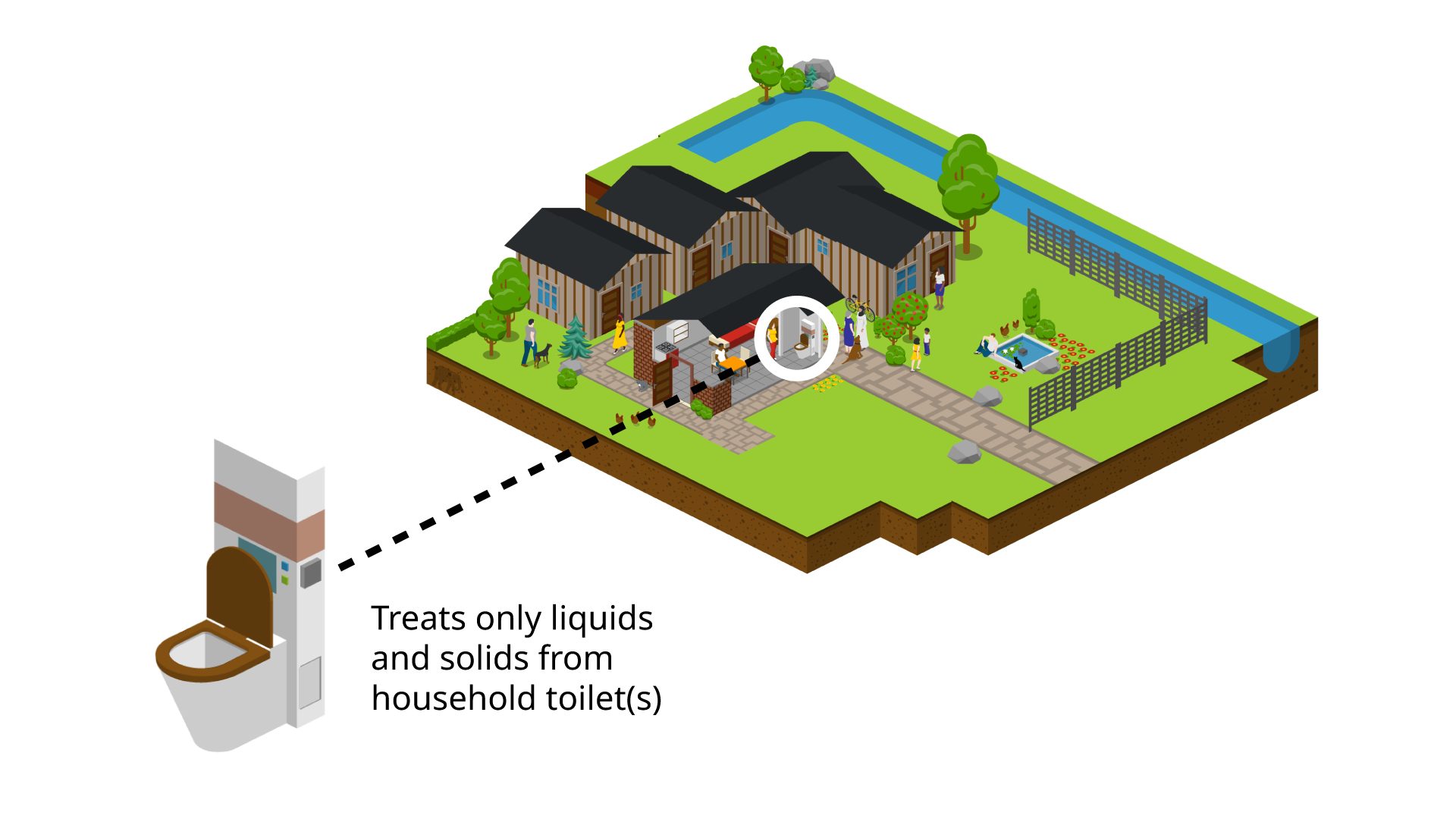
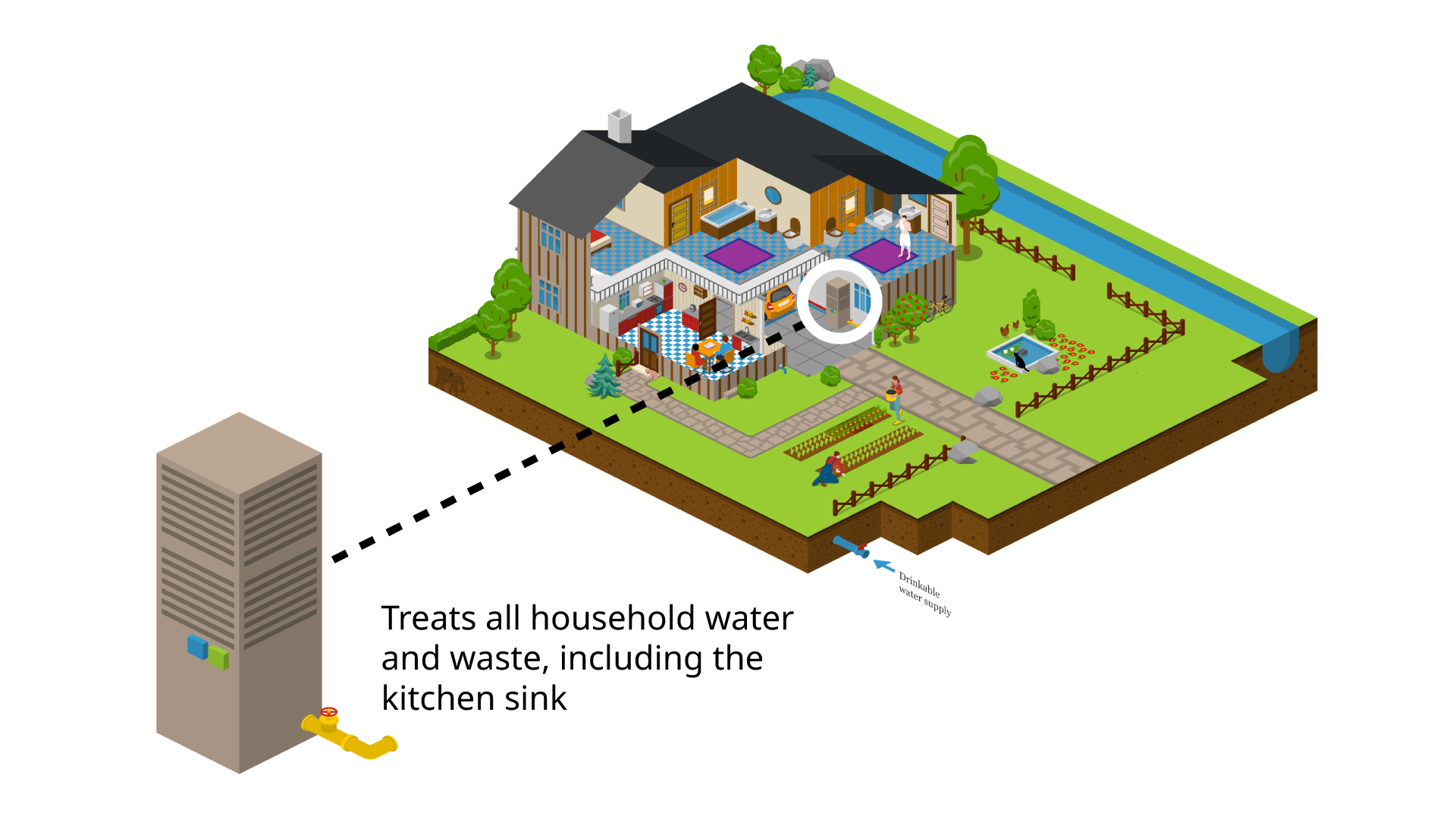
Piping the toilets, sinks, and showers in a house to a treatment system outside that takes the place of a septic tank:
Piping the toilets, sinks, and showers in an apartment building to a treatment system in the basement or other central, accessible location:
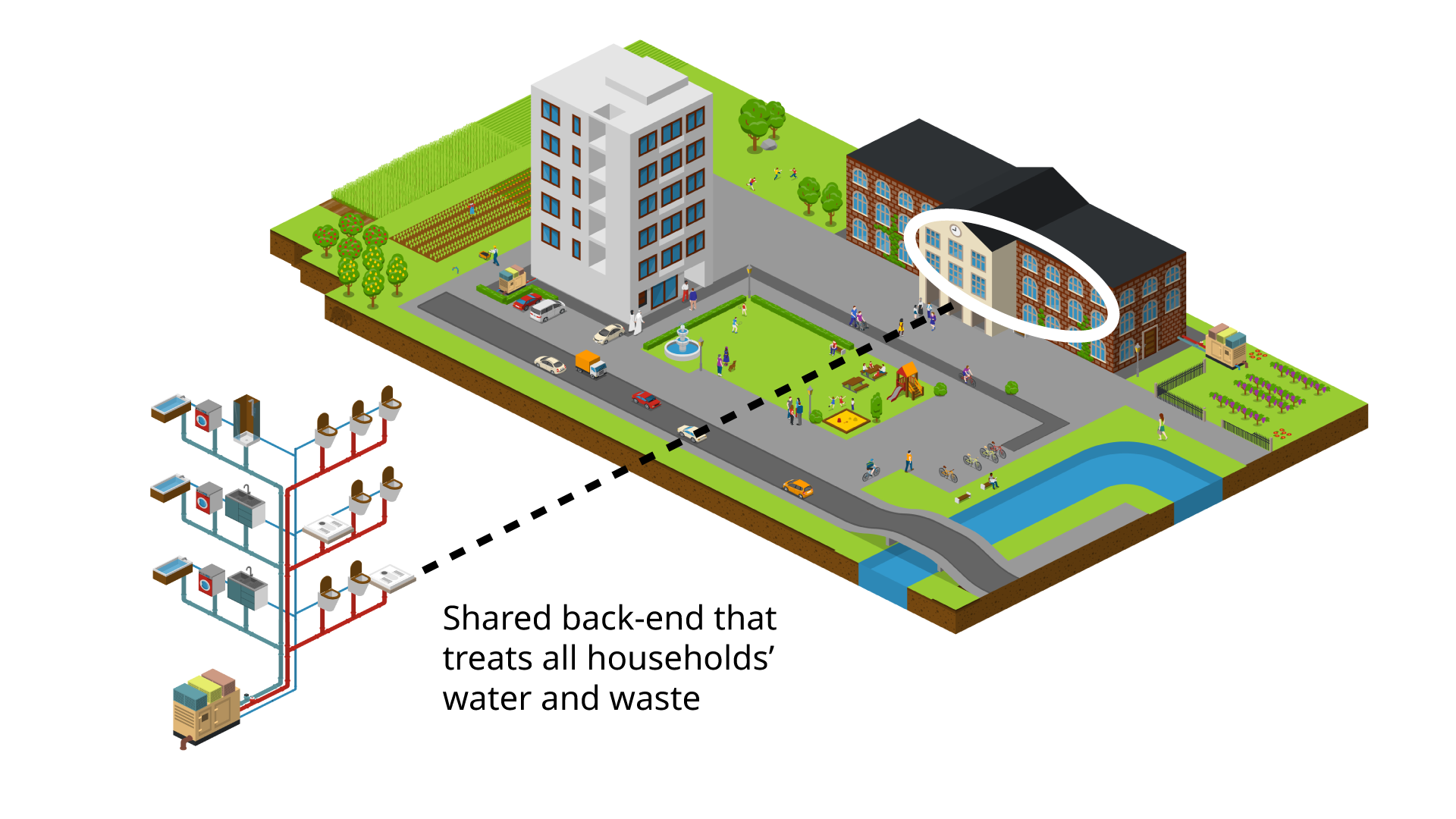
These systems will use combustion for solids processing and recycle the wastewater for flushing and nonpotable reuse. We focus on combustion for a few reasons: combustion systems kill pathogens more reliably than standard systems; it significantly reduces the volume of residual material; the biochar or ash can be disposed of safely in the garden or the trash; and the technology can be scaled down to a very small size or scaled up to serve an entire building.
Second, we plan to launch these systems in two high-income countries—the United States and France—as early adopter markets to bring down costs and foster the conditions for technology adoption. These countries are ideal markets because they offer a combination of need, regulatory support, and willingness to invest. In both countries, about one-fifth of the population uses septic tanks because a connection to a sewer system is not feasible. Septic tanks are costly and, if they are not properly maintained, can lead to pollution of underground water sources, which causes lasting environmental and economic harm. Also, the local and federal governments in both the U.S. and France provide strong regulatory environments that not only require replacement of outdated septic tanks but also encourage adoption of environmentally friendly measures.
Third, we will aim for these water-efficient sanitation systems to use the same component parts, to ensure that they are more scalable, affordable, and easily adopted by markets around the world. Working with our partners, we will identify challenges with parts—such as reliability, short lifespan, and cost implications—and then work with experts so good-quality parts can be built and manufactured more quickly and at lower cost and be used across all system configurations.
Bringing safe sanitation to all
As we pursue this ambitious strategy, we will build on the positive momentum we’re seeing around the world. We will carry out the work through our existing partnerships in China, India, and South Africa, where we are already supporting development and testing of community and household sanitation solutions. We’re already seeing strong evidence of the benefits of these solutions, from higher school attendance in South Africa to reduced infant and child mortality rates in India.
As we continue to learn from these programs, we will incorporate what we learn into our work. This will help us nurture markets for the future adoption of high-quality, affordable technologies on a broad scale.
The promise of low-cost, water-efficient reinvented toilets is profound. Accelerated progress in this area will bring the world one step closer to enabling everyone to live a healthy life and achieve their full economic and human potential.