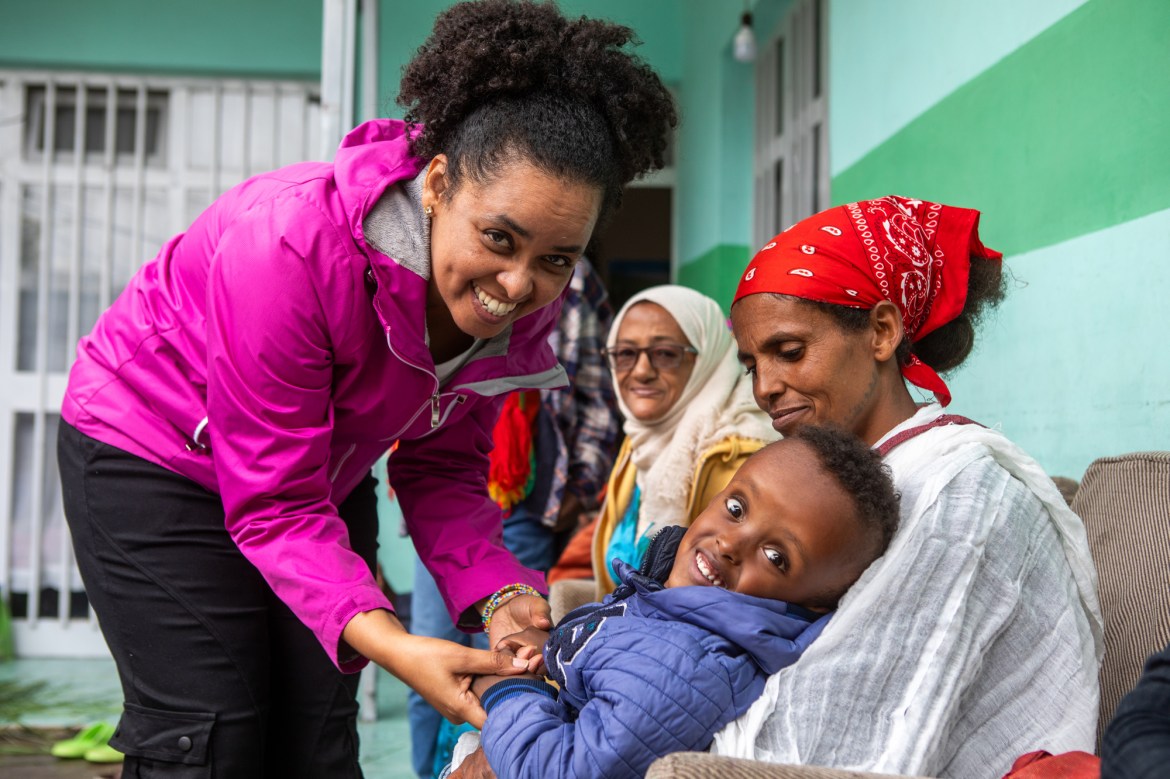
Four years ago, Bill and I took a trip to Atlanta, Georgia, to learn more about the challenges that 40 million Americans living in poverty face every day. As I was leaving a weekly coffee gathering at an affordable housing community in the Thomasville Heights neighborhood, an older woman who told me to call her Mrs. Peaches took me by the arm and said, “Now, I’ve told you a lot. What are you going to do about it?”
I didn’t have a good answer back then, but I have a better one now.
Earlier this year, the Gates Foundation significantly expanded our work on economic mobility and opportunity, investing an additional $460 million over four years. It is—and it will be—a core foundation investment in the United States, alongside our longstanding programs in education.
In the years to come, we will support dozens of organizations that are dedicated to building pathways out of poverty, especially for those contending with the often-interlocking forces of racism and sexism. Through it all, we will be guided by the voices of people like Mrs. Peaches and LaTina Denson, another woman who recently shared her story with me.
LaTina, who has a Ph.D. in urban affairs and public policy, had a stroke in 2009. When she went to apply for disability benefits from the state of Michigan, she couldn’t speak and had difficulty moving the right side of her body—but, as she told me, her mind was “on point.”
The problem was that DHS-1171, one of Michigan’s application forms for public benefits, felt like it was designed to make an already hard time even more difficult. It asked the same questions over and over, and many of those questions weren’t relevant in the first place. As she filled out the form, LaTina toggled between two reactions. As a policy expert, she knew that a 42-page application with 1,000 questions written in legalese was a really bad way to get people the help they desperately needed. As a human being, she felt demoralized.
Take question #17: “What is the date of conception of your children?” LaTina doesn’t have children. So why was she being asked this question? Nowhere did the form indicate how this information was relevant, or how it might be used.
LaTina jokes that as she worked with a speech therapist to teach herself to talk again, she practiced by complaining about the benefits application process to anyone who would listen. It wasn’t just about her. Every year, about 2.5 million Michiganders have to fill out DHS-1171 to buy food, to see a doctor when they’re sick, to find child care. Each year in the United States, millions of people go without an estimated $60 billion in safety net benefits they’re eligible to receive. One major reason why is that the application process in most states is hard to navigate.
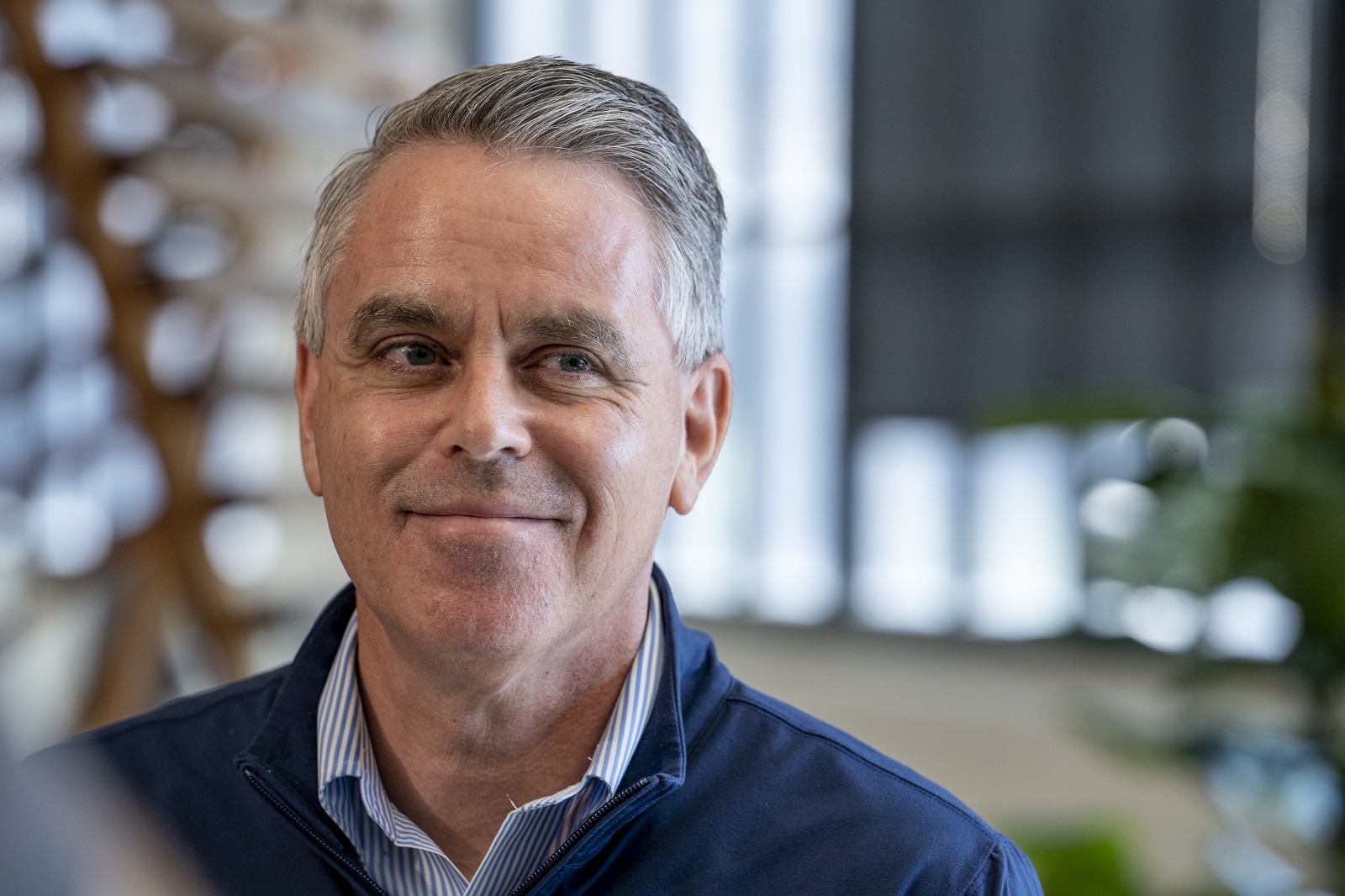
Fortunately, LaTina wasn’t the only Michigander obsessed with DHS-1171. When Michael Brennan worked at the United Way in Detroit, he carried a copy of the form everywhere he went to show people what the opposite of “human-centered” looked like. Michael soon joined the design experts Adam and Lena Selzer to found a nonprofit in Detroit that makes local government work better for people. They called it Civilla (Civil + Village), and they saw DHS-1171 as representative of everything they wanted to change.
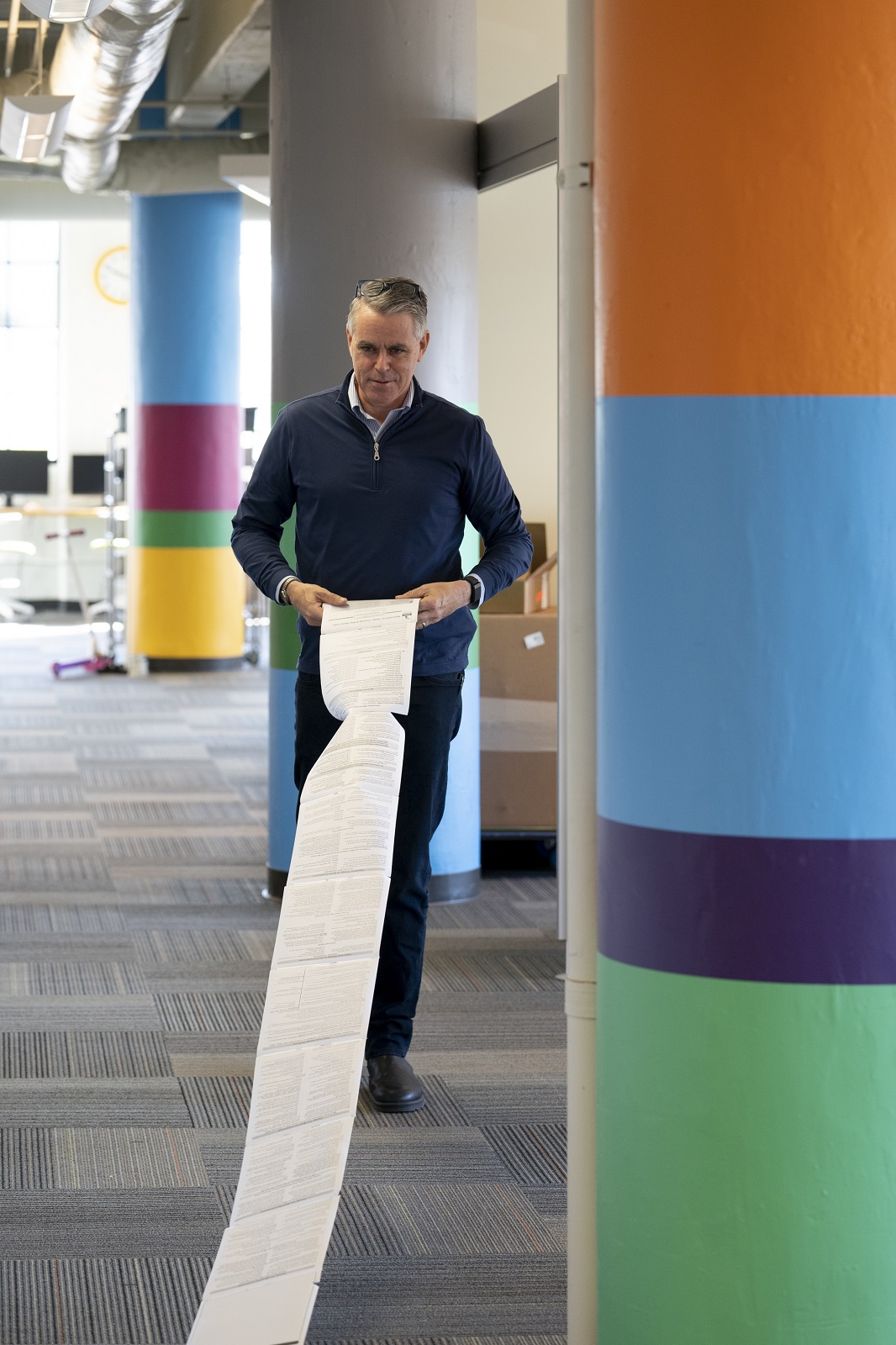
It didn’t take long for LaTina and Civilla to find each other. One of the first things Michael and Lena did as co-founders was to interview LaTina in her home. In the years since, they have talked to hundreds of people about the form—not just those who receive benefits, but many of the 5,000 government employees who manage the system day to day. Their goal was not just to revise the form but to reimagine it to meet the needs of all the people who used it.
They knew they’d need a partner at the Michigan Department of Health and Human Services (DHHS), so they approached Terry Beurer, who’d worked there for 35 years, to gauge his interest. During their conversation, they asked Terry to fill out the form. He got to page 8 before giving up. Terry told Michael and Lena that it was one of the most humbling experiences of his career, and he signed on to the project.
In 2018, after three years of prototyping, digesting 1,800 pages of federal and state regulations, prototyping again, and pilot testing, Michigan rolled out a new form. It is 80% shorter. Nine out of 10 applicants fill it out in 20 minutes or less. And it takes staff 42% less time to process.
It shows that it’s possible to build systems around people’s needs instead of forcing people to adjust to poorly designed systems.
When I talked to LaTina, Michael, Lena, and Terry, I didn’t expect to be so inspired by the story of a benefits application form, but I was—because of what the new form represents. It shows that it’s possible to build systems around people’s needs instead of forcing people to adjust to poorly designed systems. Just as important as the form itself is the collaboration that produced it. Terry, representing DHHS, could have fought against LaTina and Civilla, and vice versa; instead, they found a common purpose and worked hard together for three years to deliver better public services to the people of their state.
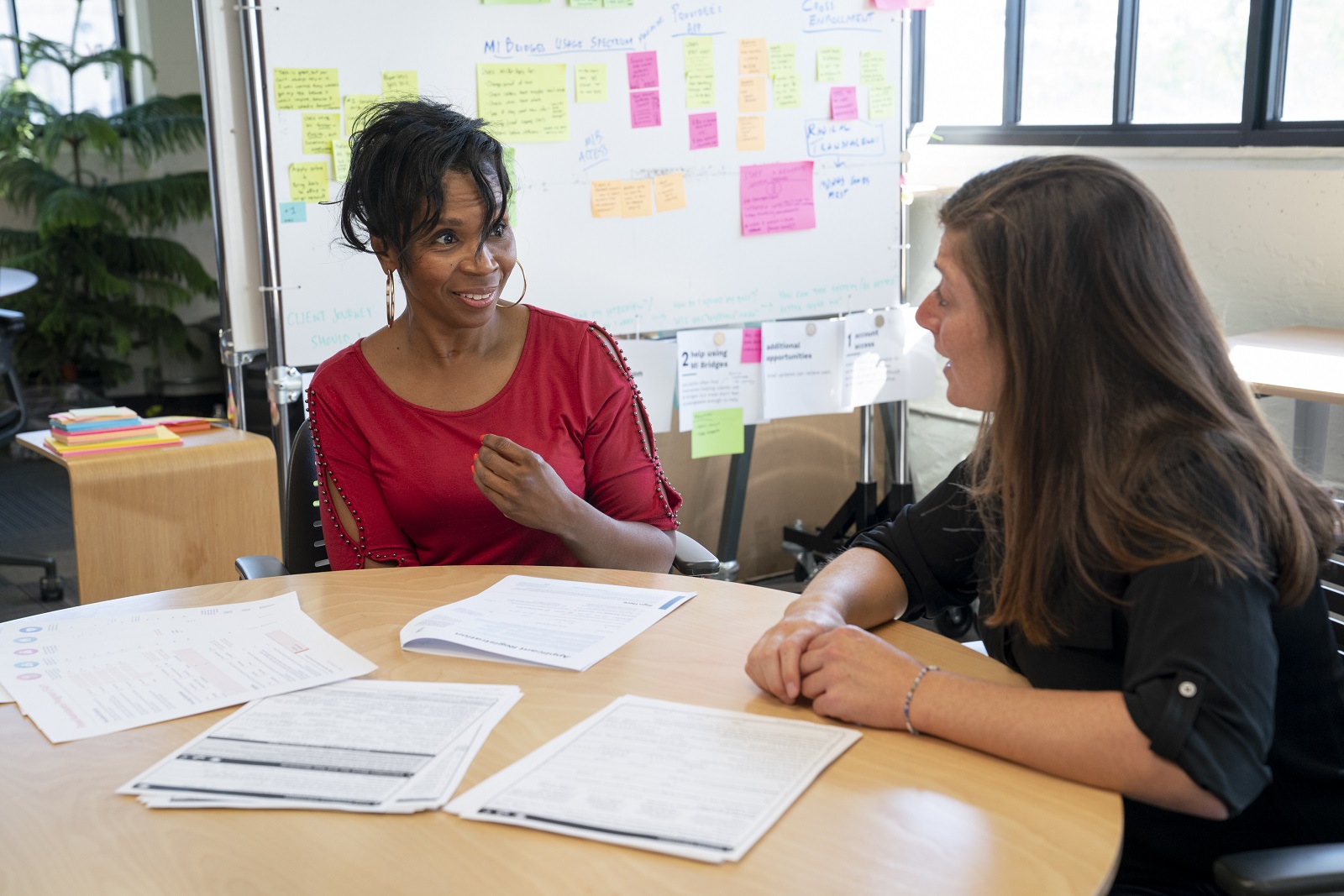
The Gates Foundation is now funding Civilla to bring this kind of work to other states. Our vision for the future is millions more people leading the lives they dream of. The way we intend to get there is by listening to people with lived experience and asking them to lead the way. Michael says that LaTina continues to be his organization’s North Star. Voices like hers and Mrs. Peaches’ will guide us, too.