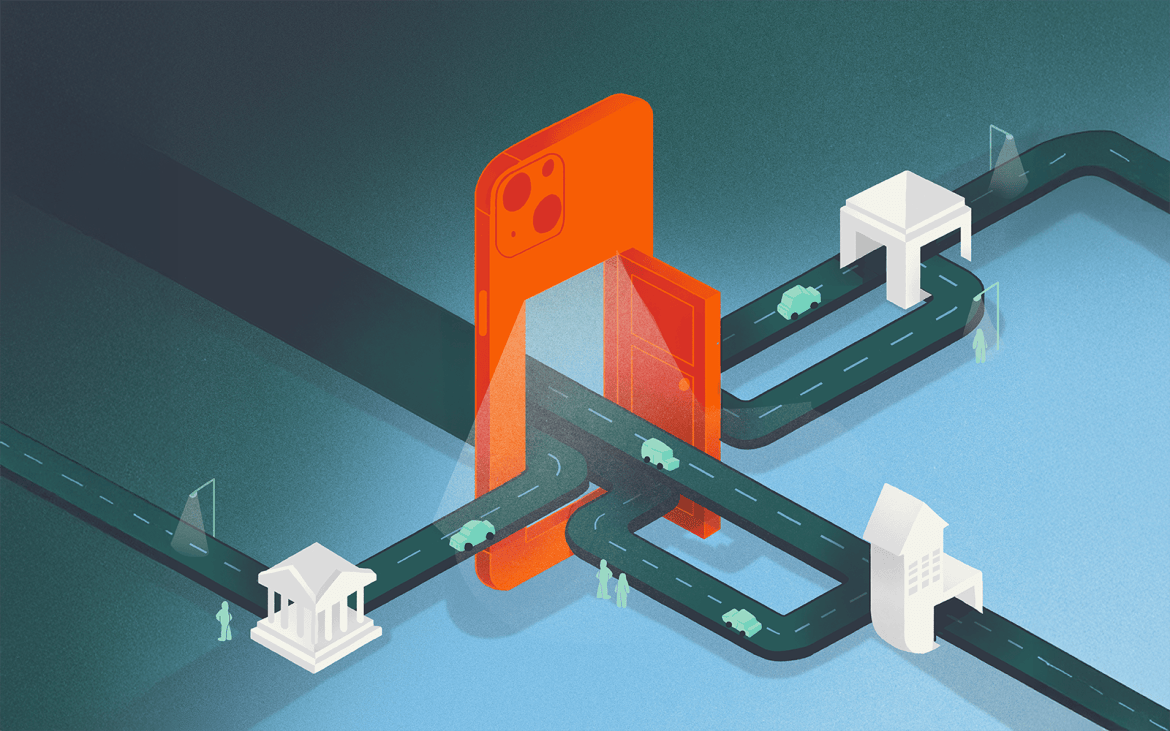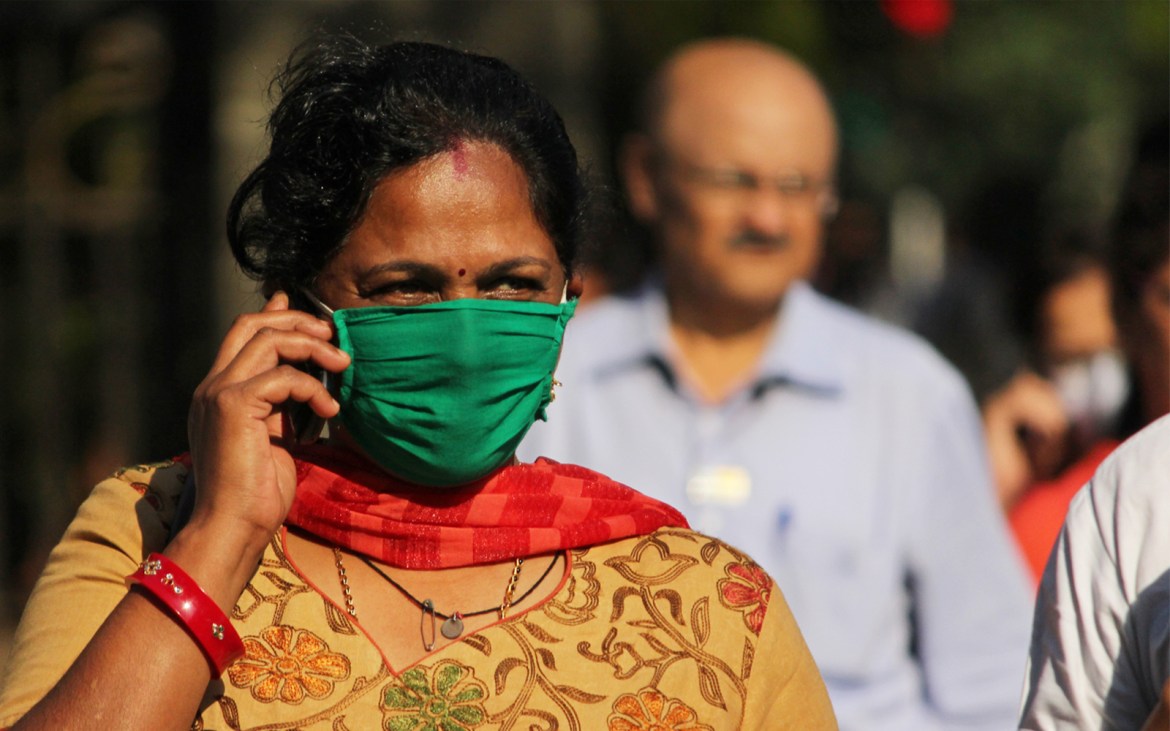
There are all sorts of ways to measure the inequality between men and women, but the most interesting may be counting who has a cellphone—and who doesn’t. The mobile gender gap is doggedly persistent, especially in low- and middle-income countries where women are 20% less likely to own a smartphone than men.
For obvious reasons, closing this gap is an alluring goal: Give a woman a phone, and immediately she’ll have at her fingertips apps to help her save money, consult a doctor, sell goods from her home-based business, or assist with farming issues. There are even apps to report domestic abuse. Of course, there is no single app that will deliver up gender equality, but it’s easy to see how this digital bundle of goods and services might provide something approximating it.
In 2016, the organization CARE tested the proposition. They began a pilot project in rural Uganda with the aim of connecting women with digital savings accounts. Most of the women in the pilot said they owned mobile phones, but almost none had formal bank accounts. Many hid their cash to avoid turning it over to their husbands. They were eager to have a tool to help them save with purpose.
And yet, CARE found that while more than half of the women applied to open the accounts, only a minority of them followed through. By the end of the study, none had made a deposit beyond the opening balance requirement. Instead, the project ran up against a problem that, in retrospect, surprised few gender equality advocates: Technology is a powerful tool, but it is not an all-powerful tool. It cannot overcome generations of bias or deep-rooted social norms.
What good does a phone do if a woman’s community—or family—never lets her use it?
The forgotten barriers
In surveys, women often cite cost and digital literacy as the biggest barriers to owning and using a phone. Phone companies are trying to address that by offering less expensive phones and helping customers understand how to use them. Still, as long as women are paid less than men or don’t control their own finances, cost will continue to be an impediment. And until girls are afforded the same access to education as boys, the literacy piece will be a challenge too.
But those weren’t the most vexing problems that CARE faced in rural Uganda. For example, the women had said they owned phones, but many didn’t own SIM cards, a requirement for most mobile banking. That’s a gender-based problem. In many countries getting a SIM requires official government identification, yet women can’t always get them. In low- and middle-income countries, 44% of women lack identification, versus 28% of men, according to the World Bank. Another problem was many women had the less expensive basic phones, not smartphones.
Yes, there are barriers in terms of affordability, in terms of literacy, but the social barriers, they’re sometimes forgotten.
Grace Majara
Senior Technical Advisor for CARE’s Global VSLA Team
There were also technology issues, including problems on the bank’s end. A lack of reliable connectivity was also an impediment.
But the women also shared other challenges going on inside their homes. Day-to-day decision-making was solely the man’s realm, the women said. Most women weren’t allowed to leave the house without their husband’s permission. Many were required to turn their earnings over to their husband, who spent the money as he wanted. Here as elsewhere, evidence shows men are less likely to spend household income on family needs such as food or schooling.
“Yes, there are barriers in terms of affordability, in terms of literacy,” said Grace Majara, senior technical advisor for CARE’s Global Village Savings and Loan Association Team. “But the social barriers, they’re sometimes forgotten.
“Those are the real barriers that limit women in terms of benefitting from using a phone.”
GSMA Connected Women, a global effort to reduce the gender gap in mobile internet and mobile money services backed by the cell phone industry and other funders, came to a similar conclusion in an August 2020 study comparing women’s and men’s mobile engagement in 31 low- and middle-income countries. While controlling for socioeconomic and demographic factors, they found that men werestill 4-6% more likely to own a smartphone and to use mobile internet than women.
“Our hypothesis is that it’s because of social norms,” said Claire Sibthorpe at GSMA.
Rather than help narrow inequality, then, the nagging gender divide in mobile use is more like a reflection of gender and social norms in a given community.
When a woman uses her phone, she may face questioning from gatekeepers—maybe her husband, maybe her parents. Some face constant suspicion around who they’re communicating with. In some communities, women use their phone only in secret.
When women begin to do things that are outside the narrow bounds men draw around them, there is a great fear—and some very real examples—that a phone can exacerbate gender-based violence.
While the issues faced by women in rural Uganda aren’t necessarily found everywhere, it’s clear that a goal of empowering women needs to consider these social forces of disempowerment. Putting a phone in her hand isn’t going to erase that.
“We really have to understand the woman’s experience and not be naïve to some of these challenges,” said Jamie Zimmerman, the gender lead on the foundation’s Financial Services for the Poor team. “We want to ensure our great intentions to use the mobile phone to help empower her don’t backfire.”
Subscribe to The Optimist to get weekly updates on the latest in global health, gender equality, education, and more.
By submitting your email to subscribe, you agree to the Gates Foundation’s Privacy & Cookies Notice.
Tense conversations
After the Uganda pilot, CARE conducted a follow-up project that was larger and explored some new ideas. Overall, the women once again did not accumulate meaningful savings. (That wasn’t unexpected here. Some were saving for school tuition, which would drain the account.)
Participants were divided into groups. One was offered digital bank accounts. Another was offered a digital bank account plus family financial counseling. There was also a control.
The counseling involved dialogues between husband, wife, other household decision makers, and a trainer, aimed at fostering cooperation to benefit the whole family. They talked about setting household goals together, healthy decision making, providing positivesupport, and how gender norms affect opportunities. The household finances were scrutinized. In many cases, women learned for the first time what their husbands were earning—and how much they spent on their own socializing.
The conversations could be tense. In a few cases, the husbands became visibly angry. One woman reported her husband had become “cruel,” refusing to buy her food and making her sleep outside.
But through a series of survey questions at the beginning and the end, the researchers found that overall, the conversations seem to have served a larger purpose.
The questions tracked the women’s feelings of psychological distress, as well as feelings about their own “mastery” in guiding their destinies—two feelings, CARE reasoned, that can reflect a woman’s sense of empowerment. Many said their husbands were more likely to help pay for the children’s needs after the household counseling. They were able to ask questions and felt like they were being treated with more respect. That made them feel more empowered.
While the mobile banking was viewed positively, the researchers concluded the household dialogues were “the mover of change.”
Focus on the mobile network—and the social one
The challenges posed by social and gender norms won’t come as a surprise to anyone who works in development. In Uganda, in India, in Pakistan and beyond, people are already working to mitigate them.
A number of groups are working with men and boys in low- and middle-income countries to talk through their assumptions about gender equity and how women’s equality benefits everyone.
“When we think about gender equality,” noted Caren Grown, global director for Gender at the World Bank, “I never forget the male part of this: What’s in it for him? We have to make the point that this is not necessarily a zero-sum game.”
There’s also a push to get more women government identification. Groups in South Asia are working to boost the number of mobile money agents who are women. In places where it’s not considered acceptable for a woman to have a conversation with a man, this could help connect more women with formal banking.
“It’s not just the phone in the hand that’s the barrier. There are lots of interconnected issues, including those social norms, that we also need to urgently address,” the foundation’s Zimmerman said.
Taking gender into account on any new or ongoing project is crucial says the World Bank’s Grown. In the short term, she said, “some of the communications campaigns that we do around these issues have to focus on why mobile phones in the hands of women and girls is really important. The pandemic is exposing these arguments.” COVID-19 has exacerbated inequality, deepening poverty. In an era where 1.7 billion people, more than half of them women, are excluded from the formal financial sector, change is vital. When women don’t have phones, families can fall even farther behind.
Closing the gender gap in cellphones isn’t simply the task of mobile operators or nongovernmental organizations, Grown said. Governments need to address gender imbalanced regulations and the enabling environment. Institutions such as banks need to focus on women’s needs.
“It’s not just about giving women a phone, but figuring out all the complementary services or information that has to go with that.” Grown said.
Until then, mobile phones will never work like magic wands, disappearing bias and discrimination with the tap of an icon. Instead, they will continue function as they do now: Like powerful mirrors, reflecting how a society values the woman holding the phone in her hands.