
Maternal mortality: A preventable crisis
We can save the lives of more mothers around the world
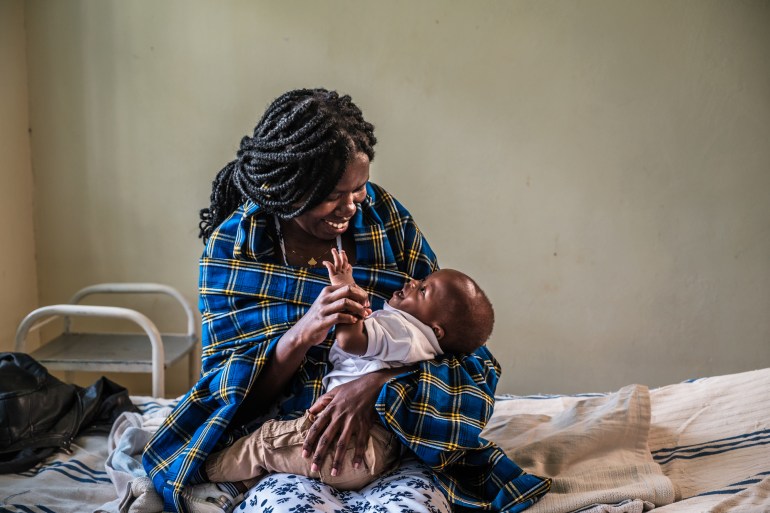
Each year, nearly 300,000 women die from maternal health complications. That’s one life lost every two minutes due to pregnancy or childbirth.
But it doesn’t have to be that way.
Maternal mortality is preventable. While medical emergencies like dangerously high blood pressure before labor or severe bleeding after birth can be deadly, they don’t have to be.
Effective treatments and preventative measures exist. But too many maternal mortality solutions are still out of reach for far too many women, especially those in low- and middle-income countries.
Scaling global access to healthcare facilities, trained providers, and essential medicines could save 2 million mothers and babies by 2030 and 6.4 million by 2040. That’s cause for hope.
Essential medicines could save 2 million mothers and babies by 2030 and 6.4 million by 2040. That’s cause for hope.
Maternal mortality by the numbers
The global maternal mortality ratio (MMR) is a key indicator of whether women can access quality care before, during, and after childbirth. When providers are able to catch and treat issues like high blood pressure, bleeding, infection, anemia, and obstructed labor before they become fatal, the MMR goes down. If that care is missing or delayed, fewer women are saved—and the MMR goes up.
To calculate the MMR, we measure the number of women who die from pregnancy or childbirth-related causes for every 100,000 live births. This makes it possible to compare maternal mortality across countries, even when the number of births varies widely from place to place. Understanding the MMR also helps us understand how much progress has been made and how much work remains.
In 2015, the United Nations’ Sustainable Development Goals set a target MMR of fewer than 70 deaths per 100,000 live births by 2030. To get to that target, countries need to consistently reduce maternal mortality every single year. But global improvements have slowed over the past few years. At the current pace, the world is projected to reach approximately 177 maternal deaths per 100,000 live births by 2030—two and a half times higher than the target.
As with many global health challenges, the burden of maternal mortality is not shared equally. Nearly all preventable maternal deaths occur in low- and middle-income countries, with two-thirds of maternal and newborn deaths concentrated in Sub-Saharan Africa and nearly one-fifth in South Asia.
But maternal mortality is not only rising in low-resource settings. In the United States, the number of women who died within a year after pregnancy more than doubled between 1999 and 2019, with the highest death rates among Black women. The greatest increases in maternal mortality rates over that same period of time were seen among American Indian and Alaska Native women. These disparities further highlight that maternal mortality is shaped not only by whether lifesaving interventions exist, but by whether every woman can access timely, high-quality care when she needs it.
40% of
maternal deaths in 2023 were caused by severe bleeding and pregnancy-related high blood pressure.
The leading causes of maternal mortality
The top causes of maternal mortality are well known. The leading cause of maternal mortality worldwide is postpartum hemorrhage (PPH), or severe bleeding after childbirth. It affects an estimated 27 million women every year and kills about 43,000 women. In 2023, severe bleeding and pregnancy-related high blood pressure, including conditions such as preeclampsia and eclampsia, together accounted for more than 40% of maternal deaths globally.
Pregnancy-related infections are also among the leading causes of maternal death. In the United States, for example, sepsis accounts for 23% of maternal deaths. When infections progress to sepsis, they can become life-threatening, especially when clean delivery conditions, timely antibiotics, and emergency care are not available.
Newborn survival is directly linked to maternal survival
Preventable maternal deaths put newborns at risk. More than 6,300 babies die every day from preventable pregnancy and childbirth complications, including preterm birth, infection, respiratory distress, and poor nutrition. Additionally, nearly 2 million babies are stillborn each year, with more than 40% of those losses happening during labor. If a mother dies during childbirth, her baby’s chance of reaching their first birthday drops below 37%. When we save more mothers, we save more newborns too.
37%
Chance of a baby reaching its first birthday if the mother dies during childbirth
Tools that advance maternal and infant survival
In maternal health, complications can escalate quickly. Severe bleeding, infection, high blood pressure, and obstructed labor can become life-threatening in a matter of hours or even minutes. The sooner risks are identified, the sooner health workers can act—whether that means providing treatment, arranging emergency transport, making a referral, or preparing for a safer delivery.
Some of the most promising solutions for reducing maternal mortality are simple, low-cost tools and practices that help health workers identify danger earlier, respond faster, and protect mothers and babies before complications become fatal. These include such medicines and innovations as:
- Azithromycin: Administered during labor, this common antibiotic can reduce the risk of maternal infection and sepsis. Its promise lies partly in practicality. It is already widely used, relatively simple to administer, and can be incorporated into maternal care without requiring highly specialized infrastructure. In a trial in Sub-Saharan Africa, azithromycin given during labor reduced maternal sepsis cases by one-third.
- Magnesium sulfate: Used to prevent and treat seizures related to preeclampsia and eclampsia, this medication, like many maternal mortality solutions, relies on the basics: trained providers who know when to use it, reliable supplies, and health facilities that can identify high blood pressure before it becomes a crisis.
- IV iron: Anemia, which can multiply the danger of postpartum bleeding, affects as many as 35.5% of pregnant women globally, and rates can be much higher in parts of South Asia. This one-time, 15-minute intravenous infusion of iron offers a faster way to treat moderate or severe anemia during pregnancy. Instead of relying only on daily iron pills, which can take time and may be difficult to tolerate, IV iron can help replenish iron levels more quickly before delivery.
- Postpartum hemorrhage (PPH) drape: In addition to readily available medicines, many affordable innovations can be used effectively in low-resource settings. One simple but highly effective tool is the PPH drape—a low-cost device that helps providers detect and treat severe bleeding after childbirth. The drape is essentially a plastic sheet that collects and measures blood, so health workers can accurately determine when to begin treatment rather than relying on guesswork. The drape is part of the E-MOTIVE protocol, a larger, revolutionary combination of readily available interventions used for early detection and treatment of PPH that can reduce onset by 60%.
- AI-enabled ultrasounds: In many low-resource settings, ultrasound machines and specialists trained to use them are limited, which means serious pregnancy risks can go undetected. AI-enabled ultrasound devices are portable and affordable at about 5% of the cost of most larger ultrasound machines. The device’s AI capabilities and simplified user interface also make it straightforward to operate, so health workers can identify risks like fetal growth concerns and refer women for higher-level care when needed.
- Multiple micronutrient supplements (MMS): Containing 15 vitamins and minerals, MMS is a comprehensive prenatal vitamin taken daily to support a healthy pregnancy, prevent anemia, and reduce the risk of newborns being born too soon, too small, or dying in their first six months. Reaching 260 million women with MMS by 2030 could save 600,000 lives, improve birth outcomes for 5 million babies, and prevent anemia in 15 million pregnant women.
Reducing maternal mortality through integrated systems of newborn and maternal health
Maternal mortality solutions take many shapes. Some are medicines and tools, others are simply expanded ways of organizing care.
Expanding the role of midwives is one of the most effective system-level solutions available. Midwives play a vital role across the continuum of care by broadening access, raising quality standards, and reducing unnecessary medical procedures. If scaled globally, midwife-led care could help prevent roughly two-thirds of all maternal and newborn fatalities.
Similarly, in group antenatal care (G-ANC), pregnant women receive essential prenatal care from trained providers in a group setting with other women at similar stages of pregnancy. Within a community, women can learn about nutrition, birth planning, breastfeeding, and newborn care, ask questions in a supportive environment, and hear from others navigating similar experiences. G-ANC can also help healthcare workers reach more women. Its shared experience has been shown to make prenatal care more consistent and useful, and also build trust. When women have regular contact with providers throughout their pregnancy, they may be more likely to recognize early warning signs of potential complications, seek care early, and schedule follow-up appointments.
Maternal health cannot be separated from newborn health; solutions for one must inherently include the other.
Babies born too early or too small are especially vulnerable because they can lose body heat quickly, making it harder to breathe regularly, nurse, and maintain normal body functions. Thermal care helps protect newborns in those first critical moments through simple steps like drying, wrapping, and skin-to-skin contact. These practices help babies stay warm while also supporting early bonding and breastfeeding. Like many maternal and newborn health solutions, thermal care is not complex or expensive.
For newborns who need extra help breathing, continuous positive airway pressure, or CPAP, can be lifesaving. This non-invasive respiratory support helps a newborn’s lungs function more effectively by keeping the baby’s airways open. CPAP can also reduce the need for mechanical ventilation and emergency transfers to larger hospitals with specialized newborn units, making it possible for preterm babies with respiratory distress to receive quality care closer to home.
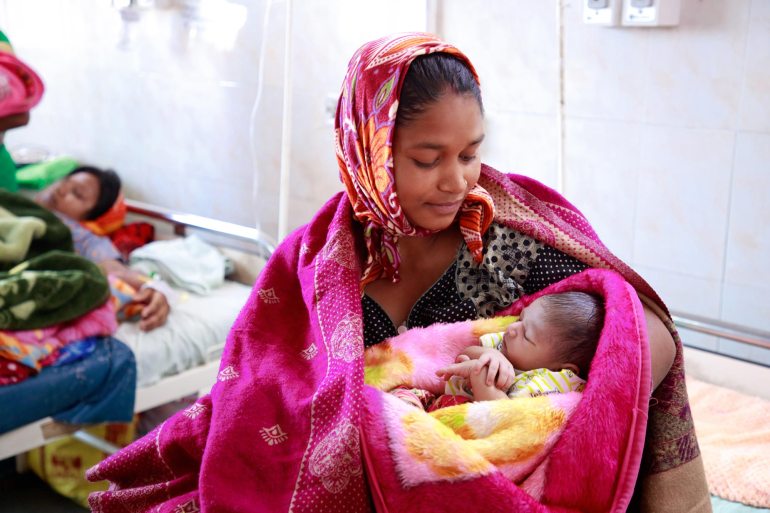
Goalkeepers 2023 Report
Imagine a world where innovations could save the lives of 2 million more mothers and babies
Published Oct 2023
What happens when maternal healthcare systems get stronger
Tanzania is a recent example of the level of progress that is possible when government and health systems work together toward a common goal. Over the past two decades, the country reduced barriers to health services by building nearly 2,000 new health facilities, putting essential care closer to women in need. Through the m-Mama initiative, an emergency transportation service specifically for pregnant women and new mothers, Tanzania helped reduce delays between the first warning signs of an emergency and critical care at a health facility. Because maternal complications can become fatal quickly, shortening the time and distance from an expecting mother to the doctors, medicines, and care a mother needs can be the difference between life and death.
Tanzania’s progress has also extended beyond childbirth. The country has invested in nutrition programs that address stunting, malnutrition, and micronutrient deficiencies, helping improve health for mothers, newborns, and young children. Those efforts, combined with expanded health facilities and stronger emergency transport, have helped more women and children get care earlier and receive support when complications arise. According to the country’s 2022-2023 Demographic and Health Survey, Tanzania reduced its maternal mortality ratio by 80% within one decade.1
Kenya offers a focused example of how one low-cost tool, paired with the right training and protocol, can help health workers keep an emergency from becoming a tragedy. The E-MOTIVE protocol, which pairs early detection with a coordinated multi-step treatment, gives health workers a clearer way to recognize excessive bleeding and a structured set of next steps, from uterine massage and medicines to IV fluids and examination.
Providers across nearly half of Kenya’s counties have been trained on this protocol, helping the approach move beyond a single facility or pilot program. Severe bleeding from postpartum hemorrhage fell by 60% in clinics that used E-MOTIVE.
Across Africa, Gates Philanthropy Partners and the Gates Foundation have also supported HATCH Technologies, a nonprofit that distributes practical equipment for maternal and newborn care. HATCH ensures that tools such as CPAP devices for preterm newborns with respiratory distress and point-of-care ultrasounds get to providers so that they can detect serious pregnancy complications earlier. HATCH pairs equipment distribution with clinical training and technical support for health workers in Kenya, Nigeria, Ethiopia, Rwanda, Uganda, and Tanzania.
Combatting maternal mortality in developing countries
Proven tools and interventions save lives and can make a difference only if they continue to reach the patients who need them most. Through the Gates Foundation Maternal, Newborn, Child Nutrition & Health (MNCNH) program, we support the development and delivery of practical tools that can help lower the maternal mortality rate. The program focuses on women and newborns in low- and middle-income countries, where maternal and child deaths remain highest and where simple, affordable solutions can have a strong impact.
That work has led to a pipeline of 16 maternal and newborn health products, nine of which are ready or nearly ready for market. These include innovations designed to address potentially fatal conditions such as malnutrition, anemia, postpartum hemorrhage, infection, and preterm birth, as well as newborn health.
Developing a tool is only the first step toward reducing maternal mortality rates in developing countries. To save mothers and babies, that tool must reach clinics, health workers, and patients. That means countries need reliable funding, strong supply chains, trained providers, and clear plans for how new tools will be used in everyday care.
Our foundation bridges the gap between development and delivery by partnering with governments, professional associations, multilateral organizations, civil society, and the private sector to help countries implement maternal mortality solutions, strengthen the systems that deliver them, and make maternal health care safer for more women.
The way to end preventable maternal deaths
Progress toward reducing the global maternal mortality rate has slowed because lifesaving care still does not reliably reach the women most at risk. Structural gaps—from underfunded primary health systems and healthcare worker shortages to fragile supply chains and uneven access to prenatal and postnatal care—all make treatable complications more likely to become fatal.
Still, the evidence points to real cause for hope. We have the tools to reduce the global maternal mortality rate. Now, we need stronger systems to deliver them to women in need. By investing in stronger primary healthcare systems and following the proven blueprints of nations like Tanzania and Kenya, governments and healthcare systems can work together to ensure a healthy, thriving future for mothers and babies all over the world.
Latest articles
-
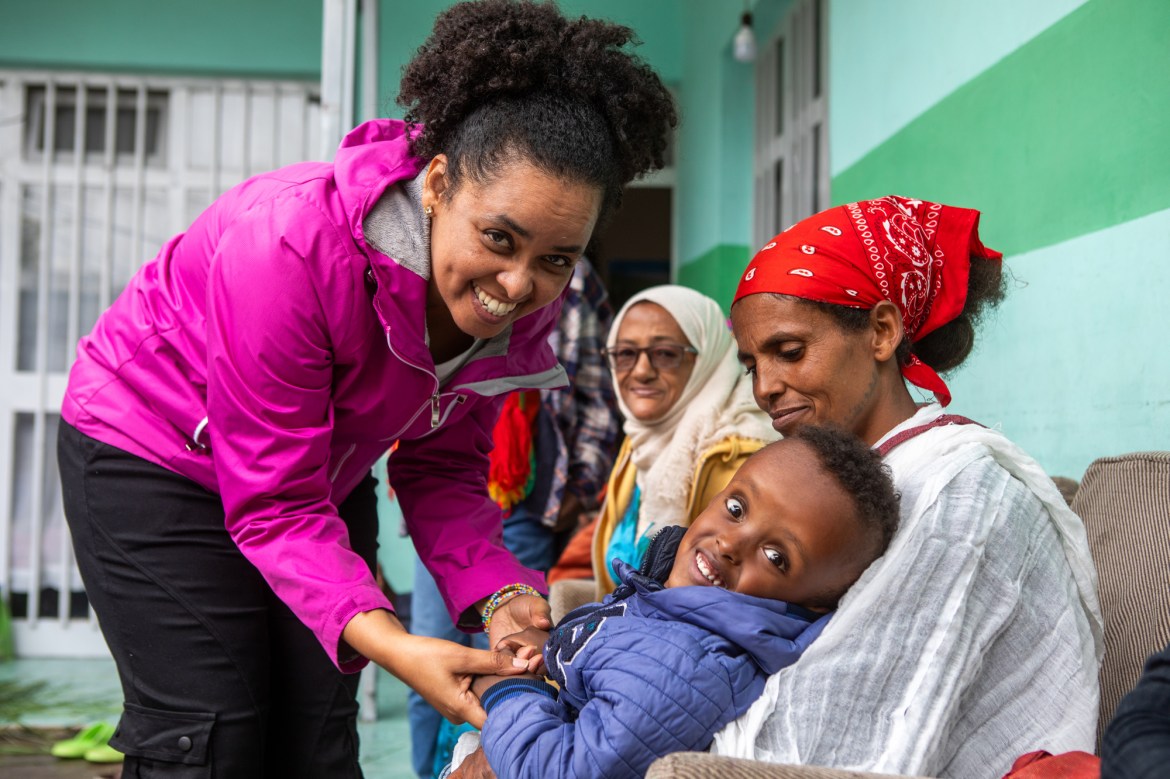
A mother’s mission to prevent spina bifida in Ethiopia
From hospital corridors to policy discussions, an Ethiopian mother is making families’ voices heard and advancing efforts to prevent birth defects.
-

How POCUS is changing pregnancy care in Kenya
The partnerships making it possible A handheld device may be small, but getting it into the hands of a trained health worker takes a much larger partnership. This work is…
-
MTN Group Foundation and Gates Foundation Launch First-of-Its-Kind Maternal Health Multiplier Platform to Expand Access to AI-enabled Maternal Health Care in Nigeria
Partnership aims to help 500,000 women in Nigeria access higher-quality maternal health care by 2030 NEW YORK (September 22, 2026) — MTN Group Foundation (MTN) and the Gates Foundation today…
Get the Optimist newsletter
Join 300,000 readers who see the world differently. Subscribe for hopeful stories about the people and partnerships improving lives around the world — every other week.
By submitting your email to subscribe, you agree to the Gates Foundation’s
Privacy & Cookies Notice.