In the battle to fight the spread of disease, syringes may be the unsung heroes.
These devices, which cost just a few cents each, are the delivery vehicle for critical immunizations against diseases including polio and measles. But in low-resource settings, syringes are sometimes reused, putting people at risk of infection with blood-borne pathogens such as HIV and hepatitis B.
Enter early-activation auto-disable syringes, which prevent reuse after the syringe’s plunger is pushed any amount, thereby eliminating the risk of spreading disease. But 80% of these syringes are made in Asia, and they can take months to be shipped by sea to Africa.
Today, Gavi, the Vaccine Alliance, is working with governments and other partners, using Revital’s syringes across the continent to help ensure more children receive equitable access to life-saving vaccines.
A few years ago, the COVID-19 pandemic laid bare the dangers of Africa’s reliance on a vulnerable global supply chain. The closing of borders led to an undersupply of tens of millions of syringes across the continent. Routine childhood immunizations were delayed, and COVID-19 vaccination programs were hampered by long syringe transport times.
As Revital scales up production of the syringes, it is also offering Kenyan women new job opportunities who have found major ways to contribute to their homes, families, and communities.
“Women are the ones who feed their family.”
Lorraine Kai
One day after Lorraine Kai landed in Kenya with her infant son in her arms, the country went on lockdown. It was March 2020, and Lorraine had left Hyderabad, India, to move back to her home country. She had been studying in India for a master’s degree in business administration, after earning an undergraduate degree in psychology. With her infant son, she could no longer finish her MBA, but her empathy and love for psychology remained. “I’m this emotional person. I’m the firstborn of three, and I saw the softness in my dad. He always used to help people. I got it from him.”
Back in Kenya, the only time Lorraine left the house was to bring her newborn to the hospital for vaccinations, and she was always anxious that she or one of her family members could get COVID-19. Fortunately, Kenya had no shortage of face masks, so she could always wear one on those trips. When she learned that a Kenyan medical manufacturing device company called Revital was making masks that were helping to prevent the spread of the virus, she felt proud.
In 2021, Lorraine applied for a job at Revital and was hired as a human resources assistant, a role that draws on her psychology background as she works to understand the needs and motivations of her colleagues and support them through hard times. She is keen to hire local women, many of whom, like her, are mothers caring for children alone. “Women are the ones who feed their family,” she says.
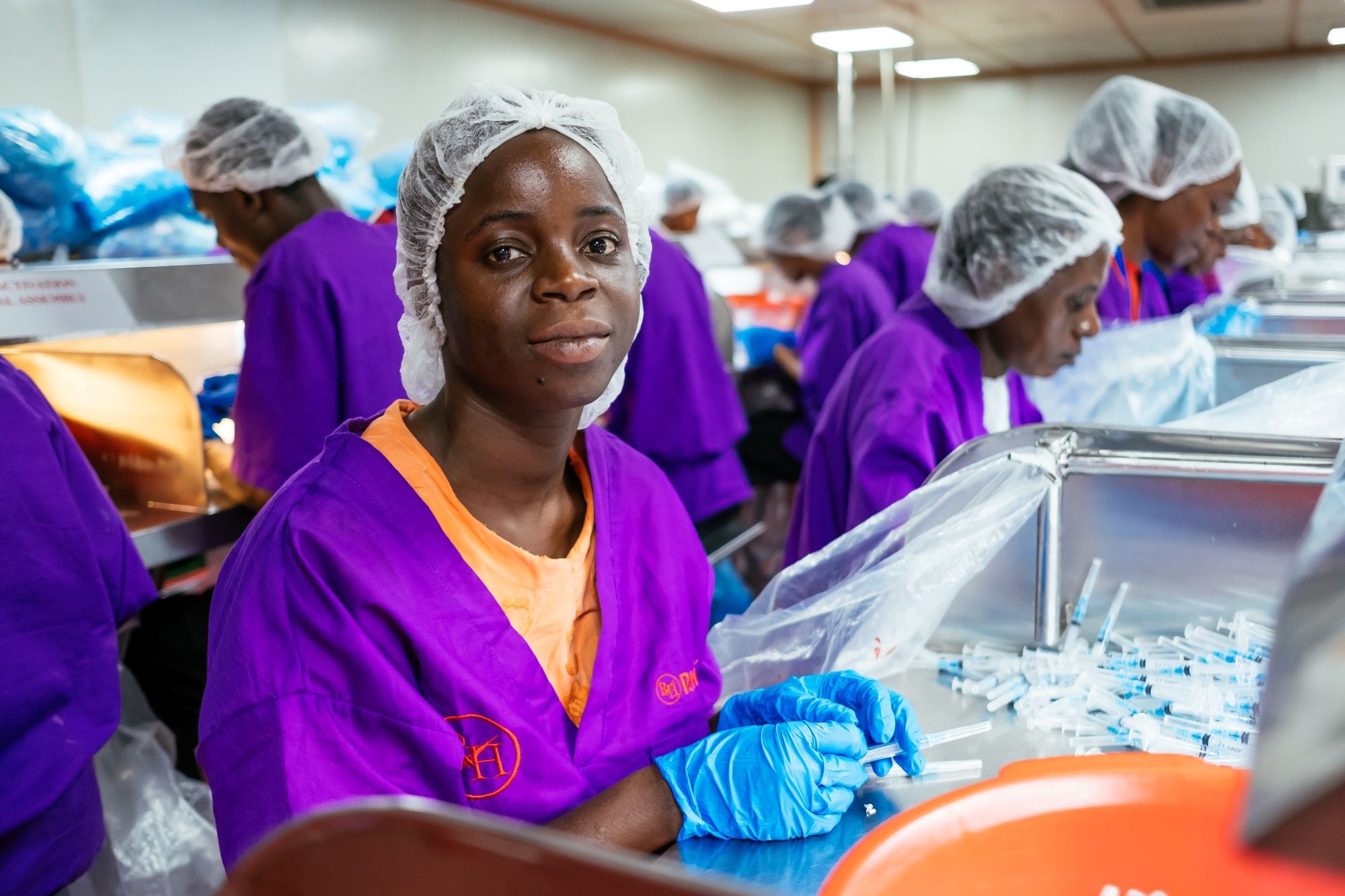
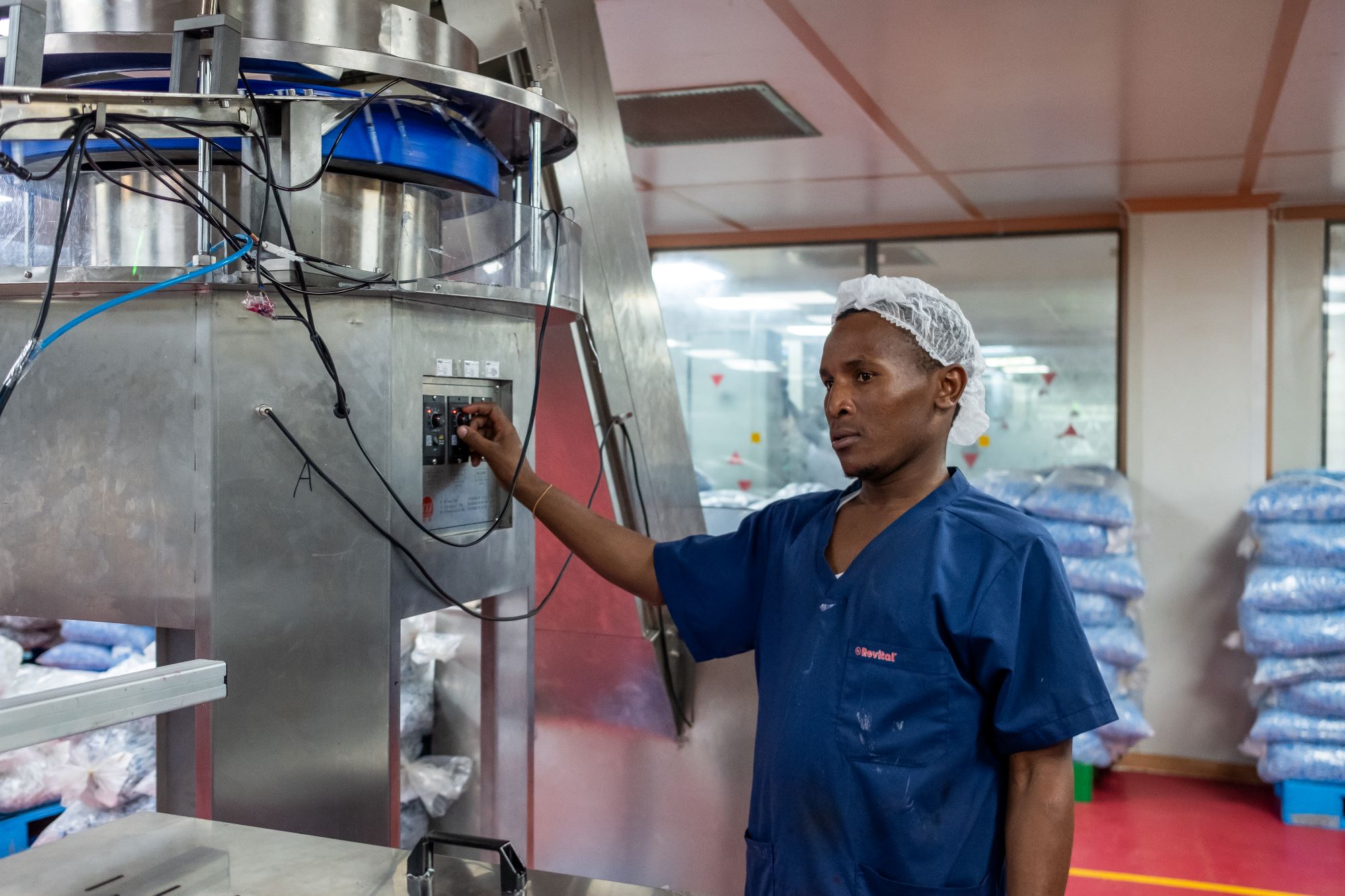
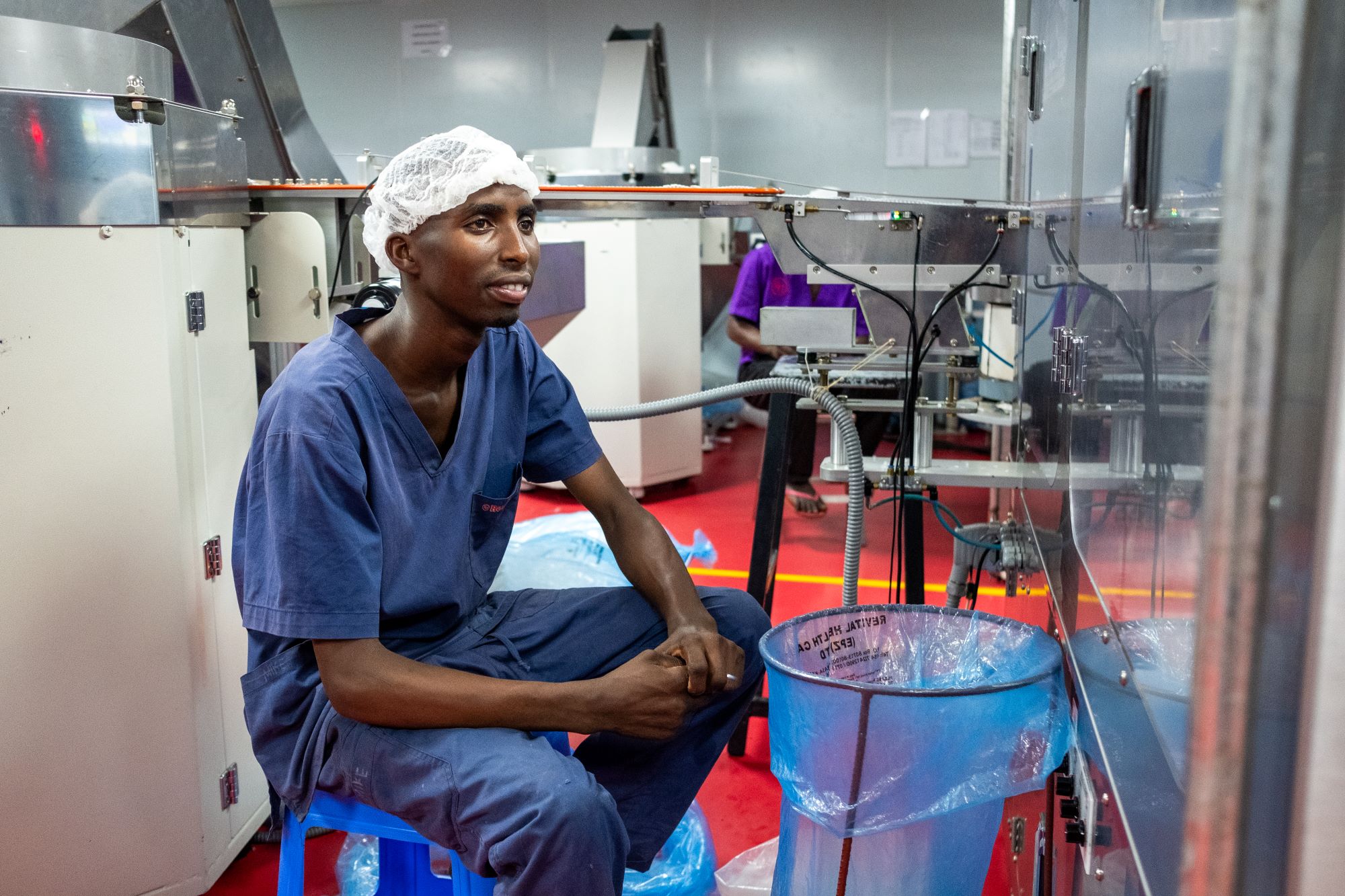
To accommodate the company’s many working mothers, Revital offers eight-hour shifts, with the option to work more. “If this parent has someone to take care of their children and they’re available to do the extra hours, we give them the opportunity. And if they don’t have someone to take over with the child, they can do eight hours and then go attend to their child,” Lorraine says. “We are there to support the women when it comes to motherhood especially.” She is honored that her colleagues see her as a friend and come to her for advice and support. “I give you an ear so that you can talk to me,” she says.
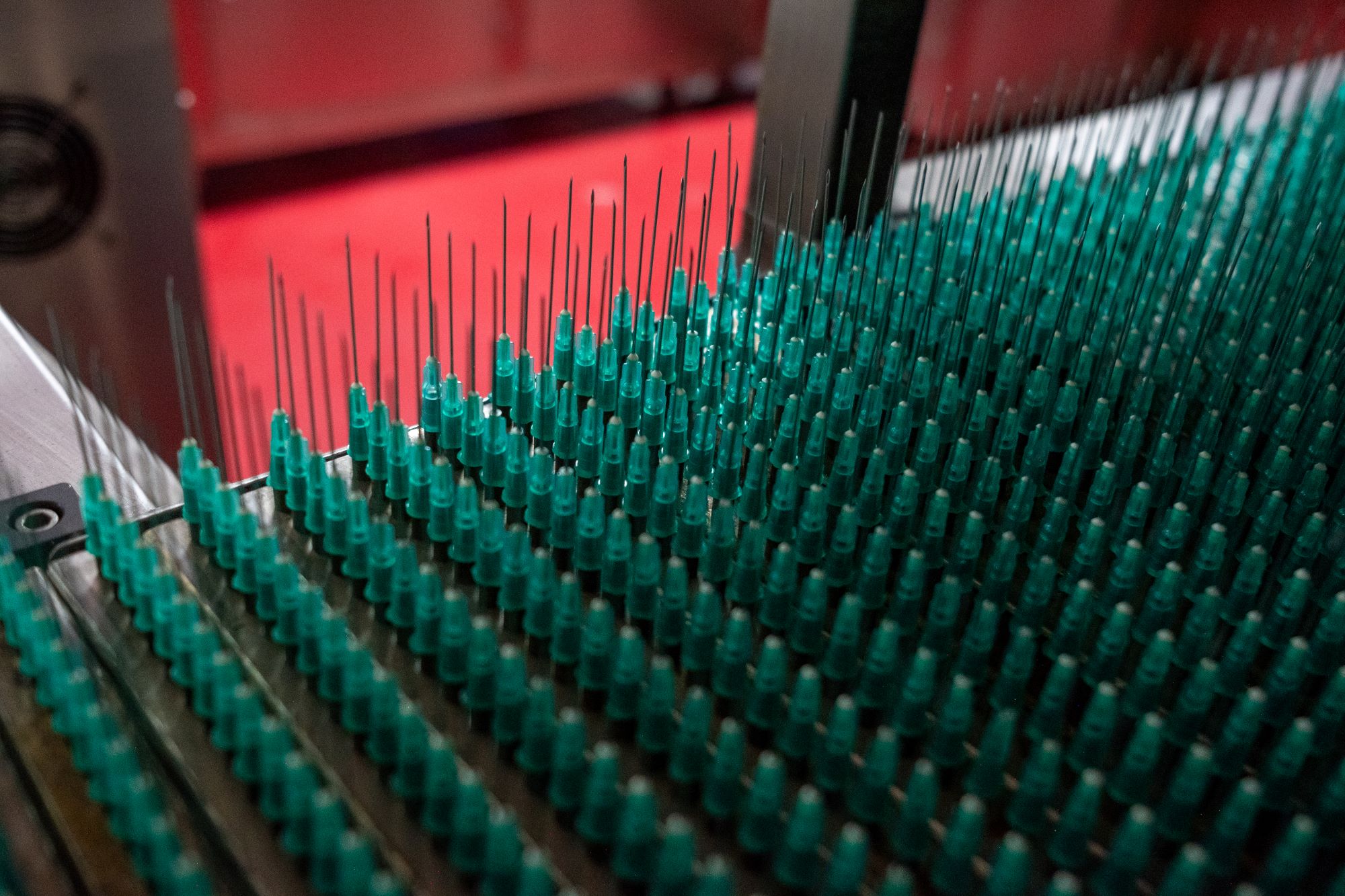
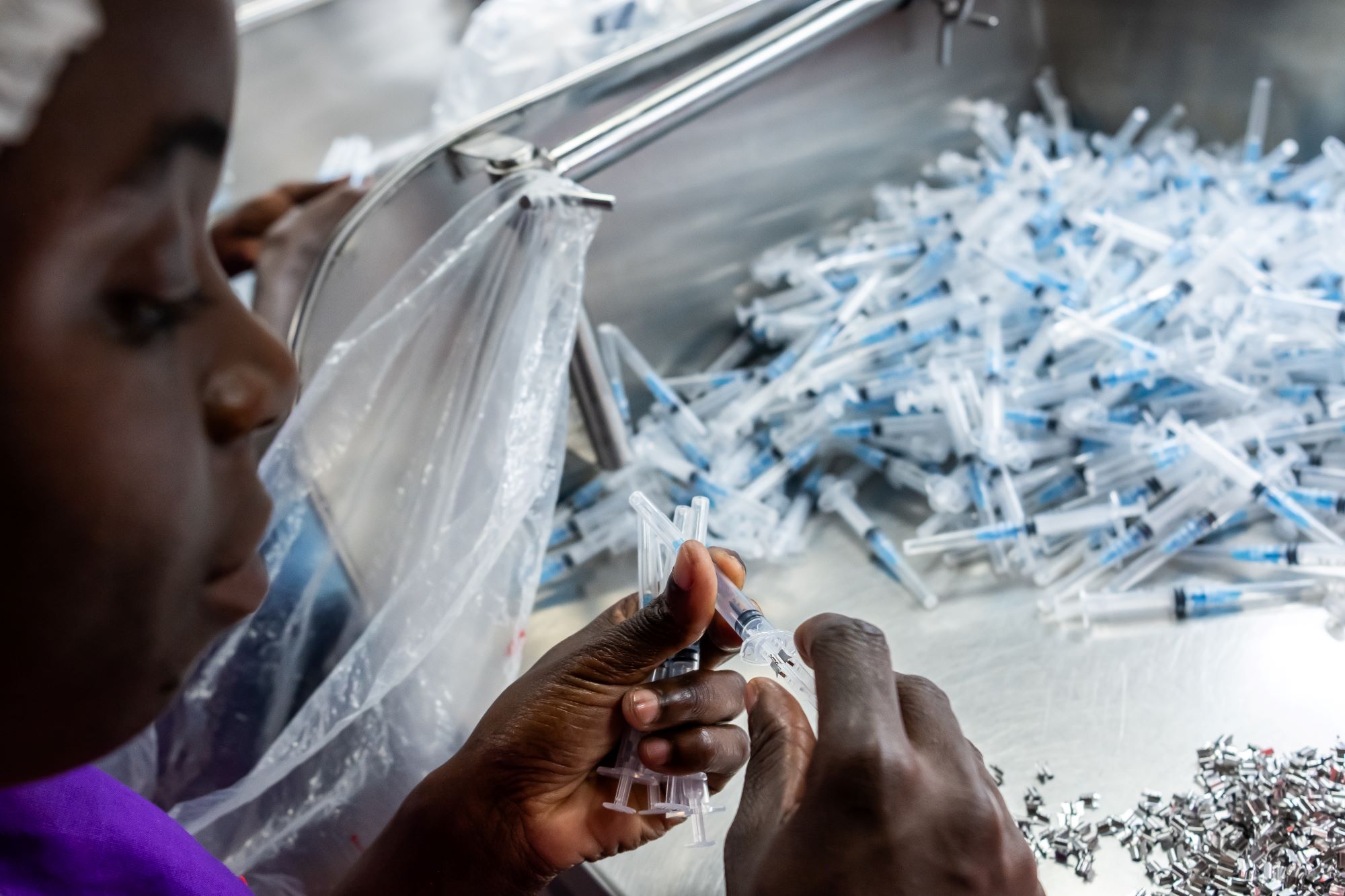
When Lorraine first started at the company, she learned about the design and importance of auto-disable syringes, and how they keep people safe. “At first, I didn’t know a syringe can be locked and unlocked,” she says. Now she easily discusses the component parts of syringes: barrels, gaskets, plungers, and needles. It became inspiring to work here and be a part of the mission.
She sees being a part of Revital’s team as her way of telling people, “Stay safe, take your vaccines. Take care of yourself, and I’m there for you. That’s how you show your love and care to someone else out there who you’re not related to.”
“I really know how we’re protecting syringes.”
Roseline Oliwa
Roseline Oliwa was searching for a way to improve her children’s lives. In 2008, her family’s finances were unstable. She’d been selling homemade detergent door to door, making just enough money to feed her children. Although her husband worked hard in construction, his earnings were inconsistent. Roseline had been forced to pull her three kids, ages 9, 6, and 2, out of school and care because she couldn’t afford the fees.
When a neighbor told her that a company called Revital was “recruiting ladies,” she applied the next morning. “At first, I was actually scared, because I didn’t have any knowledge regarding the syringe,” she remembers, referring to an earlier model of syringe that did not have the auto-disabling feature. She was honest about it with the recruiter. The recruiter hired her, alongside 20 other women.
The women were trained to manually assemble syringes, which were an earlier model with no auto-disable feature. They inspected the syringes for defects and packed them in boxes for shipment. Roseline’s starting daily wage was 250 Kenyan shillings, or nearly US$2 a day. At the end of her first week at Revital, she stopped by a school near her home and told the teacher she’d be enrolling her kids. She didn’t have a lot of money, she said, but she promised to come by every night on the way home from work and pay 100 shillings out of her earnings. After the teacher agreed, Roseline went to her church and prayed until she cried. “I was very, very happy,” she recalls. “It was like—it was a new life. It was a new beginning.”
More on vaccines and immunization:
The foundation’s global strategy on immunization
Four things to know about the single-dose HPV vaccine for cervical cancer
Three immunization advocates share why Gavi matters
Roseline has used the training and knowledge she has gained at Revital to help people in her community overcome their fear of syringes. She learned during the pandemic that many Kenyans associated syringes with unpleasant trips to the hospital and didn’t trust the syringes they saw there. When she met with other mothers after church on Sundays, she told them about her work at Revital and the integrity of the company’s syringes, to assure them that vaccinations are safe. “Working there, I really know how we are protecting the syringes,” she told them.
On visits back to her home village of Musokoto, she repeated that message so much that her friends and family jokingly called her umuresi, which means doctor in Luhya, the language of her ethnic group.
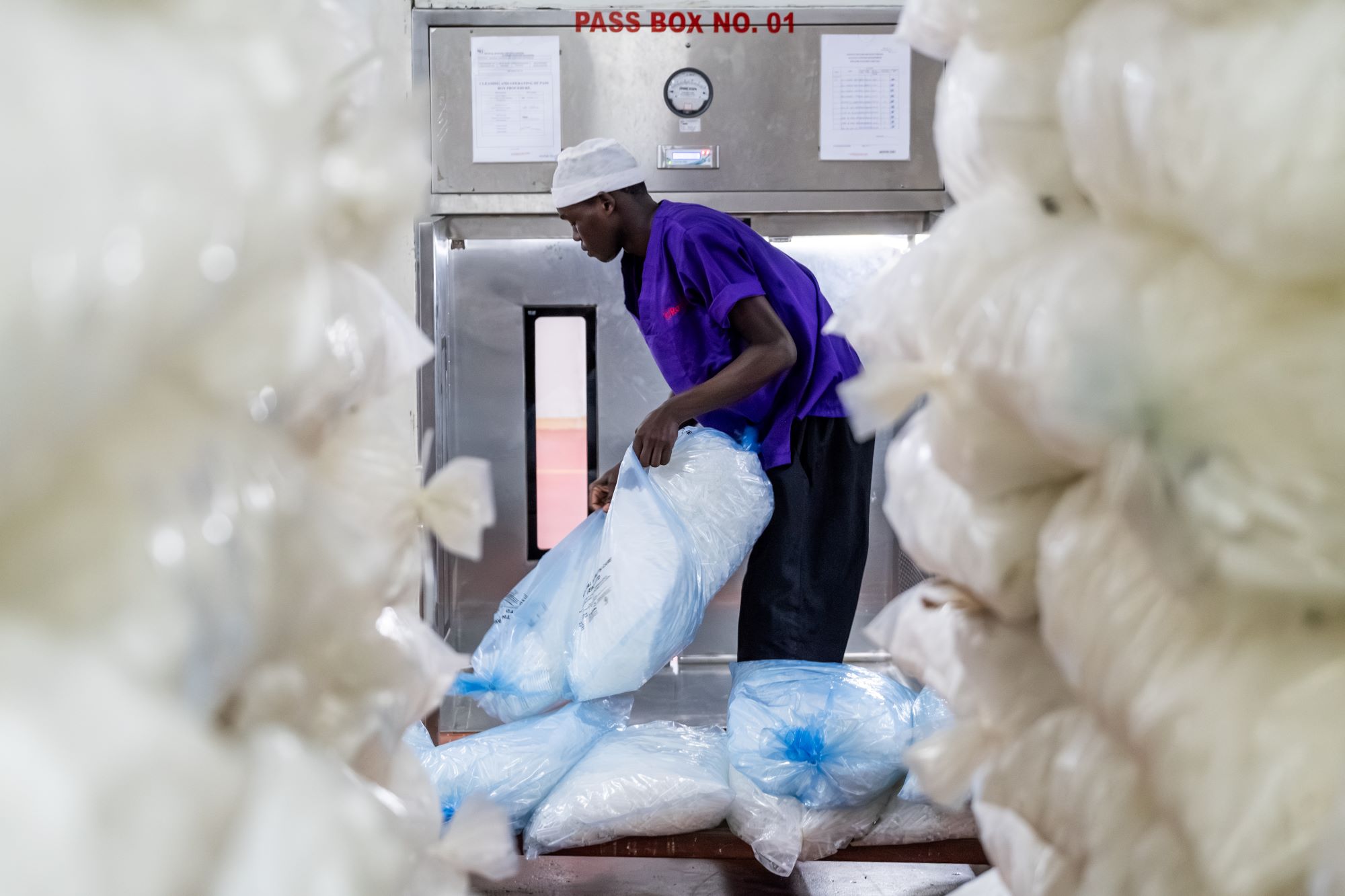
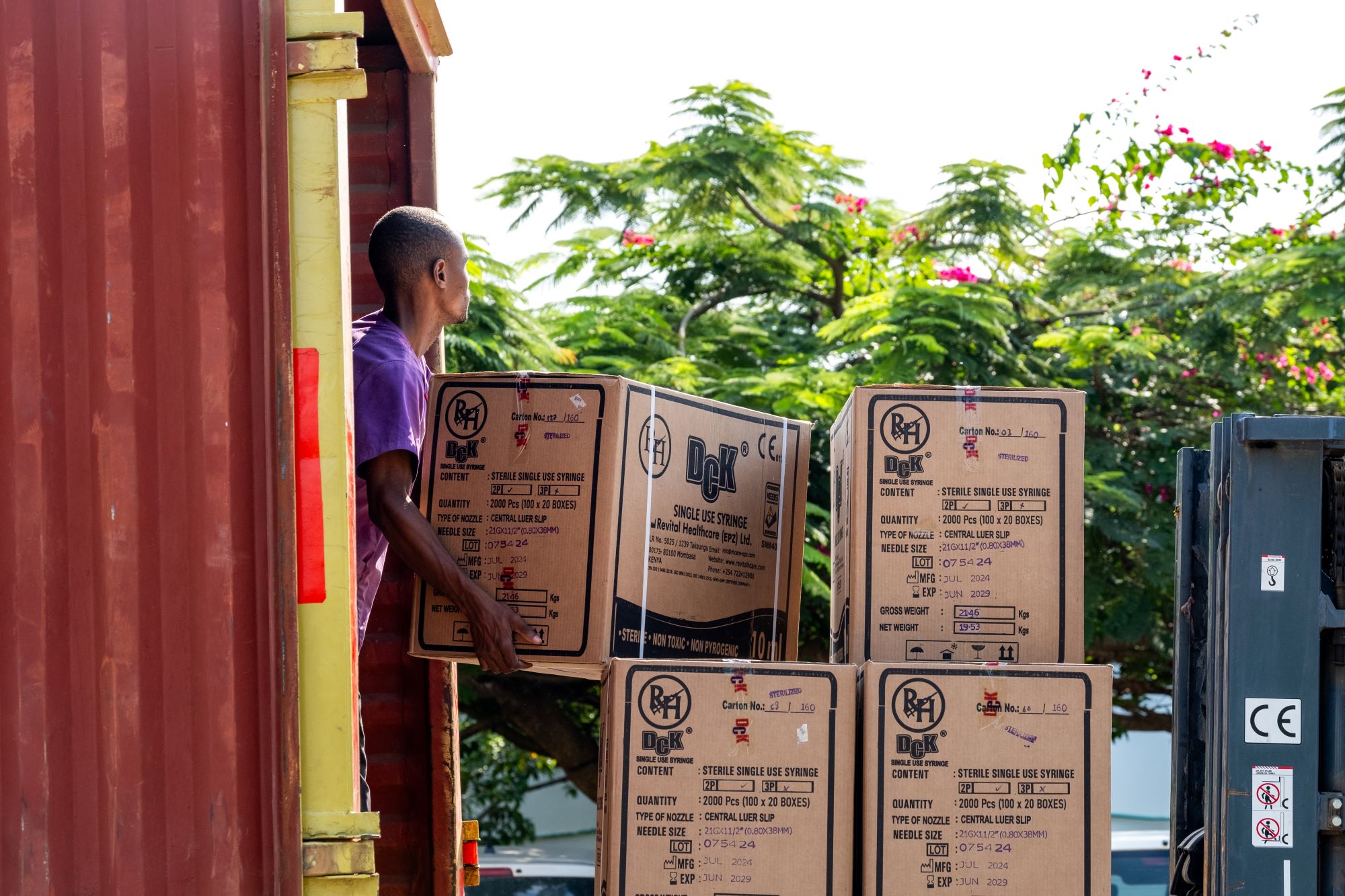
Roseline is now a supervisor in the stores department—the first woman to hold that title at Revital. She is responsible for managing inventory, including overseeing shipments of syringes and other medical supplies that will reach people all over the continent. One day in June, she watched as 10 UNICEF trucks, each loaded with 1.6 million early-activation auto-disable syringes, pulled out of the warehouse, destined for Zambia via Mombasa’s port. “We are inspecting the goods—the whole thing from the start to the end,” she says. “I feel so proud of it.”
Since Roseline started working at Revital, her two oldest children have finished school. Her daughter earned a college degree in logistics and supply chain management, and her son has completed training to work for the Kenya Wildlife Service. She bought a small plot of land, where she is building a six-room house. She plans to go back to school herself, to study her favorite aspects of Revital’s business, including logistics and medicine, which her supervisors have been encouraging her to do.
Roseline wishes she had a photo of herself on her first day at Revital so she could compare that nervous woman to the woman she has become. “Looking at the photos, you would see two different people,” she says. “I was frustrated. I was broke. But now I’m earning. I have my daily bread.”
“This is made in Kenya, they’re ours.”
Tabitha Musyoka
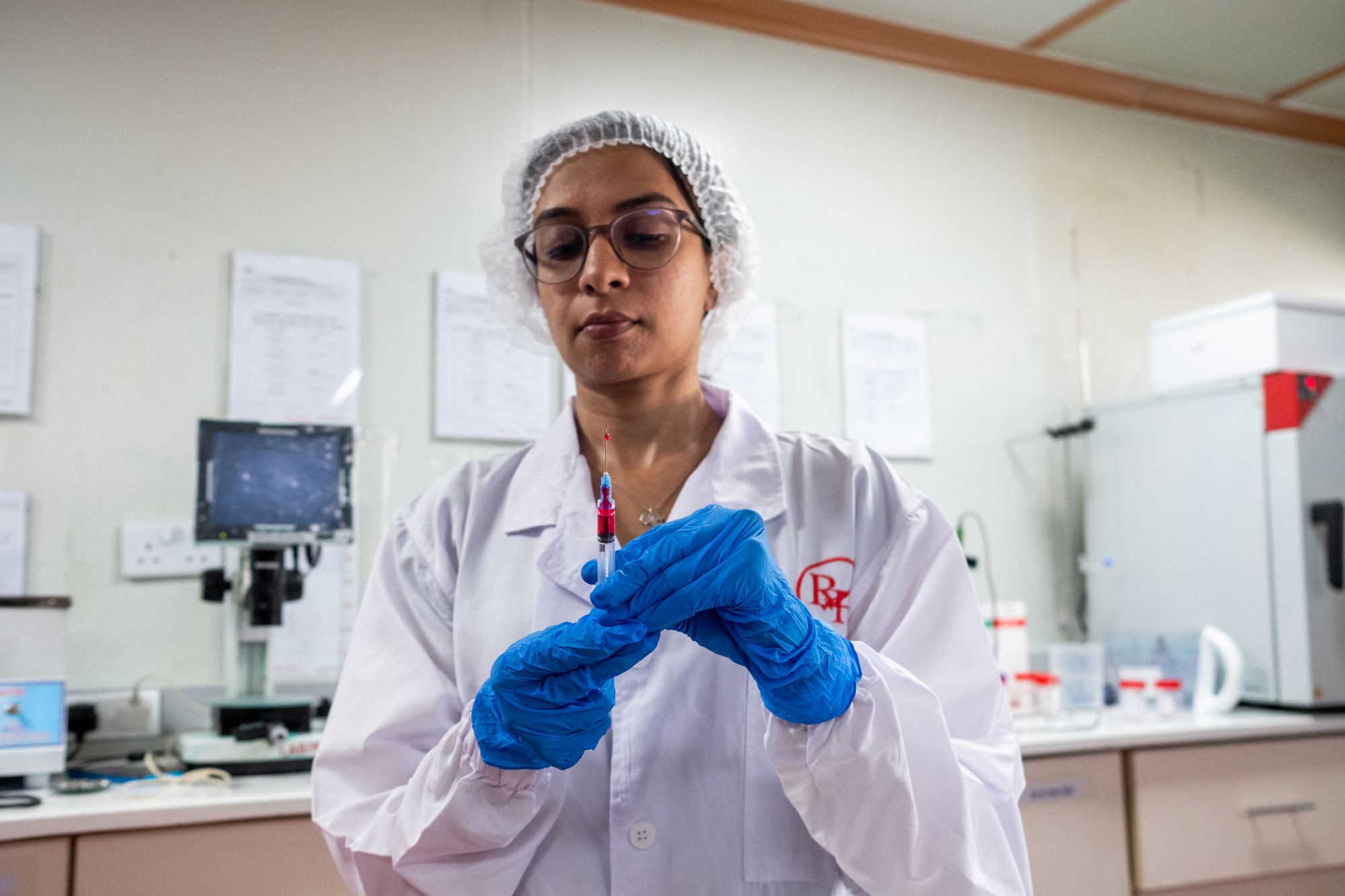
Growing up in Mombasa, Tabitha Musyoka was always passionate about math and science, taking after her father, who tutored her every evening before the family sat down for dinner. After earning a degree in biochemistry and molecular biology from a university in Nairobi, she joined Revital in 2021 as a quality control microbiologist.
The COVID-19 pandemic was raging, and Tabitha learned from her mother that people back home were reluctant to be vaccinated against the virus. Determined to change hearts and minds, Tabitha made many trips upcountry, armed with knowledge about how syringes are manufactured and her own experience of safely getting vaccinated. She found that people were suspicious of a vaccine imported from outside of Kenya. “How are we supposed to trust that this thing is safe?” she often heard. “The fact that it wasn’t made in Kenya was a big challenge for them,” she says.
“I told them, this is made in Kenya, they’re our own syringes, and you shouldn’t be worried about anything.” She showed people a box of Revital syringes, explaining how she herself ensured the manufacturing environment was clean and safe by personally testing the syringes for sterility.
“I told them, this is made in Kenya.”
Older people in her community were especially hesitant. “The elderly, they have this notion that when you get a vaccine, you’re going to die soon,” Tabitha says. Being from the region and speaking its native language, Kamba, helped her gain people’s trust. “Me talking to them in our mother tongue, they get that confidence that, Oh, she’s one of us.”
Tabitha still hears from many of the friends she made during that period. Some call her to tell her they have lost friends or relatives to COVID-19 and thank her for educating them about the vaccine. She’s the reason, they say, that they’re still alive. “I felt good,” she says. “I felt good helping people.”
Tabitha now works in regulatory affairs at Revital, registering products with regulatory bodies in countries worldwide and getting them prequalified by WHO for safety and quality. She aspires to join Revital’s newly formed research and development department—one of only a few such institutions in Kenya. “The research institutions in Kenya are not many, but I love the research part,” she says. “I love science.”
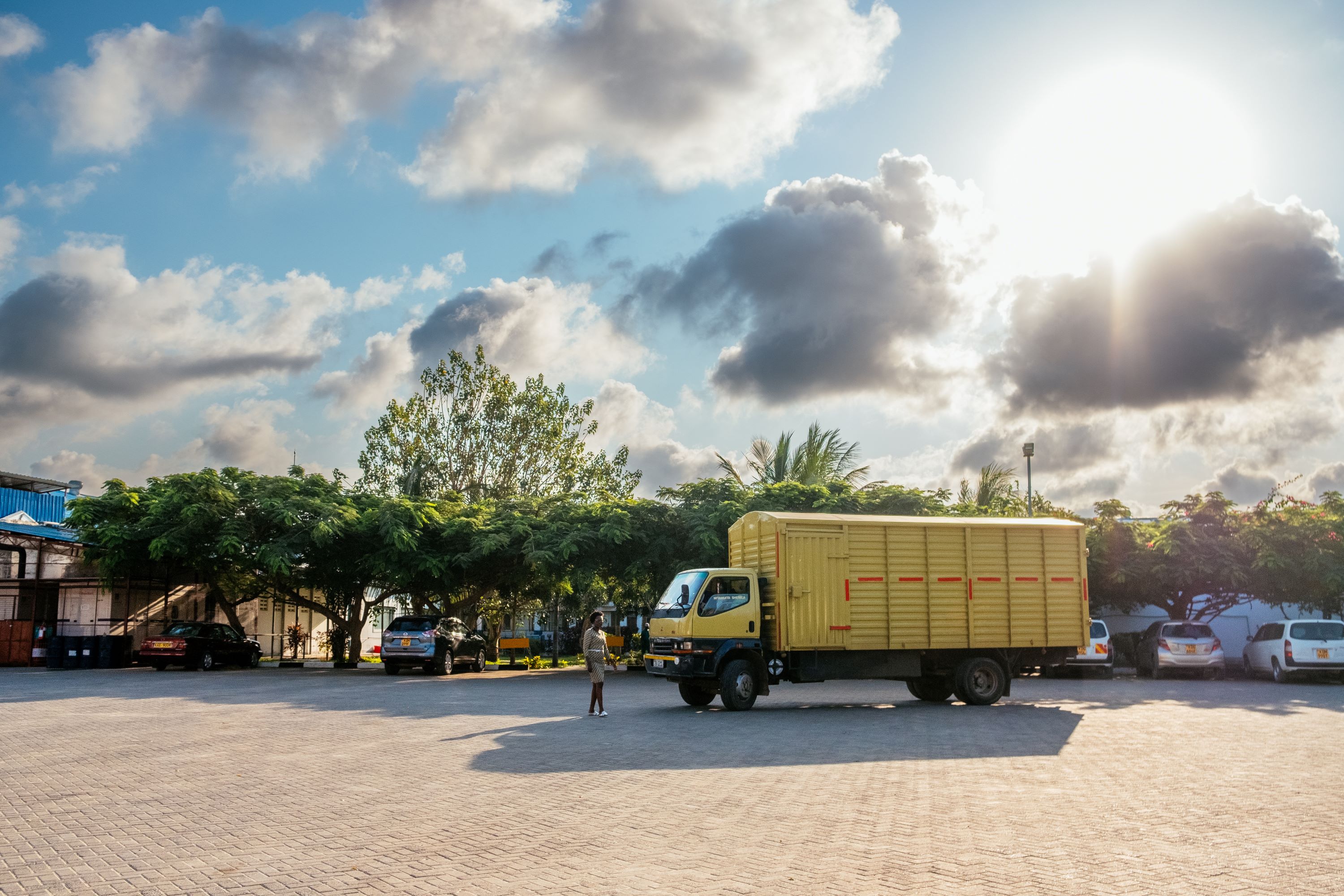
On May 5th, 2024, UNICEF delivered the first shipment of Revital’s WHO-prequalified syringes to Niger.