
America’s Historically Black College and Universities (HBCUs) are facing a double risk. Black Americans have been disproportionally affected by COVID-19—in some places dying at twice the rate of white Americans—and now colleges are seeing a surge in cases. According to the CDC, COVID-19 infections among 18-to-22-year-olds jumped 55% between early August and September.
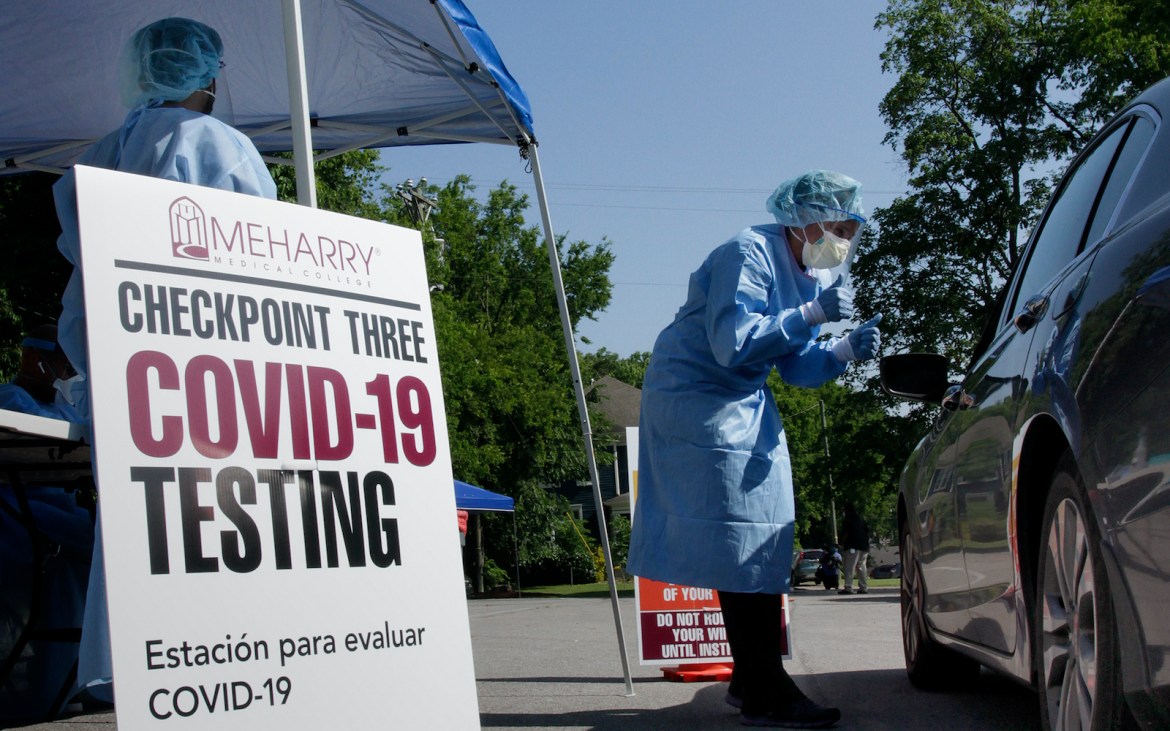
Over the last several weeks, we engaged with several presidents and other leaders from HBCUs as we explored ways to help communities disproportionately affected by the pandemic. They reinforced the need to establish, maintain, and expand COVID-19 diagnostic testing, given that HBCU campuses and their surrounding communities see an average demand of between 500 and 15,000 tests per day.
This demand is not being met, particularly at rural universities. An estimated 21 million Americans live in what is considered a “testing desert,” according to data from the Surgo Foundation. Their analysis also found that Black Americans are 2.7 times more likely to live in a rural area with insufficient testing access and increasing COVID-19 deaths compared to the average rural American.
How to address this problem? Boost the capacity of HBCUs to serve as critical diagnostic testing hubs. Many of the universities that have medical, pharmacy, veterinary, and agriculture schools are already well-positioned to do this.
Recently, 29 HBCUs joined together on an initiative called The Just Project. The partnership is designed as a “hub and spoke” model with up to 10 testing hubs processing tests from 20 of the 100+ HBCUs with a target turnaround time of 24-48 hours.
As part of the foundation’s ongoing work to combat racial inequality and its impact, we are supporting these institutions’ efforts with a series of three-year grants totaling $15M to provide critical diagnostic testing infrastructure for up to 10 HBCUs. To date, Florida A&M University (Tallahassee, FL), Hampton University (Hampton, VA), Howard University (Washington, D.C.), Meharry Medical College (Nashville, TN), Morehouse School of Medicine (Atlanta, GA), and Xavier University of Louisiana (New Orleans, LA) have all joined as testing hubs, with additional colleges and universities being added in the coming weeks.
We must do what we can to make sure this public health crisis does not become an opportunity crisis.
Allan Golston
President, U.S. Program
Bill & Melinda Gates Foundation
These grants provide the testing hubs funding for additional medical technical staff for specimen analysis, lab equipment, supplies, and technology. Investing in these supports will not only leave an enduring laboratory capacity beyond COVID-19, it will also increase the numbers and types of tests, improve turnaround times for results, and ultimately meet the rise in demand for local community testing—something HBCU leaders have expressed a strong desire to be able to deliver.
In addition to enabling reliable, efficient, and rapid COVID-19 testing for students, faculty, staff, local communities, and other campuses, this “hub-and-spoke” approach to diagnostic testing could prove to be an efficient model that other colleges and universities and their partners could replicate. Testing is only one part of tackling COVID-19, but it is a critical element of helping colleges and universities reopen safely—and stay open.
In my 20 years with the foundation, this investment stands out to me as a unique example of stitching together our global health and U.S. education partnerships to drive impact. At the same time, we recognize the many other challenges this pandemic presents for our communities and educational institutions.
Subscribe to The Optimist to get weekly updates on the latest in global health, gender equality, education, and more.
By submitting your email to subscribe, you agree to the Gates Foundation’s Privacy & Cookies Notice.
As we noted in our No Dream Deferred campaign in August, more than half of Black and Latino students are reconsidering their post-high school graduation plans. This uncertainty for students comes at a time when studies show that nearly two-thirds of all jobs by 2025 will require some form of postsecondary education credential. Making sure students from some of the most underserved communities can stay on a path to achieve their educational goals has never been more important. HBCUs are trusted institutions for many, and they continue to serve as a critical education pathway. That is why we are committed to supporting them in this work.
We still have a long road ahead. As we navigate the uncertainty the winter months bring and the challenges they present to our higher education institutions, we must do what we can to make sure this public health crisis does not become an opportunity crisis. Supporting HBCUs commitment to rapid, effective diagnostic testing is a step in the right direction.