Fourteen years ago, Zolelwa Sifumba woke up with a strange lump on her neck.
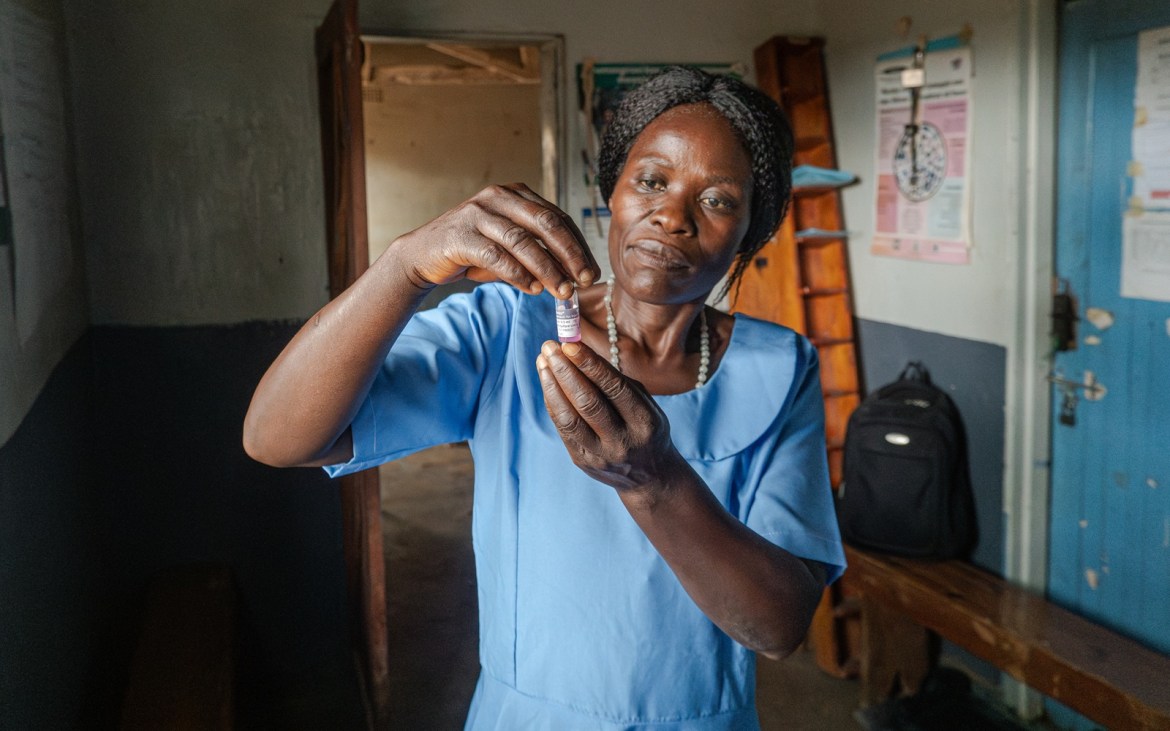
It turned out to be multidrug-resistant tuberculosis (MDR-TB), one of the most brutal forms of the world’s deadliest infectious disease. Each year, an estimated 400,000 people around the globe develop MDR-TB, which is especially costly and difficult to treat because the main anti-TB drugs do not work against it.
For Sifumba, who was then a young medical student in South Africa, it felt like hitting a brick wall. She was in disbelief and shock—“like, no, it can’t be me,” she recalls. “That’s not something we get. We’re the doctors, people come to us, you know?”
Over the next 18 months, as she ingested thousands of pills and took daily injections as part of her MDR-TB treatment—a treatment with harsh and often dangerous side effects that only 40% of patients at the time survived—her shock gave way to despair. “I wanted to give up every day,” she says, “because the medication was just too hard, the treatment was just too long, I didn’t see myself surviving.”
See related work on infectious diseases
But then, a ray of light. Representatives from TB Proof, an organization of health workers and activists seeking to raise awareness about TB, came to speak at Sifumba’s school. “I ran down to meet them after the lecture, and they really took me in as a family,” she says. “I had support basically for the first time from people who understand what it’s like to go through the illness.”
After hearing Sifumba’s story, the TB Proof team encouraged her to join the organization and help spread awareness of the disease. “They’re what kept me going: seeing people that had survived, people that were willing to walk the journey with me, people willing to hear me when I was in pain,” she says. “The advocacy and activism helped me, too, to express my pain. Those are the building blocks that got me towards getting healthier.”
Sifumba not only survived, she finished her medical degree. Today, as a full-time patient activist with TB Proof, she is educating people about TB and working to diminish the stigma that so many sufferers face. “It doesn’t matter how rich or poor you are, it doesn’t matter how educated you are, TB can happen to anyone,” she tells audiences. “Everybody breathes, and that’s what leaves you at risk…. If I can prevent one person from getting sick, that’s enough.”
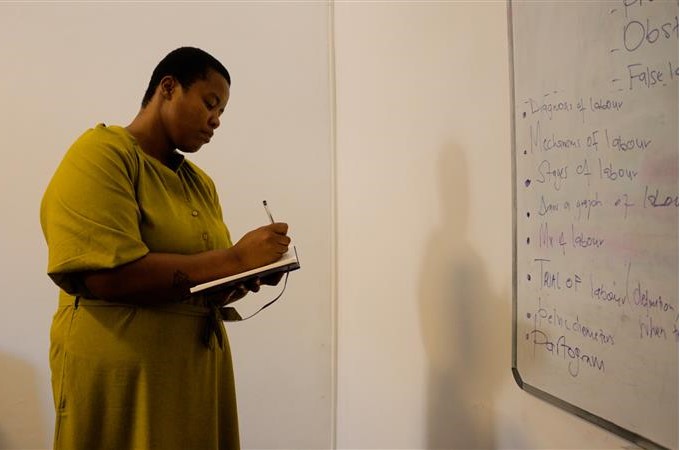
“The most urgent challenge to me is the lack of shared public health information about TB.”
-Zolelwa Sifumba
Over the past dozen years, Sifumba has helped expand TB education and outreach initiatives in South Africa. “The most urgent challenge to me is the lack of shared public health information about TB,” she says. “The fact that we’re not talking about TB in schools, for example. It should just be common knowledge what the symptoms are and how to prevent it, because prevention is better than the cure and the medication is very hard to take.”
While treatment success rates for MDR-TB have improved over the years, Sifumba’s long and painful journey to recovery is unfortunately still the norm. But through collaborative efforts like the Tuberculosis Drug Accelerator, scientists around the world are working to find new treatment regimens that are shorter, simpler, and more effective—for anyone diagnosed with TB, including MDR forms.
The commitment of TB researchers is matched by Sifumba’s passionate advocacy and activism, which have reached global audiences and led her to engage with influential individuals such as the Duke and Duchess of Cambridge, U2’s Bono, and French President Emmanuel Macron about TB funding, stigma, and policy.
But what’s most important to her is delivering a message of hope to other people going through MDR-TB. “Here I am,” she says. “I struggled, I went through this, but I made it—and you can make it too, you know? It’s so important to know that you can do something. Each of us has a voice, each of us has a story—and if we continue to act individually and collectively, we can change things.”