
Long before she devoted her life to studying mosquitoes, Corine Ngufor knew their scourge. Growing up in Cameroon, “I was condemned to suffer from malaria,” she says. “My siblings and I would just keep having malaria and malaria and malaria. Just about everyone did.”
A medical entomologist with a Ph.D. from the London School of Hygiene & Tropical Medicine and a passion for public health, Ngufor leads a Benin-based lab that investigates a variety of products aimed at controlling mosquitoes that carry malaria across the African continent.
She didn’t set out to spend her days thinking about insects—she had actually envisioned a career in the physical or mathematical sciences. But after getting a chance to collect mosquitoes at field sites during her undergraduate years, she was hooked.

It’s hardly surprising, then, that Ngufor would go on to play a big role in developing one of the most effective innovations in malaria prevention to emerge in the past decade.
When people think about innovation, they often focus on future breakthroughs: the next big scientific discovery or technology that’s going to revolutionize everything. But Ngufor’s landmark innovation is one that’s been available for several years and has already saved a stunning number of lives. Today, I’m going to tell you more about why the product she helped create is so remarkable.
Insecticide resistance on the rise
Before we get into Ngufor’s research, a quick bit of background:
Malaria
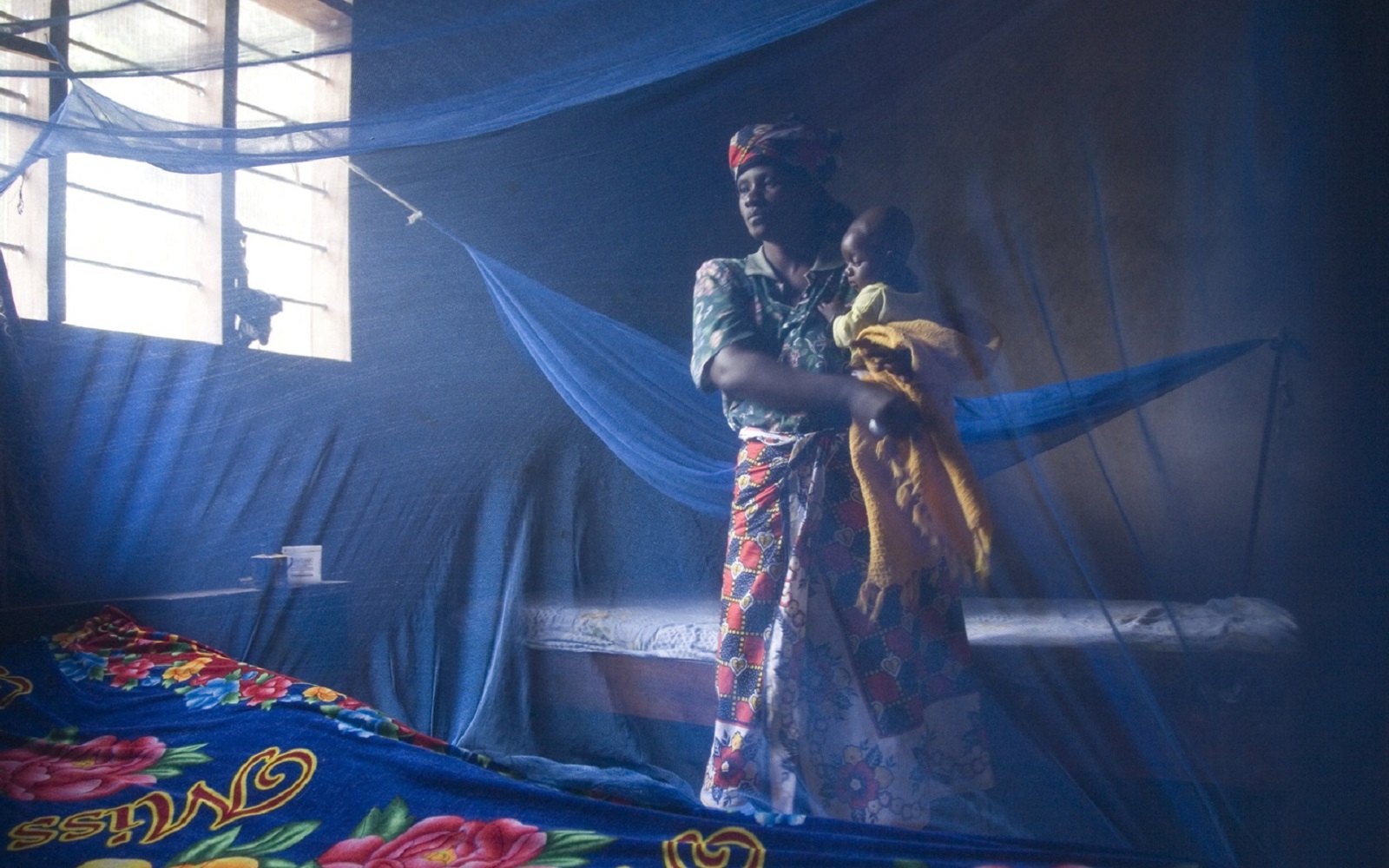
Between 1980 and 2000, malaria was on the rise. By the early 2000s, it was killing 800,000 to 900,000 people a year, most of them children. Two key innovations began to really turn things around: bed nets treated with an insecticide called pyrethroid, and indoor spraying with long-lasting insecticide. Starting around 2005, malaria cases and deaths began to steadily and substantially decline. Some say bed nets alone have been responsible for 68% of the reduction, saving an estimated 7.6 million lives over two decades.
Unfortunately, mosquitoes are wildly adaptable. Over time, they began to develop resistance to pyrethroid. In 2020, malaria cases and deaths began rising again.
To stay ahead of these adaptable creatures, humans had to keep innovating. One potential solution was creating dual-insecticide nets: nets treated with pyrethroid and a second insecticide. But which one? For a variety of reasons, finding the right insecticide was extremely difficult. One expert has noted that researchers had already eliminated millions of potential options.
That’s where Ngufor and her lab came in. They began testing an insecticide called chlorfenapyr, which, among other things, acts in a very different way than pyrethroids. Instead of targeting the mosquitoes’ nervous system, it blocks their ability to produce energy. When they can’t fly, they die.
“I thought we might have to give up.”
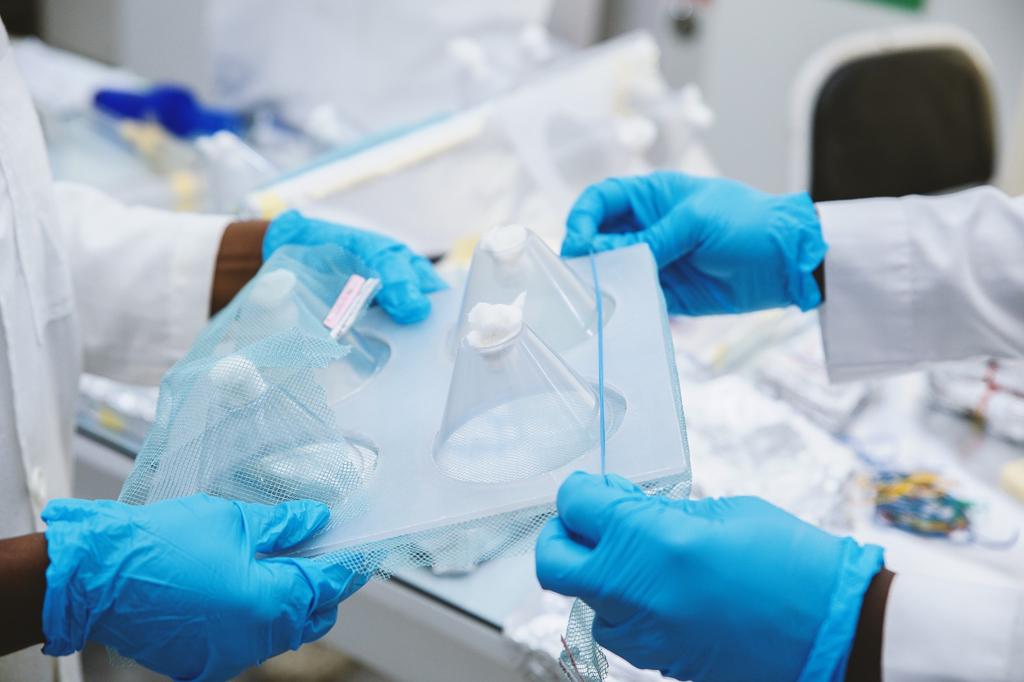
The scientific path forward wasn’t easy. Initially, the lab data wasn’t promising. Chlorfenapyr just wasn’t killing very many mosquitoes in lab tests. The researchers tried using a different polymer to bind the insecticide to the nets. Working with the manufacturer, they tested nets made from different types or combinations of materials. Still, the chlorfenapyr wasn’t killing enough mosquitoes.
“At some point, I thought we might have to give up,” Ngufor says. “But we also knew that the options out there were few, so it was important to make sure we tried everything.”
Finally, they began to consider how lab conditions differ from the real world. For example, lab tests are generally conducted during the day, but mosquitoes are most metabolically active at night and when looking for people to bite; lab tests are time-limited (based on the fast-acting nature of pyrethroids), but the effects of chlorfenapyr require a little more time.
The team needed to test under conditions more closely resembling the real world. So they turned to experimental huts. The huts were standardized, with specially designed entry points that allowed mosquitoes to get in but not get out. Adult volunteers would sleep in a hut under a net, and the next morning technicians would collect the mosquitoes—tallying how many got in, how many were dead, and how many had fed on blood.

“That way, you can have an estimate of the mortality rate and get a sense of how effective the intervention is,” Ngufor says.
The team counted a lot of dead mosquitoes from the huts. The mood at the lab improved dramatically. And statistical analysis suggested that the dual-treated nets would work even better in real life than in the lab tests. But Ngufor wasn’t quite ready to share the news.
“We wanted to contain our excitement at first,” she says. They double-checked their analysis. When they were confident of the results, they shared their findings broadly.
It had been six years since Ngufor began testing chlorfenapyr in the lab. But there was more work to be done.
Finally, signs of success
The nets, now manufactured under the name Interceptor® G2 (IG2), had to be tested in randomized controlled trials. In the first key study, conducted in Tanzania, the pyrethroid-chlorfenapyr nets performed significantly better than pyrethroid nets alone—cutting malarial infections among children by almost half. Anytime you can make gains against a disease like malaria that affects so many children, it’s a win. But this reduction was incredible.
IG2 nets
The IG2 nets emerged from a coalition of partners: BASF and the Innovative Vector Control Consortium (IVCC), among other implementing partners, worked together to develop a new net, with funding support from the Global Fund to Fight AIDS, Tuberculosis and Malaria, Unitaid, the Gates Foundation, MedAccess and USAID.
To ensure that the nets could be used in the regions that needed them most, the World Health Organization had to weigh in. That process required even more study. Subsequent controlled trials, including one in Benin that Ngufor helped design, showed results similar to the trial in Tanzania.
A last hurdle remained: IG2 nets cost more than pyrethroid-only ones. Researchers looked at the cost of treating the malaria cases that would have arisen without the IG2 nets and found that the new nets would actually save money in the long run.
In 2023, WHO made a strong recommendation in favor of the pyrethroid-chlorfenapyr nets over pyrethroid-only nets, based the new nets’ life-saving potential as well as cost-effectiveness. This was the first time WHO had issued such a recommendation for a new insecticide formulation.
It was a moment for celebration in Ngufor’s lab, and also a moment for reflection. “It shows that, as scientists, we really have to try everything before we give up on an intervention,” she says. “It was a really big lesson in my career.”
Institute for Disease Modeling
Our goal is to support global efforts to eradicate infectious diseases and achieve permanent improvements in health through computational modeling tools.
Continued innovation
Now that the IG2 nets are being used in the real world, outside of clinical trial settings, their incredible impact is clear. That’s a big deal. One large pilot project in 17 countries, funded by Unitaid and the Global Fund to Fight AIDS, Tuberculosis and Malaria, found that the nets prevented 13 million malaria cases between 2019 and 2022, saving an estimated 25,000 lives.
Ngufor says, “I want to see how I can contribute to further driving down that curve.” She’s among many researchers who believe that malaria eradication is achievable. They also know that one innovation alone, no matter how good, won’t get us there.
The Bill & Melinda Gates Foundation has funded malaria work since the early 2000s, and we’re continuing to support it in various ways, including by:
- Providing volume guarantees to manufacturers, to help reduce the price of new nets
- Supporting research into new tools, including malaria vaccines and improved treatments
- Funding a project in which male mosquitoes are bred to carry a gene that doesn’t allow their female offspring to survive into adulthood
- Supporting development of attractive targeted sugar baits, which kill mosquitoes after they take a drink of sugary liquid
New tools are important, but real-time, high-quality data is also essential to stop malaria. We support organizations that are developing more sophisticated monitoring systems to better track and target mosquito vectors.
Of course, mosquitoes are crafty, and they continue to adapt. At some point, they’ll adapt to chlorfenapyr. Constant vigilance is critical. As Ngufor says, “You always have to think ahead of the mosquito.”