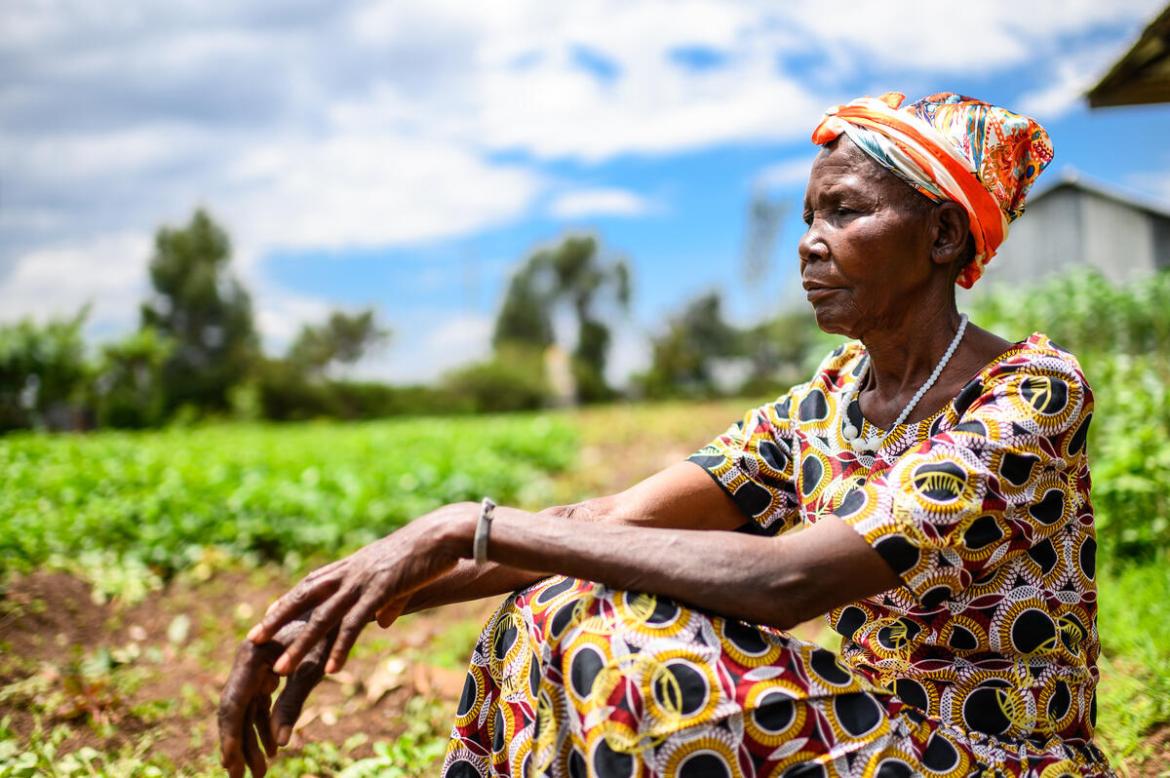
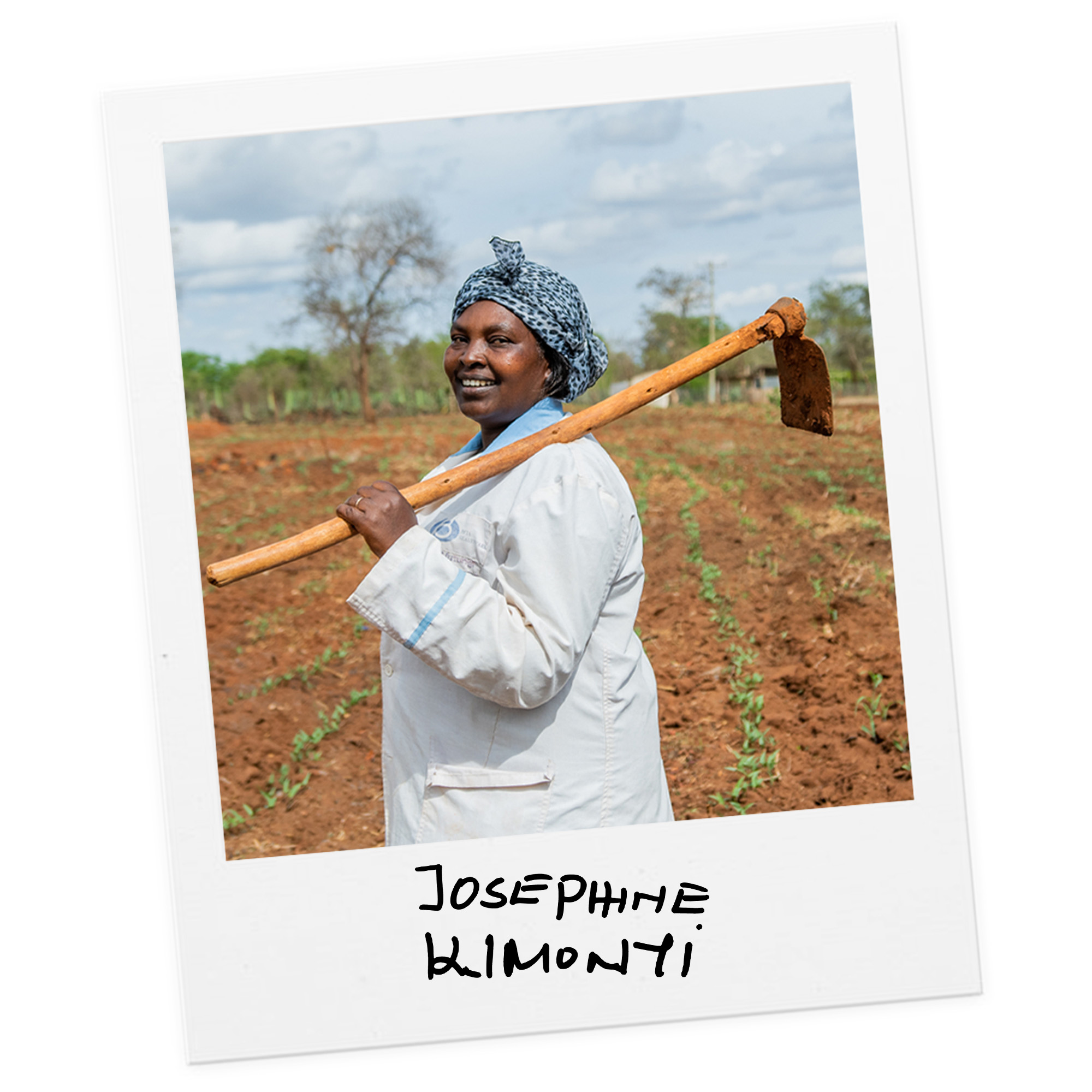
A dozen or so speckled black-and-white chickens peck and squawk in their pen against a backdrop of dusty red soil. Josephine Kalondu Kimonyi surveys her land.
“Nobody employs me,” she says. “It is me who employs myself.”
Not long ago, Josephine was a busy mother of five living an urban life in Nairobi, Kenya—far from the hens, cows, and goats that surround her today. Most people move from the country to the city to seek opportunity. Josephine saw promise in going the other direction.
One opportunity she sought was a stellar education for her children. She hadn’t pursued higher education herself, and she thought that becoming a farmer could give her the financial security to send her children to college.
“I felt in my life that if God will bless me with children, I’ll make sure my children are gone very high in education, as far as they want,” she says.
In search of a more prosperous life, Josephine left the city with her husband and children to make a home in rural Ngumu in southeast Kenya, where she grew up.
“We have a big land, so I decided to come and do agriculture in this place,” she says. The first crop she planted on the family’s new farm were green grams, also known as mung beans. From there, her vision grew.
The remarkable cow
Josephine realized that raising a cow could provide not only milk for her family but also a new income stream from selling milk to the community. Using the profits from the green grams, she bought an indigenous cow and named it Kamoli.
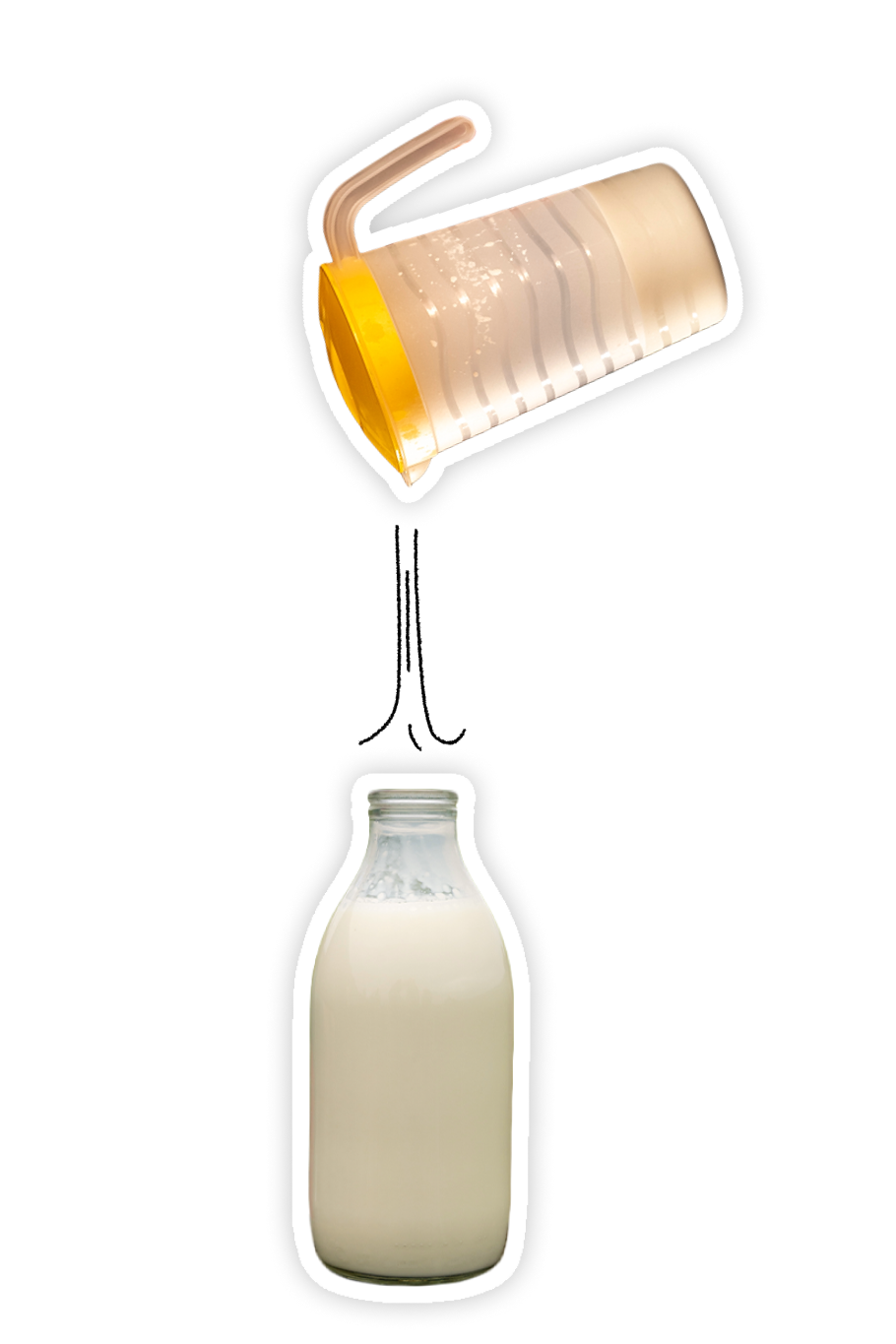
Kamoli was sturdy but produced only about eight liters of milk a day. After giving milk to her children, Josephine never had enough left over to sell. “I feel I’m not satisfied with the cow,” she says. “I needed a cow that can give me milk to boost my business.”
How does a cow produce twice as much milk?
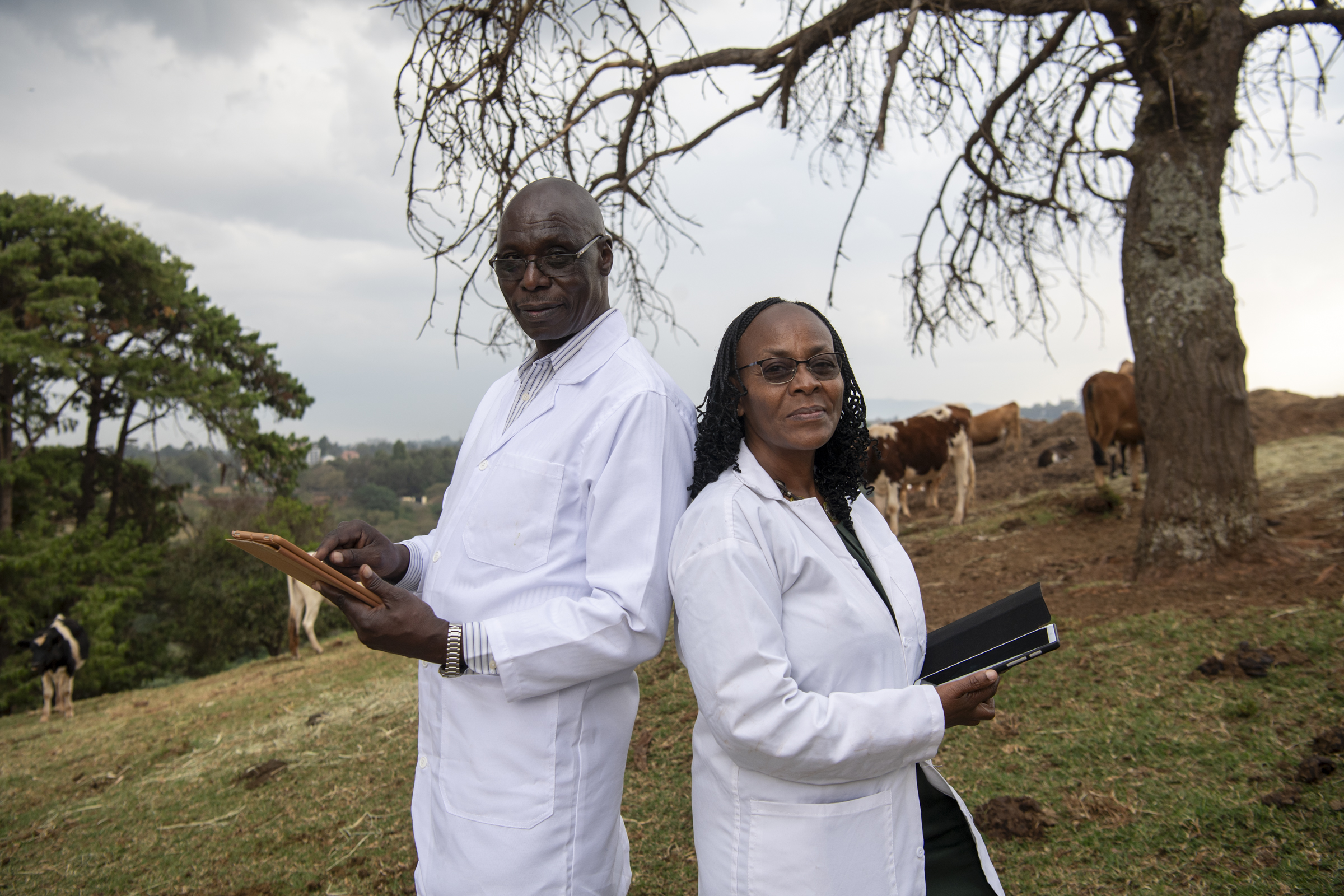
Josephine learned some farming skills from her mentor and neighbor, Mary. Mary had recently acquired a Friesian cow that was newly bred to thrive in places like Ngumu. It produced more than twice as much milk as Josephine’s indigenous cow.
“Mary could produce milk, sell in the village, sell in the community,” says Josephine. “I also wanted to have one.”
Josephine saved up and bought a Friesian cow of her own, naming it Mukuni. Mukuni was soon producing 16 liters of milk per day—enough for Josephine’s children and for her to sell at the market. The money she earned went toward her kids’ education.
Growing ambitions
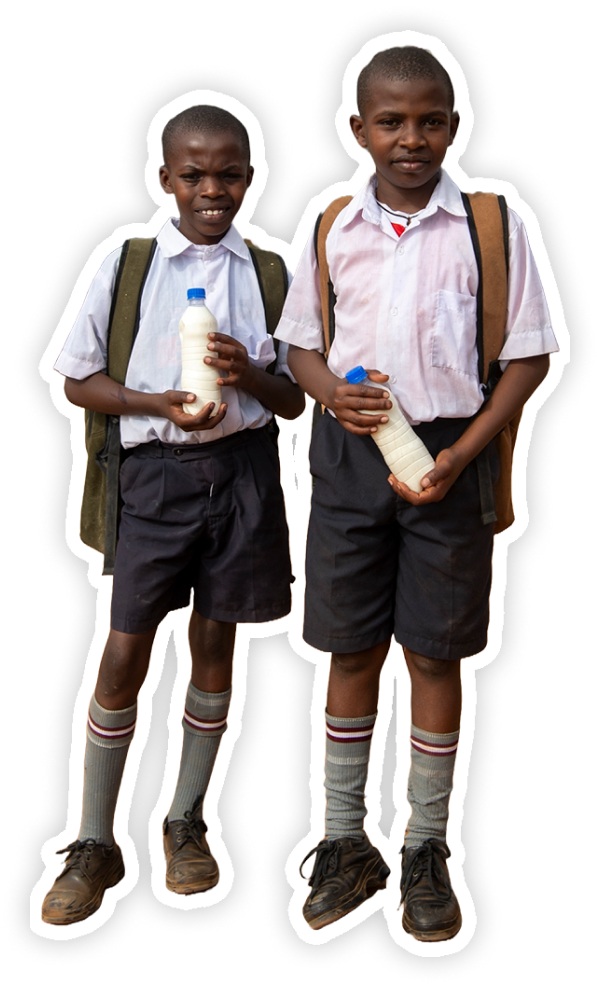
Today Josephine’s five children are thriving. Ten-year-old twins Ephraim and Manase are in grade 5 in primary school. Fifteen-year-old Wisi is in the third year of secondary school. And her eldest children, twins Jamima and Kesia, are in their third year of university. Jamima studies computer science and Kesia is studying education, math, and geography.
Josephine is providing the education she always dreamed of for her kids.
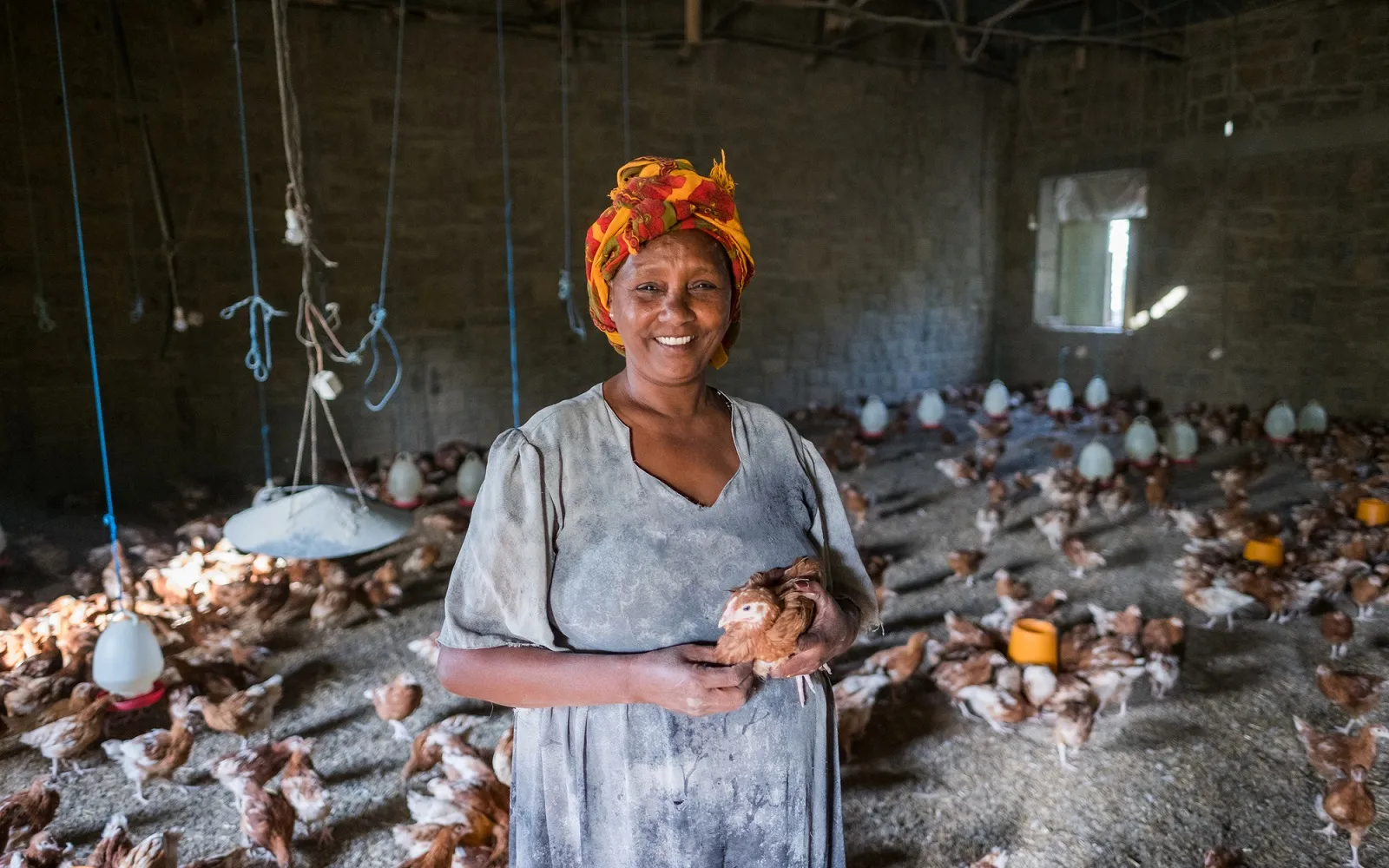
As for the hens circling in Josephine’s yard? She bought them with the extra income from Mukuni, the Friesian cow, and sells the eggs at a profit—one bold investment enabling another.
Josephine envisions buying two more Friesian cows—greatly boosting her milk production and income—and investing further in the farm. “That is my dream,” she says. An entrepreneur to the core, she is looking toward the next opportunity, milk jug in hand.
Related work
The Gates Foundation’s Agricultural Development program partners with farmers and researchers to enable the world’s smallholder farmers to thrive.