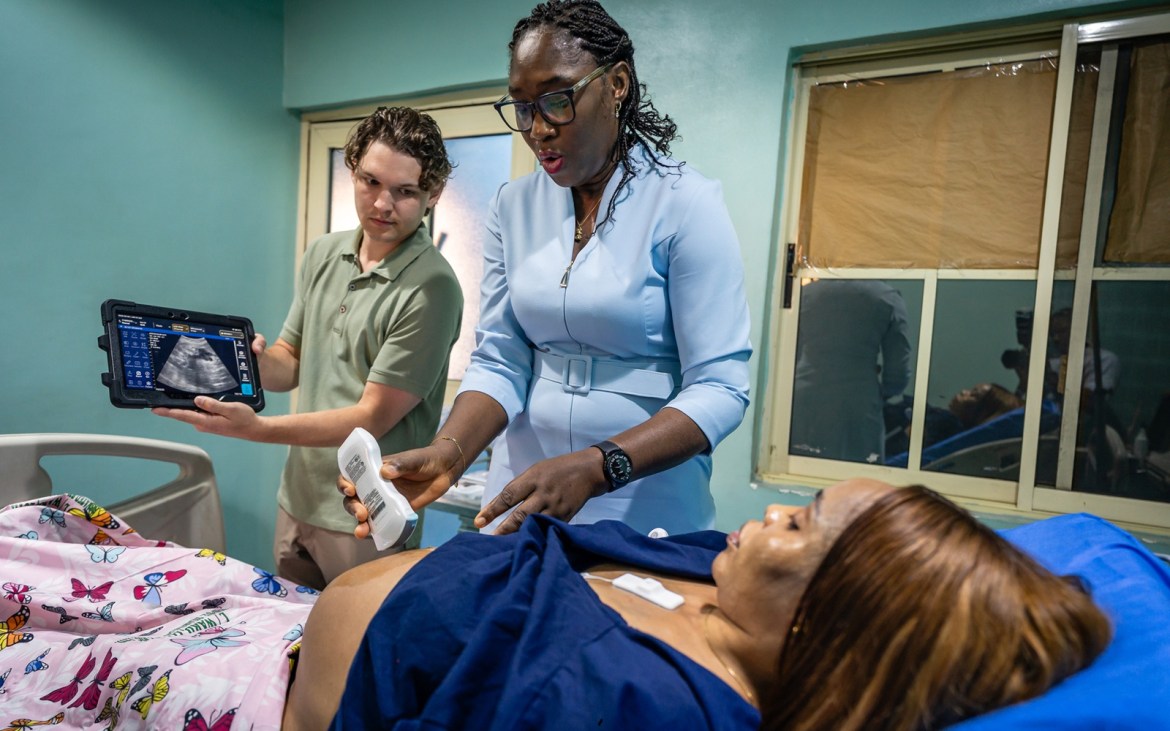
One day after COVID-19 was declared a global pandemic, Kenya reported its first case. Like many countries around the world, Kenya needed answers about how to slow the spread of the disease. But with limited resources and fragmented data systems at home, the government was heavily reliant on global data of varying quality and projections that weren’t always relevant to Kenya.
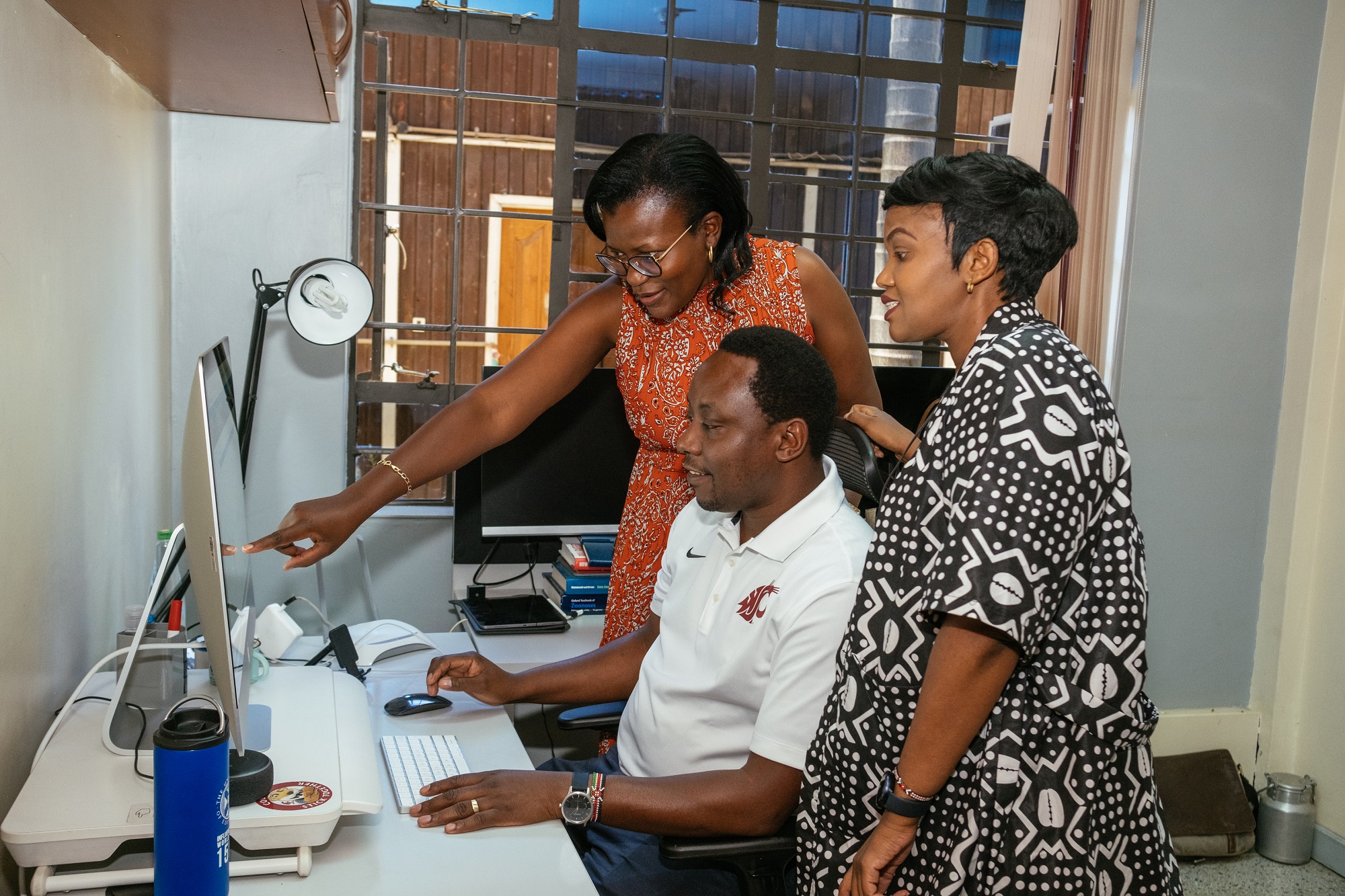
Three Kenyans quickly recognized this gap and teamed up to see how they could help. Professor Thumbi Mwangi, an infectious disease epidemiologist and trained veterinarian, brought research and modeling expertise. He joined fellow University of Nairobi professor Dr. Loice Ombajo, who also serves as an infectious disease doctor at Kenya’s largest referral hospital, Kenyatta National Hospital. Many Kenyans came to know her as a voice of reason on the news during the pandemic’s earliest days. Rounding out the trio was Dr. Shikoh Gitau, a self-professed “math geek,” who has devoted her life to creating opportunities through technology, recently launching her own company, Qhala, to catalyze Africa’s digital future.
Using local data and mathematical modeling, they provided clear, useful disease projections and became one of the government’s most trusted resources. What began as an informal partnership between three civic-minded Kenyans is now an important emerging resource for Kenya and the continent: the Center for Epidemiological Modeling and Analysis at the University of Nairobi, or CEMA.
For Ideas, they shared how CEMA is growing new talent in the field and changing the way governments can use local health data well beyond the COVID crisis.
Meet CEMA’s founders
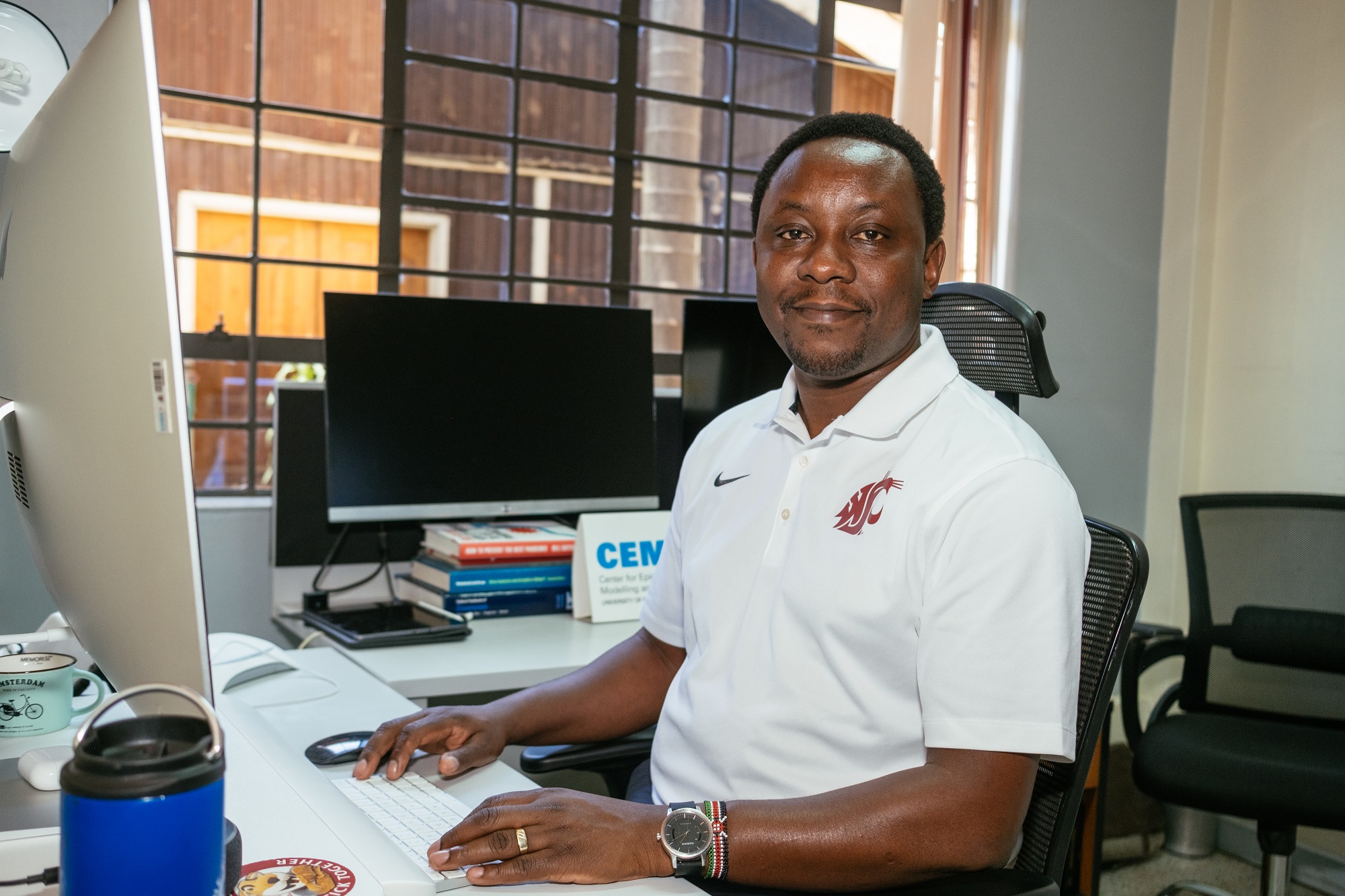
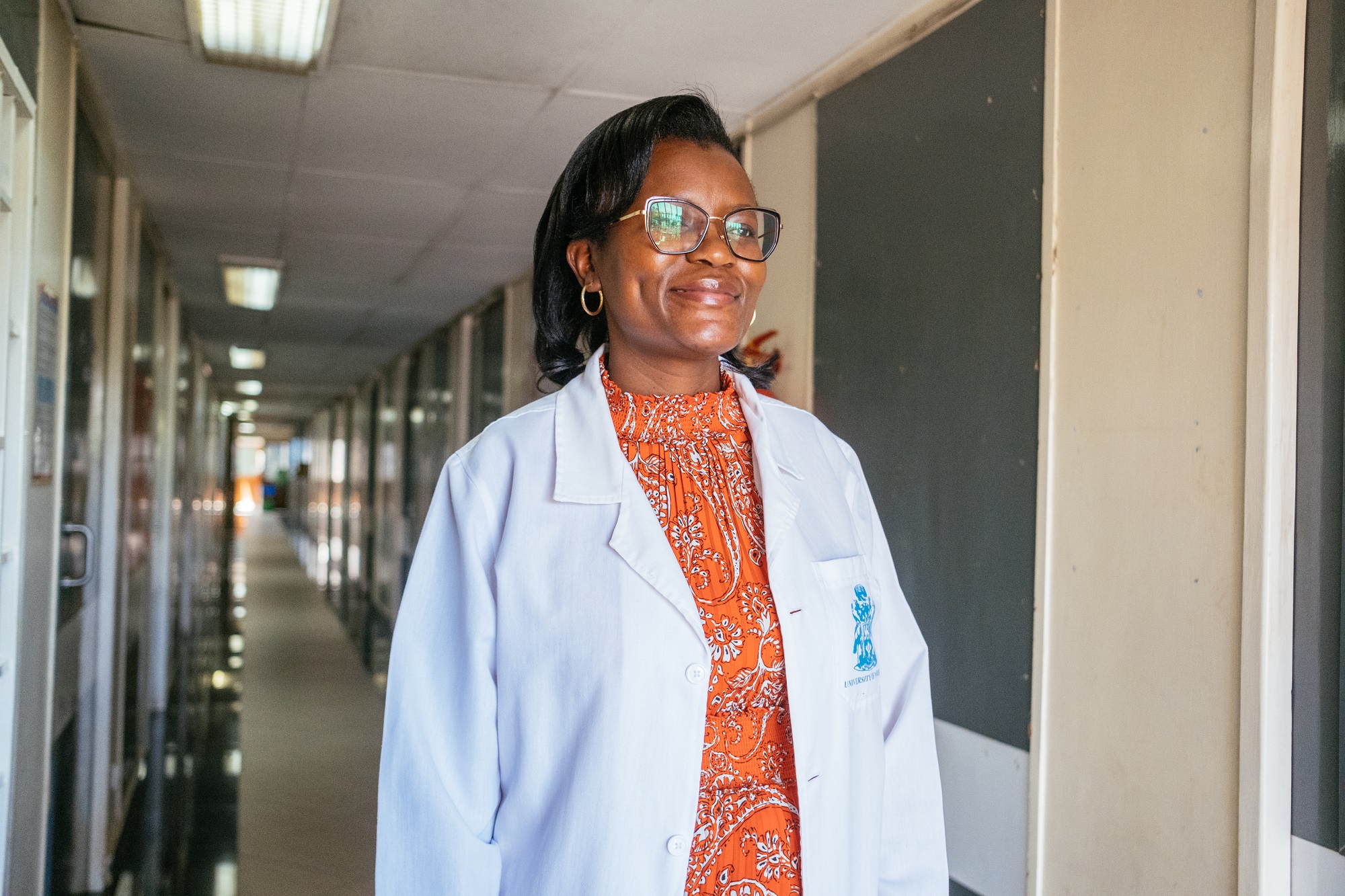
Dr. Loice Ombajo: When COVID-19 came, everybody was panicked. We were seeing images from Europe and the death toll was really high, and we knew we were not prepared.
Dr. Shikoh Gitau: I had literally just launched Qhala on January 4th. Then, the 12th of March, Kenya announced its first case. I’m thinking, “It’s two months into my new company. What are we going to do?”
Dr. Thumbi Mwangi: There was a request to model how long it would take to get to the first 1,000 cases or the first 10,000 cases. So, I got hold of one of my PhD students, and we started working out a simple model.
Gitau: My team took whatever data was available online to figure out what areas would have the most fatalities, based on comorbidities, population, or economic status, if COVID were to hit all of Kenya. I reached out to a former colleague in the government and said, “We have something that might be interesting for you.” We presented it to him, and he said: “You guys did this?” I said, “Yeah.”
“You’re sure you did this?”
“Yes, we did this.”
And he said, “Can you do more?”
So, I reconnected with Thumbi and Loice.
Ombajo: Thumbi and I had done some work together on antimicrobial resistance. I met Shikoh during a huge cholera outbreak in Kenya—together we worked out how to use technology to improve contact tracing and identify hot spots.
We came together and said: let’s do this. Let’s see what we can do to support our country’s response to COVID-19.
Dr. Loice Ombajo’s story
United by a passion for public good
Mwangi: Together, we had the appropriate ingredients to respond to a pandemic, not just from a math modeler or a practicing infectious disease clinician or a tech expert.
Ombajo: We are so different in our training. But when this came up, it felt like such a natural fit. We have the same passion for public good.
Gitau: My life’s purpose is to use technology to connect people to opportunities. I’m always looking for places where tech will have the most impact on this continent.
Ombajo: For all of us, at the end of the day, it goes back to: How is it good for Kenya? How is it good for the public? If I can put programs in place that protect other people, that’s what motivates me. The constant search for what can help everyone else.
Gitau: I’m a technologist. I love solving problems. I will not pretend at all I understand medicine, no. However, send me a problem that I can solve, and I will find a way around it, on top of it, through it.
Dr. Shikoh Gitau’s story
“Turn on the TV, right now”
Gitau: Those first three months, nobody was paying us. I was literally using my savings to pay my team.
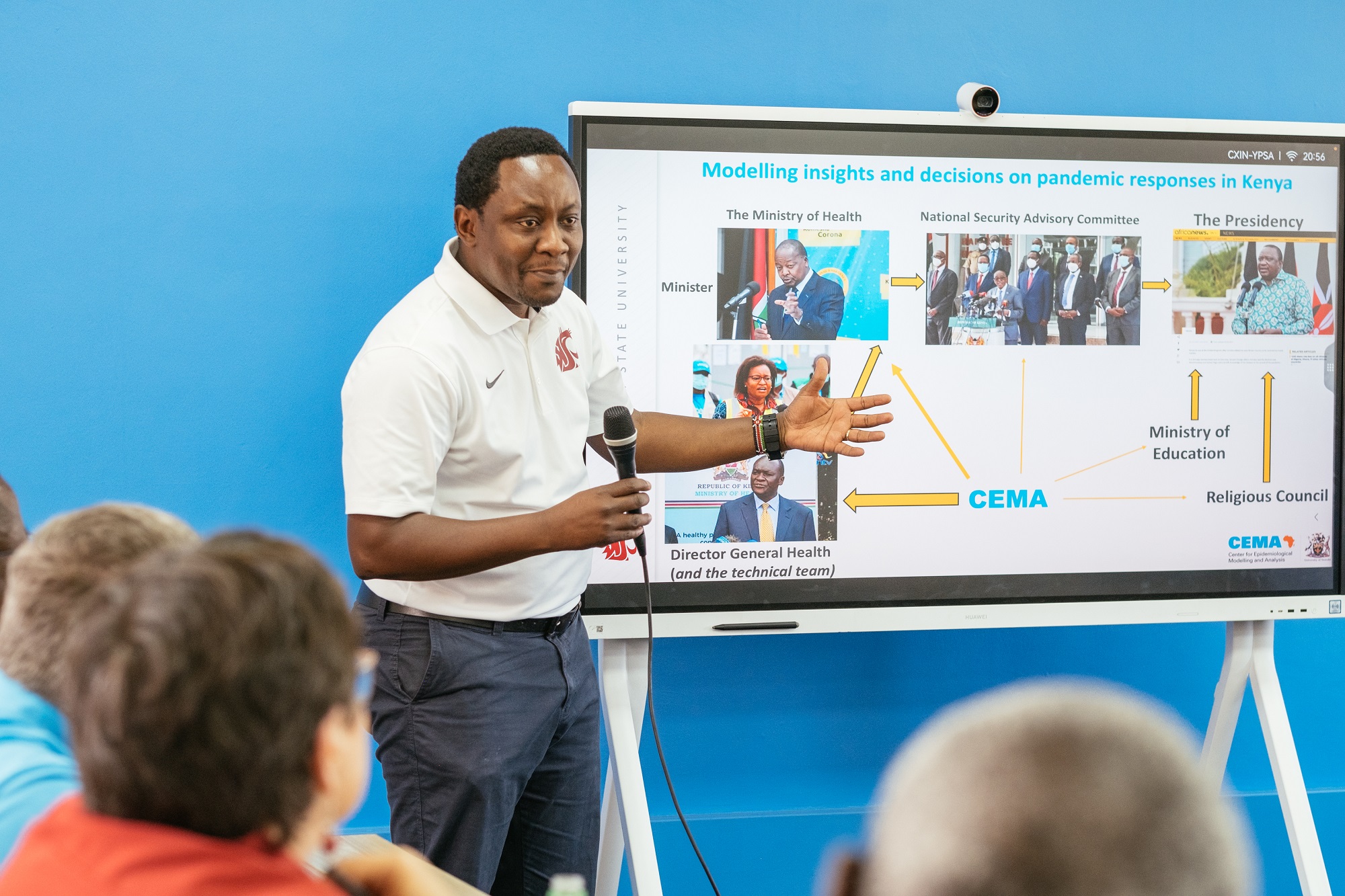
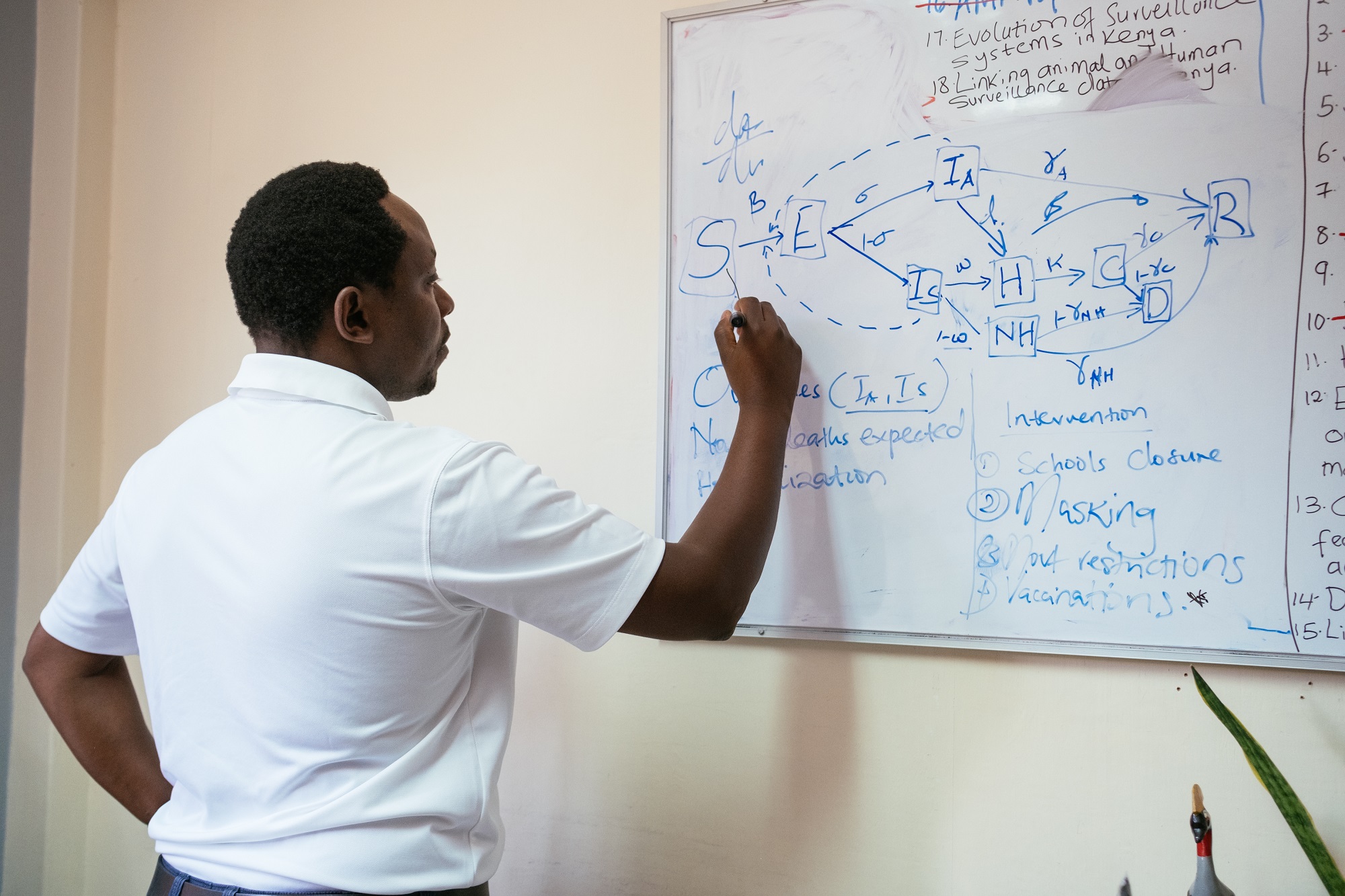
Ombajo: We started modeling the potential impact of various public health response measures to COVID. And the government reached out to us more and more. They invited us to the table and asked: “What should we do? What is the science saying?”
Mwangi: “What’s our current capacity in terms of oxygen?” “How are people moving?”
Gitau: “If you were to shut down the country, what would have the most minimal effect on the economy?” That was crucial to understand. I remember us working day and night to model that data—we gave it to the government on a Sunday.
The next day, right in the middle of the meeting with my team, I got a call from a friend. He said: “You need to turn on the TV, right now.”
I did—and there was the president of Kenya, referring to “the experts” and citing our work. I’ll never forget my team’s faces when they saw that. Remember—these are talented young people, most of them under 27. They’re being affirmed on a national stage.
Making health data accessible—and actionable
Gitau: At the end of 2020, somebody released a paper. It said that the decisions that were made early in March, April, May of 2020 in Africa, are the ones that flattened the curve for long enough for people to understand the disease and find ways to cure or manage it. And our work contributed to some of these decisions.
Ombajo: Our job is to give information in a way that could be easily broken down for people to consume. Whether it’s my aunt living in the village or someone at the Ministry of Health.
Mwangi: Even though we set up initially to address COVID-19, we’re doing so much more. Now, we’re training over one hundred people across Africa and growing. We’re building a center of excellence—not just for Kenya but for the continent.
Ombajo: Now, we’re able to track trends. We’ve looked at essential health services, to understand which trends were negatively impacted by the pandemic—like sexual violence, which really went up. Which were resilient, which are good lessons for us to learn from? Or when there’s severe drought—what’s happening with some of those indicators?
Training the next generation of African epidemiologists
Today, CEMA is run by young data scientists, students, and epidemiologists. While still nascent and growing, together they’re making sure data is accessible, clear, and tangible for decision-makers tackling a wide range of challenges—from waterborne illness to the health effects of climate change—in Kenya and across the continent.
Ombajo: I remember recently, we were doing some work on infection prevention and control. And I sat down and looked at my whole team and realized: “It’s all young women.” We have a few gentlemen. But it’s all young people.
Mwangi: Anita is a good example. She was in her final year of undergraduate, working on epidemiology.
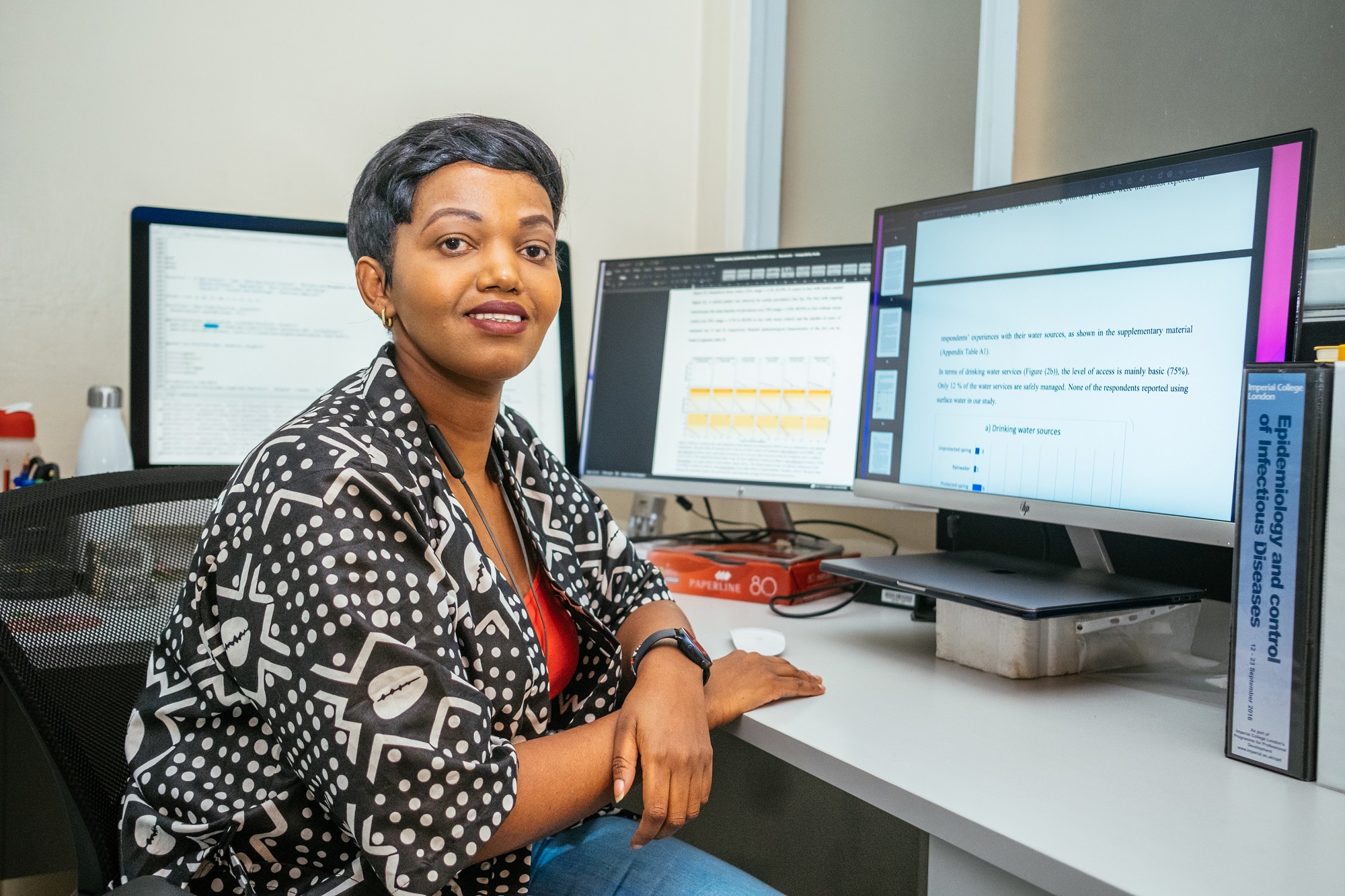
Anita Makori, research assistant at CEMA: When I was doing my undergrad, I knew the work I wanted to do. But I didn’t know where I could do it. The moment I learnt about CEMA, I said: “Oh, this is the solution we’ve all been waiting for.” We’ve always had health on one side, and data on another. But when we bring them together, policy decisions can be informed by actual evidence. The impact is life-changing.
Gitau: What CEMA provides is an opportunity to bet on local young talent—local Kenyans. There are young people on my team who have never gone to university. I know CEMA has saved lives. But those kids—this changed the trajectory of their lives.
Mwangi: We’re building a pipeline of data scientists that can have an impact. And I think we need not look elsewhere. We have enough talent on the continent. And it’s not just talent—it’s also the initiative and willingness to step up.
Makori: Every day, you learn something new from someone, and they have something to learn from you. We each have our own goals and ambitions—but once you interact with all these amazing people, you feel more inspired. You can do more and be more. That’s why I love what I do here.
Thank you to everyone at CEMA who took the time to speak with us, especially the many young rock stars who presented their research to Bill Gates in Nairobi. The Bill & Melinda Gates Foundation is proud to fund CEMA as part of our Africa Team’s work to invest in and strengthen local, African-led data ecosystems. Stories like this are a reminder of why we do this work: to support visionary leaders, young talent, and homegrown solutions that enable all to reach their full potential.