
The prefix “pan” in the word “pandemic” means “all.” And, in many ways, the pandemic has been a shared global experience. All the world has felt the pain of losing loved ones. Now, all the world is coping with the rapidly spreading Delta variant. In Africa, however, we also have had to contend with a unique problem: Less than two percent of our population has been vaccinated so far.
The public health response in the coming days and weeks will determine whether African countries are able to contain the surge and save lives.
As a result, the continent is currently suffering a third wave of infections that is already worse than the first two. Two dozen countries are seeing vertical spikes in case numbers reminiscent of the early days of the terrible tragedy when Delta struck India. But we don’t have to look to India to imagine the worst scenario.
In South Africa, where I live, cases started rising sharply more than two months ago, and they didn’t start falling again until last week. The hospitals couldn’t absorb all the patients who needed intensive care. Beds were available only after someone died. As the situation deteriorated, South African authorities moved quickly to accelerate their COVID-19 vaccine rollout in an effort to stem the rising tide of cases.
With the ongoing vaccine shortfalls across the continent, that option is not available to all countries—which is why we need to close the vaccination gap as soon as possible to start breaking virus transmission. Otherwise, we risk a fourth wave and a fifth wave and so on, our economies will continue to shrink, more people will be pushed below the poverty line, and more will die. In the immediate term, rich countries need to do more sharing and support African nations to have access to the vaccines that they need.
In the long term, we need more sustainable solutions. That’s why the African Union and Africa CDC launched Partnerships for African Vaccine Manufacturing in April, with the ambitious goal of developing the capacity to manufacture 60 percent of the continent’s annual vaccine needs by 2040. As my colleague Anita Zaidi writes, support for developing country vaccine manufacturers can have a powerful long-term impact. But vaccines made in Africa by 2040—and even vaccines shipped to Africa sometime next year—are not going to minimize the damage of the third wave right now.
The public health response in the coming days and weeks will determine whether African countries are able to contain the surge and save lives. The good news is that local, regional, and continental institutions have been rising to the challenge since the pandemic began. National governments and their leaders were able to work quickly with Africa CDC, WHO AFRO, and other partners to take decisive action.
Consider the role of the Africa CDC, an organization that was only founded in 2017 and has had to scale up much faster than normal. Early in the pandemic, the Africa CDC convened all 55 ministers of health on the continent to develop a joint strategy that all countries endorsed. I am proud of all that our foundation has done to support the Africa CDC and help it execute on this strategy. In fact, our very first COVID-19 response grant—made in January 2020—went toward the Africa CDC’s pandemic response efforts.
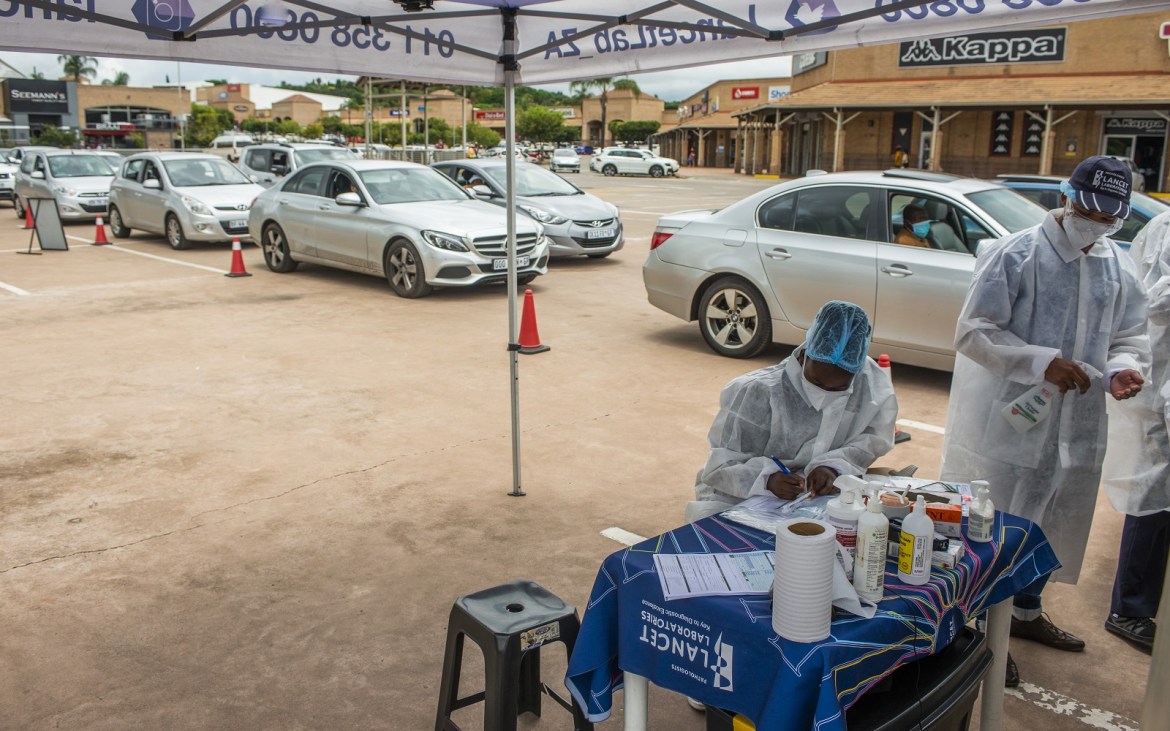
For example, the Africa CDC worked with countries to establish testing capacity for the novel coronavirus, increasing the number of nations able to diagnose the disease from just two to 43 in a matter of weeks. All 55 member states now conduct testing, and Africa CDC has distributed more than 10 million test kits.
The Africa CDC has also expanded the Institute of Pathogen Genomics, which uses cutting-edge technology to follow the development of variants on the continent and helps policymakers decide based on evidence how to contain them. Right now, Africa CDC has the infrastructure to send teams to manage hot spots across the continent, deliver personal protective equipment and treatments such as dexamethasone, slow the spread of the disease, and save the lives of those who get sick.
This latest funding will help to fill the most important resource gaps for pandemic response efforts, but a funding crunch remains. Every dollar that key partners in the response don’t have represents a patient who goes unprotected, undiagnosed, or untreated.
The bad news is that the Africa CDC doesn’t have the funding or adequate supply of commodities it needs to deliver all these vital services at scale. The Gates Foundation just provided the Africa CDC with immediate, flexible funding of US$20 million, bringing our total support for their critical work on the continent to more than US$50 million since 2017. This latest funding will help to fill the most important resource gaps for pandemic response efforts, but a funding crunch remains. Every dollar that the Africa CDC and other key partners in the response don’t have represents a patient who goes unprotected, undiagnosed, or untreated.
During this pandemic, in the face of a failure of global collaboration and equity, Africa has made major strides toward self-determination in health. Leaders on the continent are now laser-focused on goals like regional vaccine manufacturing. The ecosystem of public health and science institutions needed to deliver on those goals is much larger and more diverse than it was 18 months ago.
But the benefits of this approach will become apparent only in the long term. In the short term, there is a third wave of COVID-19 on the continent, and wealthy nations have another chance to renew their commitment to collaboration and global equity by supporting the response.