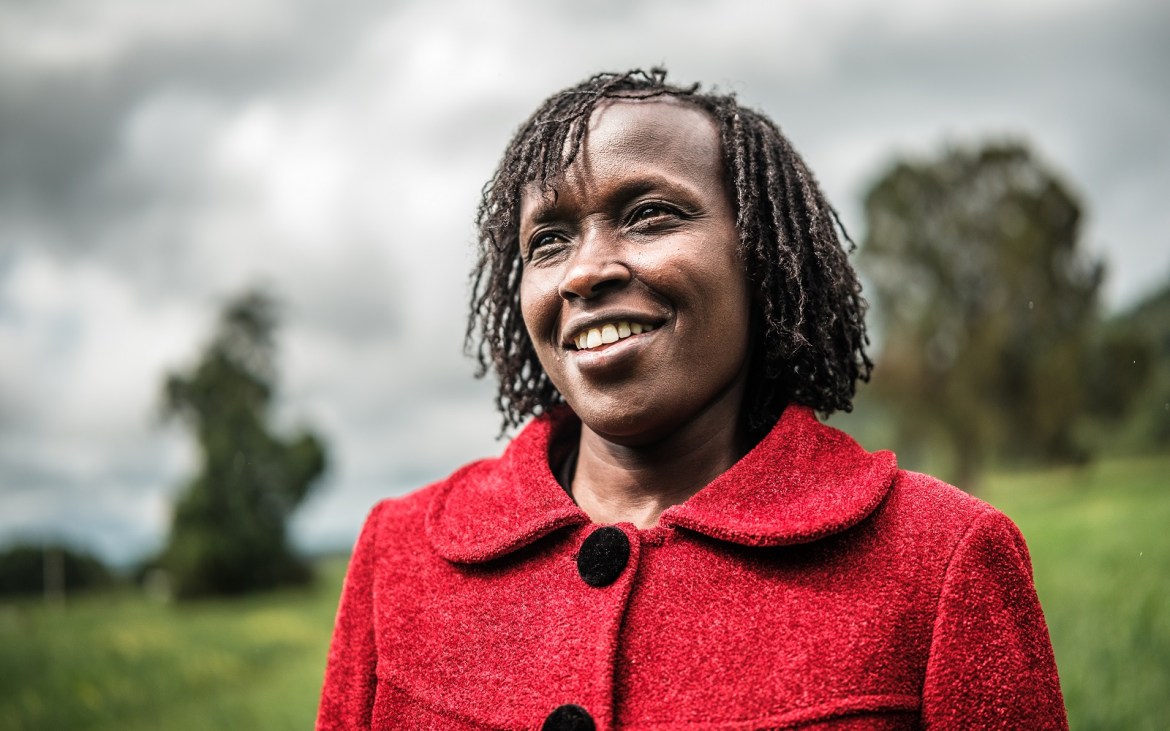
Rebecca Jerop believes that the future of Kenyan agriculture requires a return to its roots: traditional crops that once sustained communities but have since been largely overlooked.
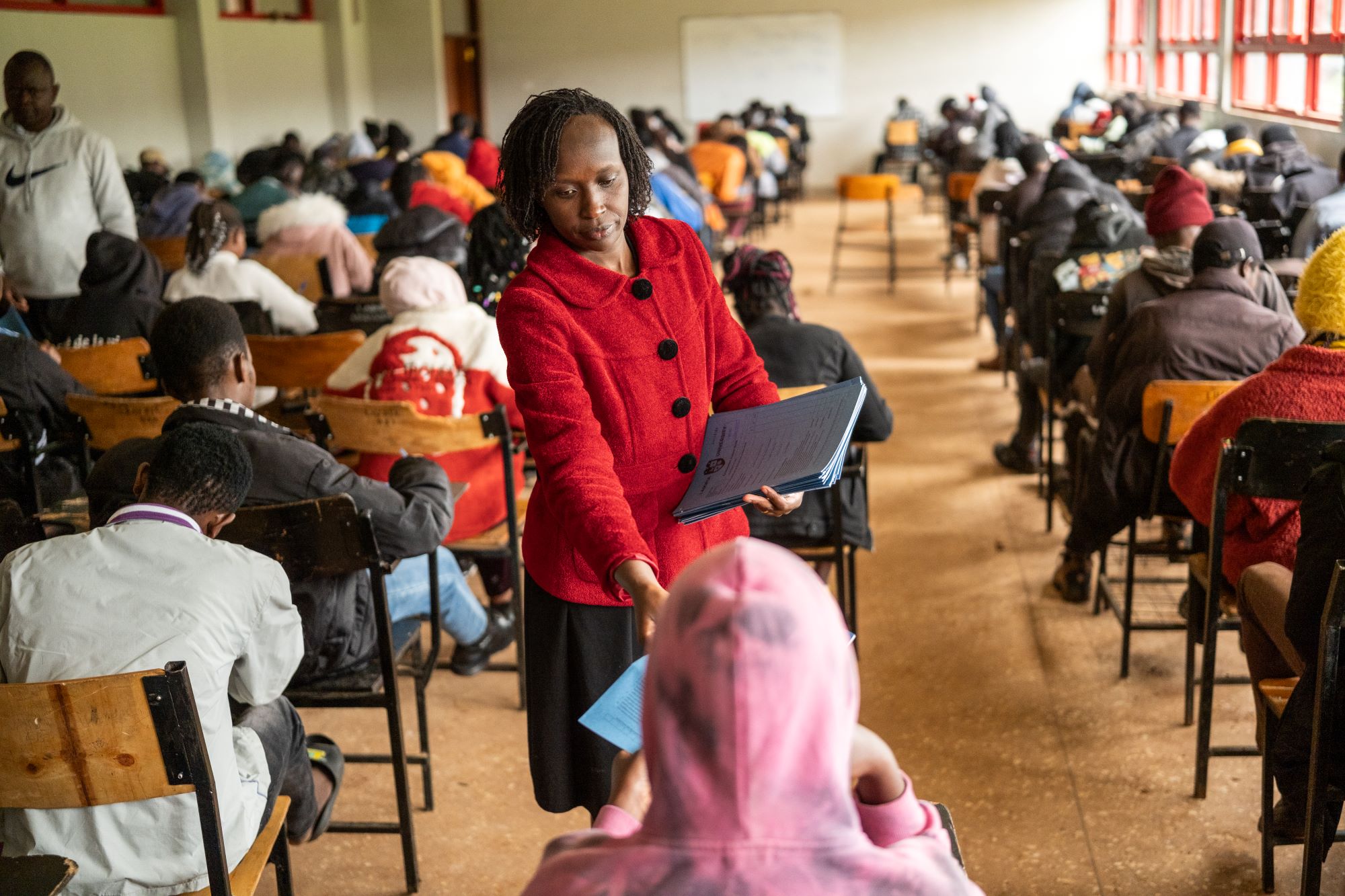
As an agricultural economist and lecturer at Laikipia University, Jerop is working to ensure that agricultural innovations—from soil conservation practices and climate-resilient seeds to marketing initiatives—work for smallholder farmers, many of whom are being forced to adapt to a changing climate. What approaches are most cost effective? What can build long-term sustainability? And, crucially, what can help farmers not just survive but thrive?
For Jerop, one of the most promising ways to build a more climate-resilient future is to reintroduce an ancient grain: finger millet. Once a staple of Kenyan diets, this nutrient-dense cereal is rich in calcium and vitamins and thrives in harsh, dry conditions. In regions where drought and degraded soils have made farming more precarious, finger millet stands out—not only for its resilience but also for its potential to improve nutrition, incomes, and economic stability in farming communities that are most at risk.
By helping to reintroduce crops like finger millet, Jerop is connecting economics, traditions, and innovation in a way that could reshape the future of farming in Kenya—and far beyond. We spoke with Jerop about her journey to this work, the promise of traditional crops in climate change adaptation, and her vision for food security in Kenya.
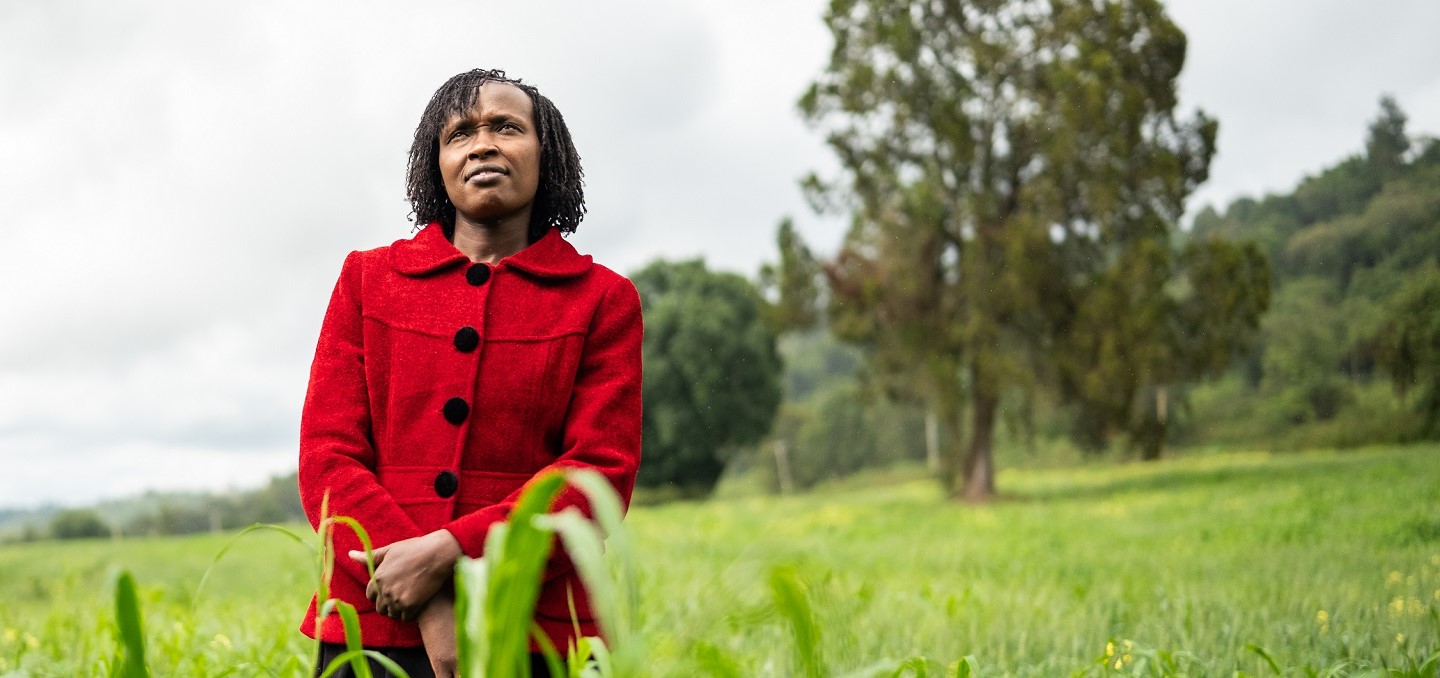
“They don’t need to be told about climate change; they know it…”
– Dr. Rebecca Jerop
A long time ago, my parents grew finger millet. It was a common food in my village. But at some point, these kinds of crops started disappearing and you saw only maize. There were new varieties of maize at the time, and they were simple to grow compared to finger millet. Early on, production was high. But maize became less productive in this region over time because of climate change. It wasn’t resilient to drought, so the crop could be wiped out and farmers would have nothing. It requires a lot of fertilizer, which causes the soil to become acidic. So it’s no longer sustainable. When I began my research work, I remembered the traditional crops, and I began thinking again about finger millet.
Finger millet doesn’t need much space, especially compared to maize. For maize to be economically viable, you have to produce it on a large scale. But in Kenya, the largest plots of land in most places are just 0.2 or 0.3 hectares [about half the size of a soccer field]. Finger millet is a short-season crop, so you can grow two or even three crops per year. It’s nutritious. In my village, it was a common food for pregnant women and young children. Finger millet will do well even in a drought.
I believe these underutilized crops are very good crops, and I want to figure out how we can get them back to farmers. A big problem is they had been neglected in the research. Finger millet had a problem long ago with low yields, but more researchers began working on it. There’s a lot more innovation, and a lot of new varieties that are more productive. With the new varieties, we also have some ways where we can conserve the soil and water. So I’m looking at different initiatives to see if they’re efficient, if they increase productivity. Have farmers adopted these innovations? If not, why not? Is there any impact on productivity? Or on commercialization? If you commercialize these crops—as opposed to growing for subsistence—and the farmers get income from them, they can continue embracing the crops.
There are many challenges, but the first one is consumer awareness. Farmers need to market this crop because it has a lot of benefits compared to maize. For one thing, it’s a very nutritious crop. After awareness, there’s also the issue of processing. During harvest season, we have processing companies that come and buy the maize. But with finger millet, processing is more challenging. Another issue is that farmers may need to be trained in how to increase productivity and be able to access the market.
I think most of the farmers are aware of certain changes. They don’t need to be told about climate change—they know it from their experiences. They can tell you how, some years back, they were sure when the planting season would start, when to expect the rains, and how long the rains would last. Not anymore. Farmers are seeing changing weather patterns, and they’re not sure when to plant, what to grow. That’s what they’re talking about. They’re looking at planting short-season crops and are interested in drought resistance. Because of growing awareness, you see more farmers growing finger millet, not as a major crop yet, but as part of their diversification.
I believe food insecurity may be increasing because of issues around climate change. But these traditional crops, especially finger millet, are well adapted to the local environment. They will do well as the climate changes. If we adopt this crop, we will have a more resilient food system. We also have the issue of malnutrition here. If we can encourage farmers to grow these crops, which are very nutritious, we can alleviate some of that. People are becoming more aware of the benefits of these underutilized crops. But it’s a slow process. I hope one day farmers will fully embrace these crops and have an impact on nutrition and food security.
Jerop’s work is a reminder that innovation doesn’t always mean something new. Sometimes, the future lies in remembering what once worked—and bringing it back to help people thrive.