At a clinic in western Kenya, Nurse Christine Watima suspected her patient might be carrying twins. A handheld ultrasound confirmed she was right – and revealed something else that would change the mothers birth plan. See what the scan revealed.
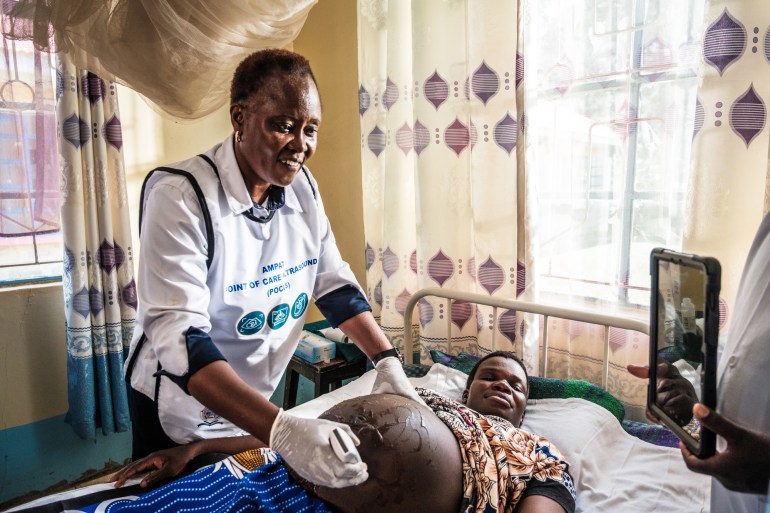
At Nasusi Health Centre in Bungoma County, Kenya, Nursing Officer Christine Watima gently pressed her hands against an expectant mother’s abdomen. She felt only a single contour, but her instinct told her that the patient might be carrying twins.
She reached for the clinic’s new point-of-care ultrasound (POCUS) device to pair her clinical judgment with a closer look at what was happening with the pregnancy.
Unlike traditional ultrasound machines that are typically housed in larger health facilities, POCUS devices are compact and portable, allowing trained health workers to perform scans where patients are already receiving care.
What the scan revealed
The ultrasound scan confirmed a twin pregnancy—reason enough for the mother to deliver at a higher-level facility—but it also revealed that one of the babies was in a breech position. A breech delivery—bottom- or feet- first rather than head first—has a higher risk of complications. Watima referred the mother to a facility equipped for specialized monitoring and delivery care.
The need for portable, easy-to-use ultrasound
For many pregnant women in rural Kenya, getting that kind of information isn’t simple. Many primary health facilities lack ultrasound equipment, so getting a scan can mean traveling as far as 40 kilometers to a major urban medical center. The high cost of transportation can put scans out of reach altogether.
“It’s estimated that approximately one in 10 pregnant women [in rural Kenya] have access to an ultrasound machine during pregnancy.”
Dr. Jeremiah Laktabai, Faculty at Moi University School of Medicine and deputy executive director of care at the Academic Model Providing Access to Healthcare (AMPATH)
POCUS gives trained health workers like Watima more confidence to act on their experience and knowledge and what they learn from their patients and from physical exams.
With a small probe and an application of gel, the device translates sound waves into real-time images, helping health workers make better-informed referrals when a pregnancy needs a higher level of care.
A Different Plan for Delivery
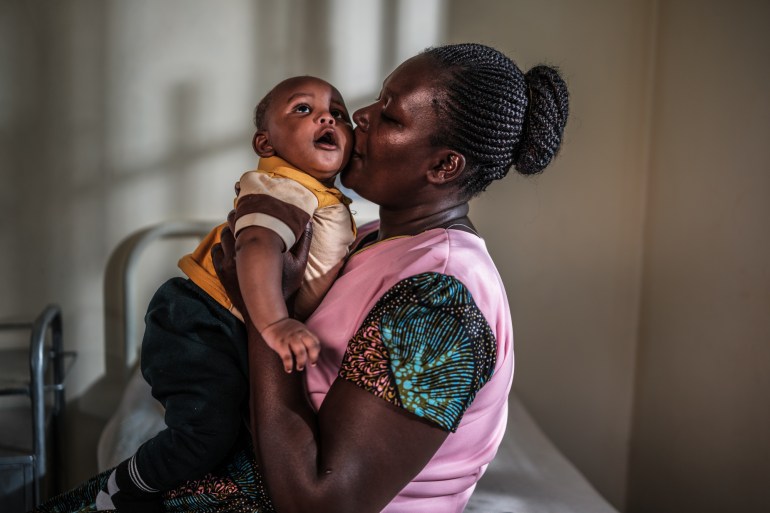
Months later, Watima’s patient safely delivered two healthy baby boys via a scheduled cesarean section. Today, she remains a regular visitor to the clinic, stopping by to say hello to the nurse she regards as not only a clinician but also a champion who helped ensure the safe birth of her twins.
“Now nurses can help mothers in a way we never could before, with timely referrals.”
Christine Watima Nursing Officer at Nasusi Health Centre
Strengthening care closer to home
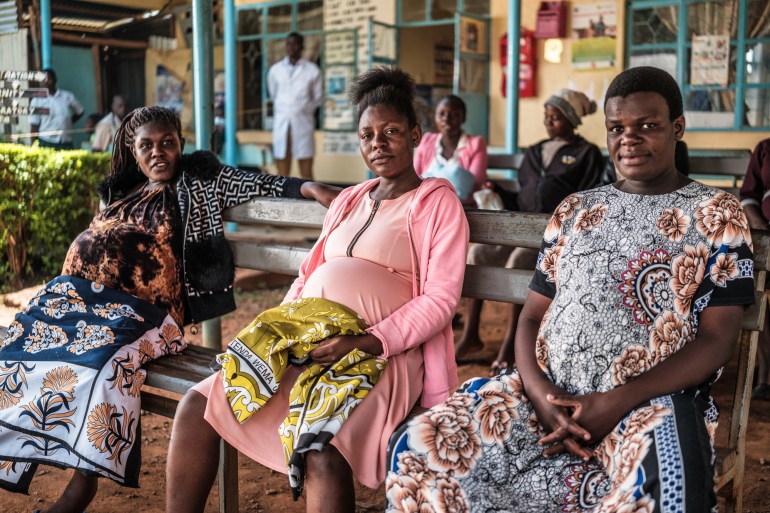
As more primary health facilities in western Kenya gain access to POCUS, health workers are noticing that more women are coming in earlier for prenatal care and staying engaged with their care throughout their pregnancies. Women are even accessing breast cancer screening through POCUS.
[Women] coming in early for antenatal care and also completing the recommended visits is an early sign that we are in the right direction.
Dr. Julia Jerono Songok Dean of the Moi University School of Medicine
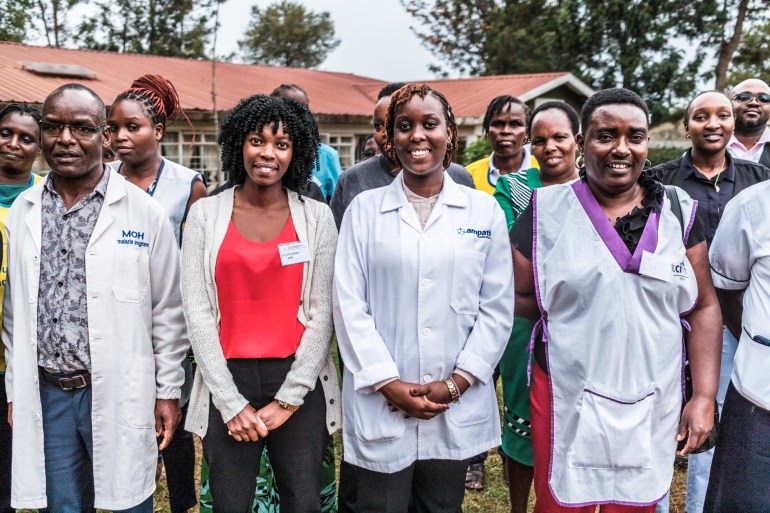
Health care workers pose for a group photo at Turbo Subcounty Hospital in Uasin Gishu County, Kenya. @Gates Archive/Brian Otieno
The partnerships making it possible
A handheld device may be small, but getting it into the hands of a trained health worker takes a much larger partnership. This work is made possible by the Academic Model Providing Access to Healthcare (AMPATH), a partnership in Kenya between Moi University, the public health system, and global academic partners through the AMPATH Consortium. Support for the POCUS initiative is provided through Panorama Global, a U.S. charitable foundation, with funding from the Gates Foundation, Novartis, Eli Lilly and Company, and MSD, through its MSD for Mothers initiative.
“The aim is to deliver quality health care in underserved communities [and] to train health care workers for this and the next generation,” says Dr. Laktabai.
Through care, education, and research, AMPATH ensures that health workers are not isolated in their practice and that mothers can access high-quality prenatal care without the burden and expense of traveling long distances. By July 2026, more than 60% of facilities across three Kenyan counties had POCUS devices.
7,000
AMPATH’s efforts have so far brought ultrasound to more than 7,000 women in western Kenya who would otherwise not have had that access.
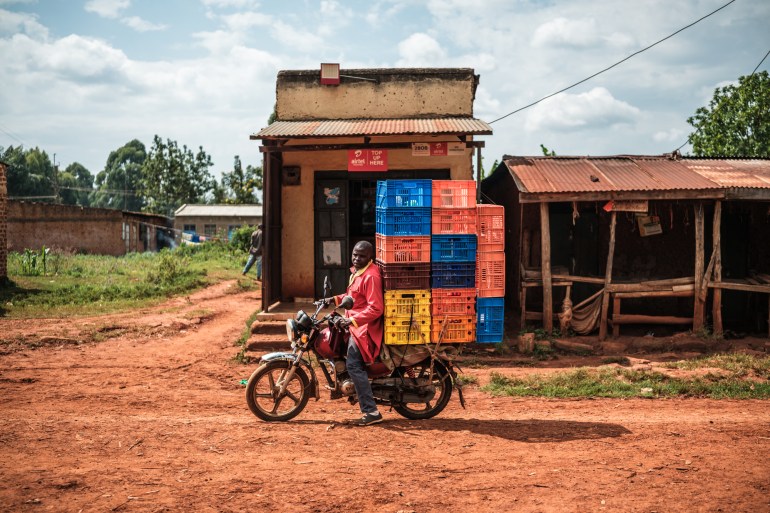
A motorcycle rider transports crates on his bike near Sinoko Subcounty Hospital in Bungoma County, Kenya.
That means more women are getting the right care at the right time—and more local health workers are able to make clinical decisions with confidence and offer patients greater reassurance and hope.
Sign up for The Optimist newsletter
Subscribe to The Optimist to get weekly updates on the latest in global health, gender equality, education, and more.
By submitting your email to subscribe, you agree to the Gates Foundation’s Privacy & Cookies Notice.