
Postsecondary Learning & Navigation
Our goal
To help more learners earn credentials of value by strengthening learning and navigation at key moments that shape success.
At a glance
- Many learners lack the guidance and support needed to choose and navigate college and career pathways and stay on track toward a credential.
- Too many learners struggle in first-year foundational college courses that determine whether they stay on track toward a credential.
- Credits and prior learning don’t always transfer, increasing time and cost of completion.
- Too few proven solutions reach enough institutions and learners to make system-wide impact.
Our strategy
We’ve seen that postsecondary success often depends less on a student’s talent or determination than on whether the systems around them work the way they’re supposed to. And our work to improve student outcomes focuses on pivotal moments that set the trajectory for a learner’s success:
- Transitioning from high school into and through college
- Passing critical first-year college courses
- Ensuring college credits count towards a credential
Our goal is that by 2030, many more institutions adopt proven learning and navigation solutions that help students succeed in first-year courses, persist toward credentials, and receive credit for prior learning. Together, these efforts will support progress toward our broader goal of 10 million more learners earning credentials of value by 2045.
Latest grants
-
CareerVillage Inc.
View grantee: CareerVillage Inc. -
Complete College America Inc.
View grantee: Complete College America Inc. -
Huston-Tillotson University
View grantee: Huston-Tillotson University -
University of Nevada, Las Vegas
View grantee: University of Nevada, Las Vegas -
State Board for Community Colleges and Occupational Education
View grantee: State Board for Community Colleges and Occupational Education -
Johnston Community College Foundation Inc
View grantee: Johnston Community College Foundation Inc
Areas of focus
Our work is organized around three connected priorities: Navigation and Advising, Digitally Enabled Teaching & Learning, and Learning Mobility, plus the institutional improvement and enabling conditions work that brings these things together.
Navigation and advising
Learners make important decisions at every step of their education—from choosing what to do after high school to selecting courses, paying for college, and staying on track toward a credential. Yet access to guidance is uneven. In high schools with high counselor caseloads—400 or more students per counselor—students receive college advising guidance at lower rates, with potential first-generation college students the least likely to access support. In college, advisors at some under-resourced public institutions support more than 600 students at a time, limiting opportunities for personalized guidance and leaving many learners to navigate complex academic and administrative systems largely on their own.
We work to strengthen advising and navigation so learners can receive clear, timely, and personalized guidance as they make decisions about their future. This includes helping institutions build stronger data and support systems and exploring how new technologies, including AI, can connect fragmented information and make guidance more responsive—while keeping advisors and other trusted adults at the center of the experience.
Digitally enabled teaching & learning
Success in foundational first-year courses can greatly influence whether learners build momentum toward a credential or fall behind. Yet in introductory courses such as calculus, chemistry, and statistics, as many as 30% of learners receive a D or F grade or withdraw.
Many learners are struggling not because they can’t do the work, but because courses aren’t consistently designed to foster motivation and engagement, and professors aren’t always equipped with the strategies needed to meet the diverse needs of their learners.
We support the development and adoption of digitally enabled teaching and learning approaches grounded in evidence about how students learn. By combining effective instructional practices with advances in technology, including AI-enabled courseware, these approaches can provide learners with timely feedback and personalized support while giving faculty better information to strengthen instruction and help more students succeed.
Learning mobility
Learners increasingly move between institutions and in and out of education as they balance school, work, and family. But our postsecondary system does not consistently recognize and apply the credits, skills, and learning they have already earned as they make those transitions. Transfer students lose an average of 43% of previously earned credits, which can mean additional time, cost, and debt on the path to a credential.
Transfer reform and credit mobility are critical first steps towards a larger vision for learning mobility: the ability of learners to move through education and into the workforce without what they’ve already learned losing value, regardless of where or how that learning happened. That includes work experience, industry credentials, skills-based training, and prior learning of all kinds – all of it assessed, portable, and recognized.
Our work focuses on strengthening the shared data, tools, and infrastructure that can give learners greater clarity about how their learning will count and help institutions create more transparent and efficient pathways to credentials.
Institutional and system improvement
Effective solutions have a greater impact when colleges and universities have the capacity to adopt them, implement them well, and continuously improve. We work with districts, schools, institutions, and the organizations that support them to strengthen the systems, practices, data, and capabilities needed to improve student outcomes at scale.
Often done via networks that support collaboration and cross-pollination, this work helps institutions adopt and implement evidence-based approaches to building student momentum, such as dual enrollment and advising, as well as approaches to sustaining that momentum with strong learning, navigation, and credit mobility practices. By building institutional capacity to test and refine new approaches and creating opportunities to learn from evidence and from one another, institutions can make effective practices part of how they operate and extend their benefits to more learners.
Policy
Federal and state policies shape how learners access, move through, and complete postsecondary education—and influence institutions’ ability to adopt and sustain approaches that improve student outcomes. We work to advance policies that create the conditions for more learners to earn credentials of value. Our policy work focuses on using evidence to inform decisions about postsecondary access, affordability, accountability, student success, and the movement of learning and credits across institutions. We also work to ensure that policy and institutional practice reinforce one another so that effective approaches can reach more learners and endure over time.
Why focus on postsecondary success?
Higher education has historically been an engine of social mobility and economic growth in the United States, but as costs rise and colleges and universities face growing financial pressures, disparities in access and success by race, ethnicity, and income persist, and student financial aid systems are stretched to the limit—all at a time when our economy needs more educated workers than ever.
Left unaddressed, these trends will leave the U.S. economy without the skilled workforce it needs to remain competitive and will increase inequity. The political and social implications for our nation are profound and unacceptable. They are also avoidable.
Research and innovation at colleges and universities across the country are yielding promising solutions that could increase student success rates and ensure that all students receive a high-quality educational experience that is tailored to their needs, academic abilities, and career goals.
These solutions include technology-enabled teaching and student advising tools, as well as systems that gather and analyze data to help institutions improve their performance and student outcomes.
Strategy leadership
-

Isa Ellis
Deputy Director, Pathways Delivery
View profile: Isa EllisIsa Ellis leads a team that advances the foundation’s Pathways strategy, a national effort to connect policy and funding with…
-

Mei-Yen Ireland
Deputy Director, Digital Holistic Student Supports
View profile: Mei-Yen IrelandMei-Yen Ireland, Ph.D., is the deputy director for Digital Holistic Student Supports as a part of the Gates Foundation’s Postsecondary…
-

Patrick Methvin
Interim President, U.S. Program
View profile: Patrick MethvinPatrick Methvin leads the foundation’s efforts to ensure education works as a pathway to good jobs and upward mobility for…
-

Tafaya Ransom
Deputy Director, Measurement, Learning & Evaluation for Postsecondary Success
View profile: Tafaya RansomTafaya Ransom, Ph.D., leads the foundation’s measurement, learning, and evaluation efforts to advance the Postsecondary Success strategy.
-

Gabriela Torres
Deputy Director, Postsecondary Delivery
View profile: Gabriela TorresGabriela Torres is the Deputy Director, Transformation at Scale on the Postsecondary Success Team. She leads the team in working…
-
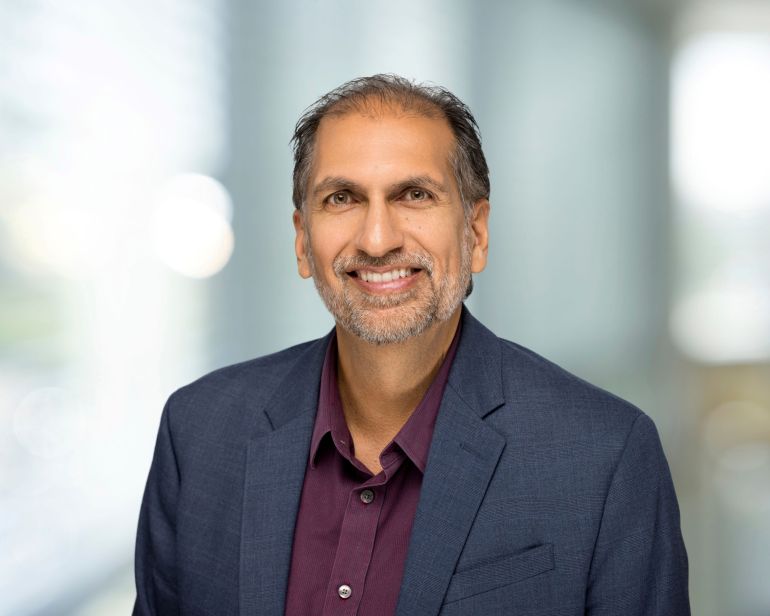
Frank Vahid
Deputy Director, Digitally Enabled Teaching & Learning
View profile: Frank VahidFrank Vahid leads a team that focuses on innovation in gateway STEM courses for college freshmen and sophomores, to support…
Sign up for The Optimist newsletter
Subscribe to The Optimist to get weekly updates on the latest in global health, gender equality, education, and more.
By submitting your email to subscribe, you agree to the Gates Foundation’s Privacy & Cookies Notice.
Related programs
The foundation’s programs in the U.S. work to transform schools, systems, and society to create life-changing opportunities for learning, growth, and prosperity.
K-12 Teaching & Learning
The K-12 team supports schools in improving K-12 teaching and learning, with a focus on math as the cornerstone skill for academic success and greater opportunities in the workforce.
Data & AI Infrastructure
The Data & AI Infrastructure team champions the safe, responsible design and development of AI in ways that strengthen institutions and lift up every student.