Statement from Gates Foundation CEO Mark Suzman: Why we need digital infrastructure
How we think about infrastructure for development is changing. Beyond roads and bridges, we also need digital public infrastructure (DPI) that can support a range of applications, from mobile banking and social welfare to disease surveillance.
DPI, which is often based on open-source software, has significant potential for accelerating improvements in health and economic welfare. We saw this during the COVID-19 pandemic—countries with digital infrastructure were able to quickly send stimulus payments to their most vulnerable populations.
But how do we as funders support public and private partnerships that build DPI in a cohesive, scalable way? Germany is among the countries taking the lead in answering this question through its newly launched digital development strategy.
At our foundation, we believe that DPI can help countries unlock new opportunities, particularly for women. Today, we are announcing a US$20 million grant to Co-Develop, a new multi-donor fund that will support DPI efforts in low- and middle-income countries.
Multi-donor funds such as the Global Fund to Fight AIDS, Tuberculosis and Malaria have helped bring about transformative advances in global health; with Co-Develop, we can do the same for digital infrastructure. This will help us have a massive impact on the economic mobility of women in low-income countries.
Good afternoon.
I’m so grateful to Minister Schulze and BMZ for the chance to share a few words today – although my main message is simply one of thanks.
Thank you for your generosity, including your recent $35 million pledge for digital public infrastructure – DPI.
When I started working in global development, it was the 90s. And back then, when we talked about infrastructure, we were talking about bridges and roads and power grids. That kind of infrastructure was critical to the development of low-income economies. And it still is. But it’s no longer sufficient on its own – not without invisible infrastructure as well.
Today, most low-and-middle income countries, have built the basic foundations for telecom and broadband. But what’s still needed are the systems that will make these foundations more effective: safe DPI that enables a thriving and inclusive digital economy.
In the first two decades of the 21st century, the world made incredible progress in health and economic welfare. But the rate of improvement is slowing. At the Bill &Melinda Gates Foundation, we believe that digital public infrastructure built on digital public goods can help the countries farthest behind get back on track and unlock new opportunities, particularly for women.
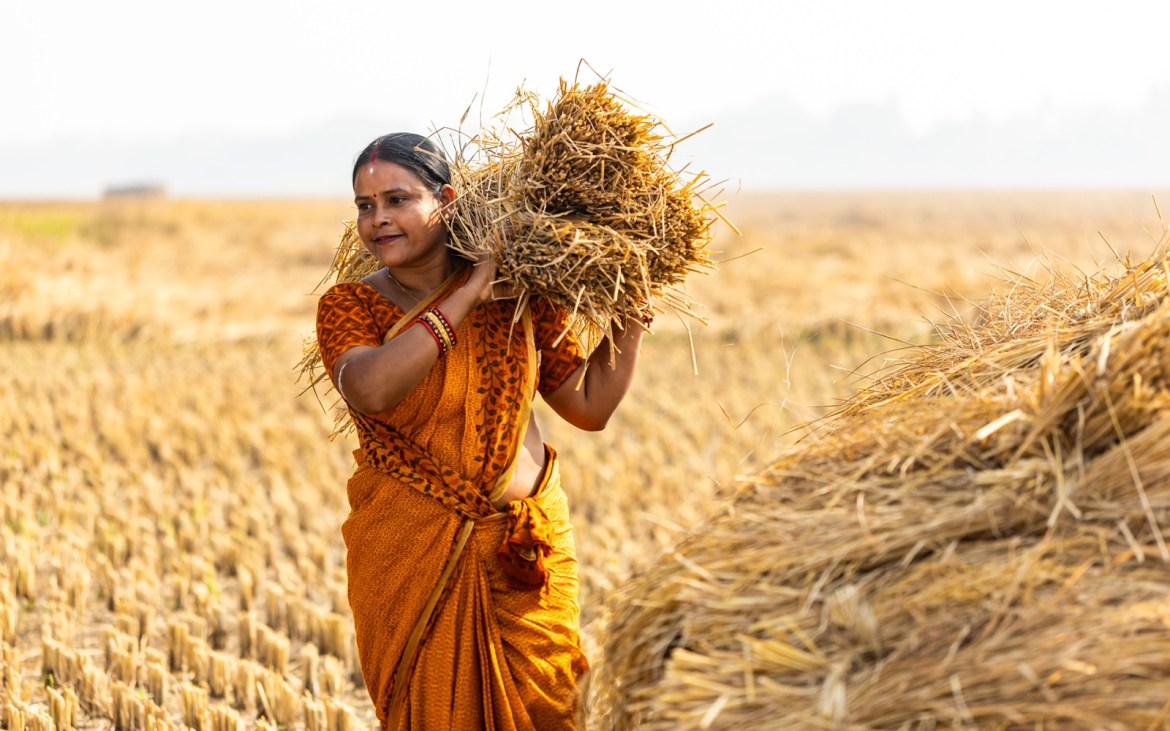
We know that too many women are shut out of the economy – either because their governments can’t reach them, or because the men in their lives don’t allow them to earn or spend their own money. DPI can be a powerful tool to help address this problem.
We saw this during the pandemic. Countries that had existing digital infrastructure in place were able to quickly send stimulus payments to their most vulnerable populations. And when that money hit the accounts of women, the impact was undeniable. In India, directing public workfare payments into a woman’s own account rather than her husband’s account significantly increased women’s participation in the labor force.
Minister Schulze has been at the forefront of those calling for a “feminist development policy” that works toward full gender equality. This is a powerful example of what that looks like in practice.
Now, the challenge is this: How do we – as funders in the development space – support public and private partnerships that build DPI in a cohesive, scalable way? Because in the past, if funders have mis-stepped anywhere, it’s in thinking too narrowly about digital infrastructure, funding pilot projects that might only apply to one region or county and employing one technical solution. It’s the equivalent of helping your partner country build a road that only goes 20 kilometers and ends at the border.
A true infrastructure revolution is going to take more investment, more collaboration across sectors, and authentic partnership with low-income countries that are already pioneering the technology needed.
On investments, we believe innovative funding solutions, like the Global Fund, which brings together many donors to make transformative changes in health, can do the same for digital public infrastructure. A new multi-donor fund called Co-Develop can serve as that catalytic vehicle for DPI. And in fact, I can share with you today that the foundation will contribute $20 million to Co-Develop, in addition to the $200 million the foundation recently pledged at UNGA to advance DPI in lower- and middle-income countries.
But we also know any funding from our foundation – or any other organization – will go much farther if Germany and BMZ continue to do to what they always have – lead and collaborate. That’s been true of our past partnerships together, like on Mojaloop in Rwanda, as well as our work together to eradicate polio. We deeply value your commitment to our common goals and look forward to continuing to partner with you wherever we think we can have a transformative impact together.
So, I’ll end my remarks there, except to say thank you for your partnership, your generosity, and your vision.