
AI equity: Ensuring access to AI for all
$16T
Predicted expansion of world’s economy by 2030 due to AI
90%
Of the world’s poor are predicted to live in Africa by 2030
18.1
Life expectancy gap between high- and low- or middle-income countries
Harnessing AI to improve the lives and well-being of vulnerable communities
In coming years, rapid advances in artificial intelligence(AI), will play an increasingly large role in global health and development, with the potential to fundamentally alter the way people communicate, work, learn, and improve their overall health and well-being.
At the foundation, we’ve invested in dozens of applications of AI for global health and development, and our focus on access and equity continues to be fundamental to this work.
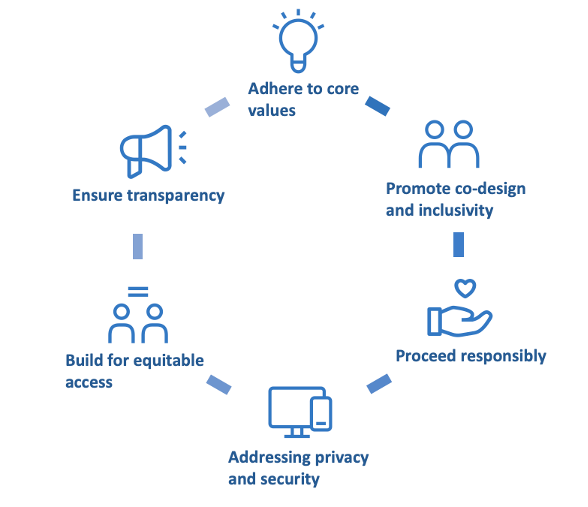
We believe that AI solutions must be locally driven and owned, and we’re focused on building an evidence base informed by the communities we serve to ensure AI technology can improve the lives of the world’s most vulnerable people. As we continue to develop our strategy and investments in this area, we remain guided by a core set of principles aligned with our mission — to help create a world where every person has the opportunity to live a healthy, productive life.
“The world needs to make sure that everyone—and not just people who are well-off—benefits from artificial intelligence. Governments and philanthropy will need to play a major role in ensuring that it reduces inequity and doesn’t contribute to it.”
Bill Gates
From The Age of AI Has Begun, Gates Notes
Including low- and middle-income countries to co-create AI tools
As AI technology continues to swiftly evolve and advance, the global community must move with urgency to ensure low- and middle-income countries (LMICs) are included in the co-creation process. Local communities must be given the opportunity to provide their own perspective and cultural context so that they can decide on both 1) their own thresholds for safe usage and 2) the overall utility of AI within their own lives.
Additionally, LMICs must have access to AI tools and approaches. Responsible global use of AI entails a safe, equitable, transparent, reliable, and beneficial process that is adhered to with a high level of accountability. As the world rapidly moves to seize AI’s opportunity, it is imperative to monitor and mitigate the safety, ethical, equity, and reliability dimensions of AI development and use. This will allow the enormous resilience, creativity, and commitment of researchers, scientists, and policymakers to capture the full capability of AI for lasting good.
Subscribe to The Optimist to get weekly updates on the latest in global health, gender equality, education, and more.
By submitting your email to subscribe, you agree to the Gates Foundation’s Privacy & Cookies Notice.
Creating equitable tools to help people lead healthier, happier lives
These local innovators are creating AI tools with the goal of saving lives and improving well-being in vulnerable communities.
Meet the foundation’s AI Ethics & Safety Advisory Committee
The Gates Foundation’s approach to AI is grounded in safety, ethics, and equity; the principles of ‘equal AI’. Led by Global Health President Trevor Mundel, the AI Ethics & Safety Advisory Committee is comprised of a select group of outside experts. The remit of the Committee is to provide insights on program design, ethical and responsible AI best practices, accountability within the organization and our grantees, and to advise how best to guard against bias and unintended consequences. With a keen focus on local and regional insights, the Committee epitomizes our pledge to ensure that AI advancements echo the voices of communities worldwide, and our dedication to the continuous refinement of the foundation’s AI initiatives.
More ideas on AI
-

How a computer scientist is using AI to save mothers’ lives in Pakistan
Dr. Maryam Mustafa is building an AI tool to close dangerous gaps in maternal care and help more women in Pakistan survive pregnancy and childbirth.
AI can help close the global health and development gap
via Microsoft

-
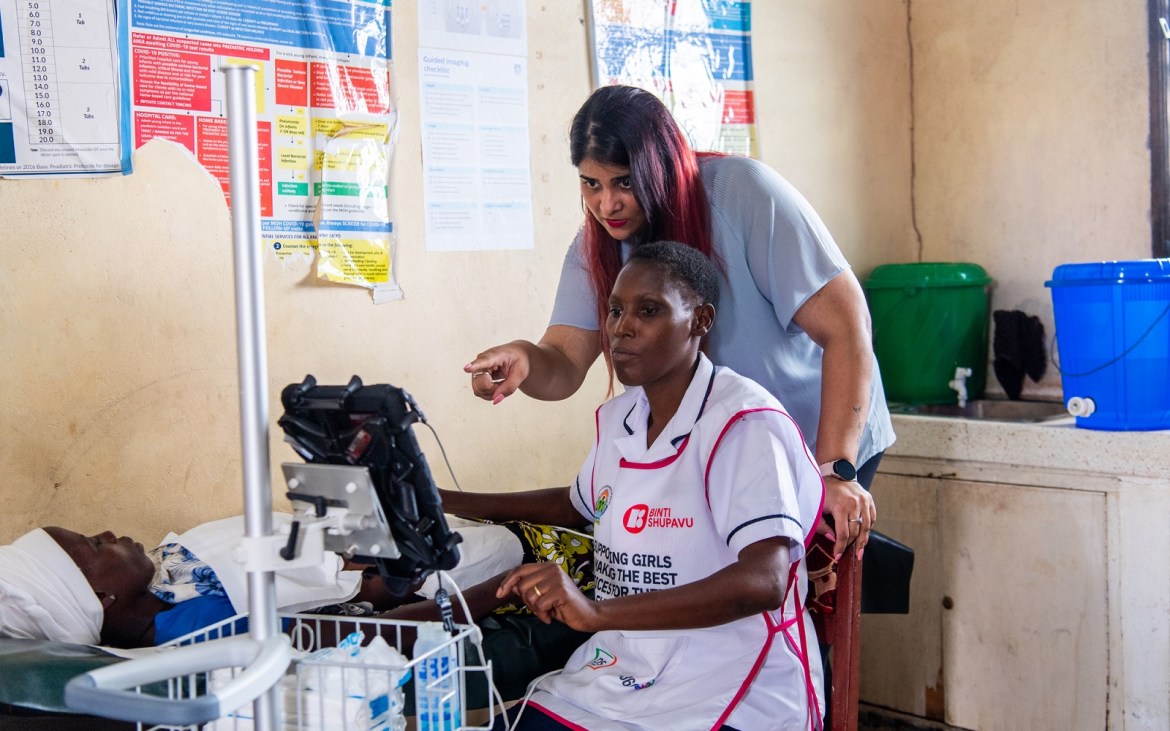
Announcing $5 million in Grand Challenges AI grants to spur local innovation for global good
Nearly 50 projects are receiving up to $100,000 to pursue the use of AI to solve problems in global health and development.
By Zameer Brey