South Sudan has stopped transmission of Guinea worm disease, also known as Dracunculiasis—zero cases in 15 months—signifying a major success in efforts to eradicate the disease, a horribly painful parasite that can trap families and entire communities in cycles of poverty.
Eradication programs rely on safe water supplies and health education
The Carter Center recently announced the good news from South Sudan. It’s a remarkable sign of progress for the country that had reported more than 20,000 cases in 2006, and a testament to the success of water filtration for safe drinking water, health education, and community outreach programs there.
Guinea worm, which spreads through consumption of contaminated water, once affected more than 3 million people each year in the 1980s.
But in 2017, just 30 cases of Dracunculiasis were detected in humans worldwide, with those cases only present in the African countries of Chad, Ethiopia, and Mali.
To eradicate the parasite completely, however, transmission among infected animals must be stopped, as the parasite continues to affect cats and dogs in Mali and Chad.
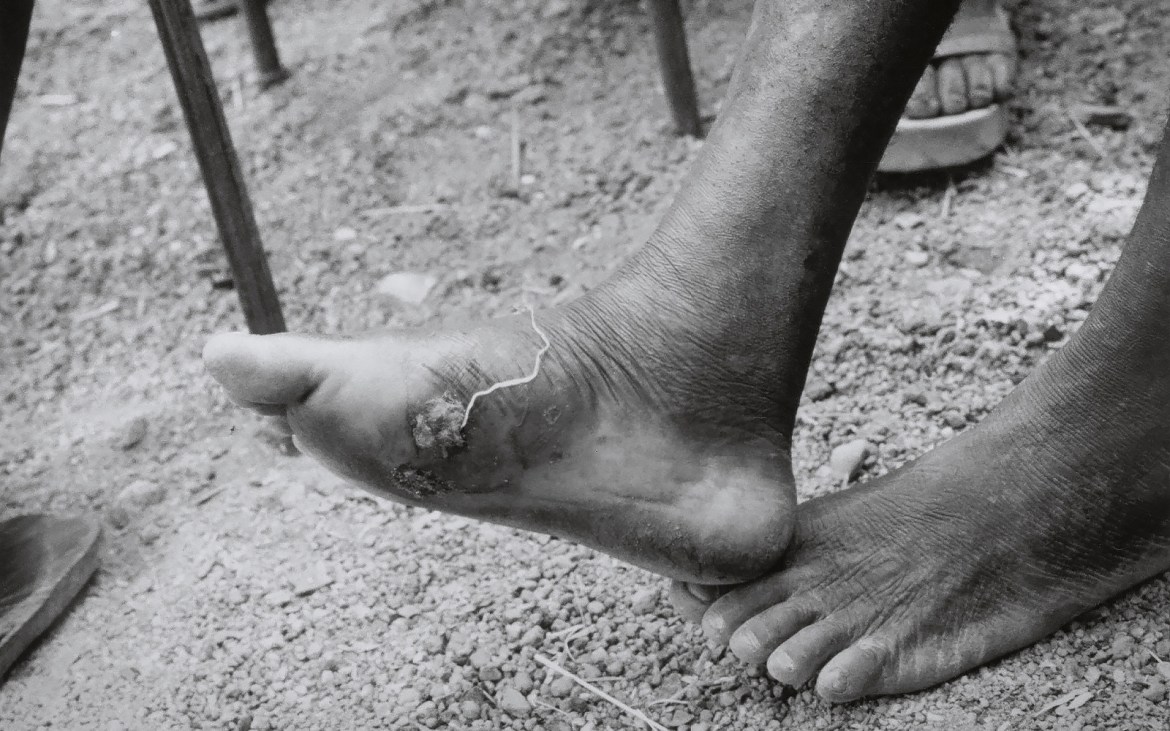
Guinea worm disease leaves patients handicapped while they wait for the worm to come out of their skin. And when community members are bedridden, they’re unable to work, care for their families, grow food, or go to school.
Eradicating Guinea worm disease is within reach, but will require continued action on clean sources of drinking water and community outreach efforts.
“If South Sudan can stop Guinea worm, Chad can do it. Mali can do it. Ethiopia can do it, too,” Dr. Sharon Roy of the Centers for Disease Control and Prevention, told NPR. “It’s really an amazing accomplishment.”