
Updated Friday, May 7. The Bill & Melinda Gates Foundation has been focused on addressing barriers to equitable access to COVID-19 vaccines that we feel are critical to saving as many lives as possible, as quickly as possible. Since the below article was written, devastating COVID-19 surges in several countries and stark inequities in access to COVID-19 vaccines have underscored the need to remove all possible barriers to COVID-19 vaccine access. This is why we have come out in support of a narrow waiver for COVID-19 vaccines during the pandemic. However, an IP waiver alone is not sufficient to improve vaccine supply globally. Our foundation will continue working with partners to address the other barriers that stand in the way. For more information about our position, please read this statement from CEO Mark Suzman.
The rapid development of COVID-19 vaccines over the past year represents astounding scientific progress. Yet 75% of COVID-19 vaccine doses have been administered in just 10 wealthy nations, while some countries are only now receiving their first vaccine shipments. This is wrong on many levels. If COVID-19 vaccines are only available in certain countries, twice as many lives could be lost worldwide and economic recovery will be slower for everyone. And if communities are left unimmunized, the virus will likely continue to mutate.
These global disparities have sparked important debates about how to achieve more equitable distribution. Some have proposed broadly eliminating drug companies’ intellectual property (IP) protections for COVID-19 vaccines as a way to increase vaccine supply and reduce prices. I think this approach misses the mark. At our foundation, we believe that IP fundamentally underpins innovation, including the work that has helped create vaccines so quickly. But we also recognize that markets aren’t always good at making sure this innovation benefits everyone.
Addressing persistent market failures in global health is one of the reasons Bill and Melinda created the foundation more than 20 years ago. We work with life science companies to ensure that the world’s best discoveries are applied to neglected global health crises. These companies represent the largest pools of proven expertise and resources that can translate scientific research into life-saving products and get those products tested, approved, and manufactured safely on a massive scale.
At the heart of our partnerships with these companies lie our Global Access commitments, which require that the products and services resulting from our funding are accessible and affordable to the people most in need. Each grantee is bound by these principles. However, their Global Access commitments may take different forms, based on the amount of funding we provide and our access goals. In some cases, our partners may agree to provide their product, whether vaccines or drugs or contraceptives, with certain price caps in lower-income markets. In other cases, they may be required to customize their innovation for low-resource settings or seek prequalification from the World Health Organization to ensure that many countries have access. Some products are protected by IP, but we have found that these protections need not be at odds with Global Access commitments. We work with product developers to manage IP in ways that spur innovation and benefit the people we are trying to reach.
There have certainly been times when IP has thwarted access, notably to lifesaving drugs in the early years of the HIV/AIDS epidemic. While HIV drugs and manufacturing capacity both existed, some companies prevented generic manufacturers from using their capacity to produce cheaper alternatives, and people in poorer countries suffered. Thankfully, voluntary licensing and financial pooling mechanisms such as the Global Fund to Fight AIDS, Tuberculosis and Malaria, which our foundation helped set up and continues to fund, have helped dramatically expand access to HIV treatments while driving down costs.
In the COVID-19 era, the challenges are even more diverse and complex.
Subscribe to The Optimist to get weekly updates on the latest in global health, gender equality, education, and more.
By submitting your email to subscribe, you agree to the Gates Foundation’s Privacy & Cookies Notice.
Global vaccine manufacturing capacity is a finite resource. Vaccines are much more difficult to produce than drugs, and facilities must be able to meet the highest safety standards. Setting up new production lines can take up to a year, and each requires separate regulatory approval. Several companies are transferring vaccine technology to global partners and developing country vaccine manufacturers, in a process known as tech transfer. These are groundbreaking steps, but tech transfers are complex and time intensive, requiring highly specialized facilities and people with the right skills—both of which are currently in short supply.
Another often overlooked supply bottleneck is a lack of raw materials, such as specialty chemicals for mRNA vaccines and disposable materials like glass vials and syringes. (We are funding manufacturing technologies like Blow-Fill-Seal—a nearly instantaneous process in which plastic containers are molded, filled with a vaccine dose, and sealed—to help address these scarcities.)
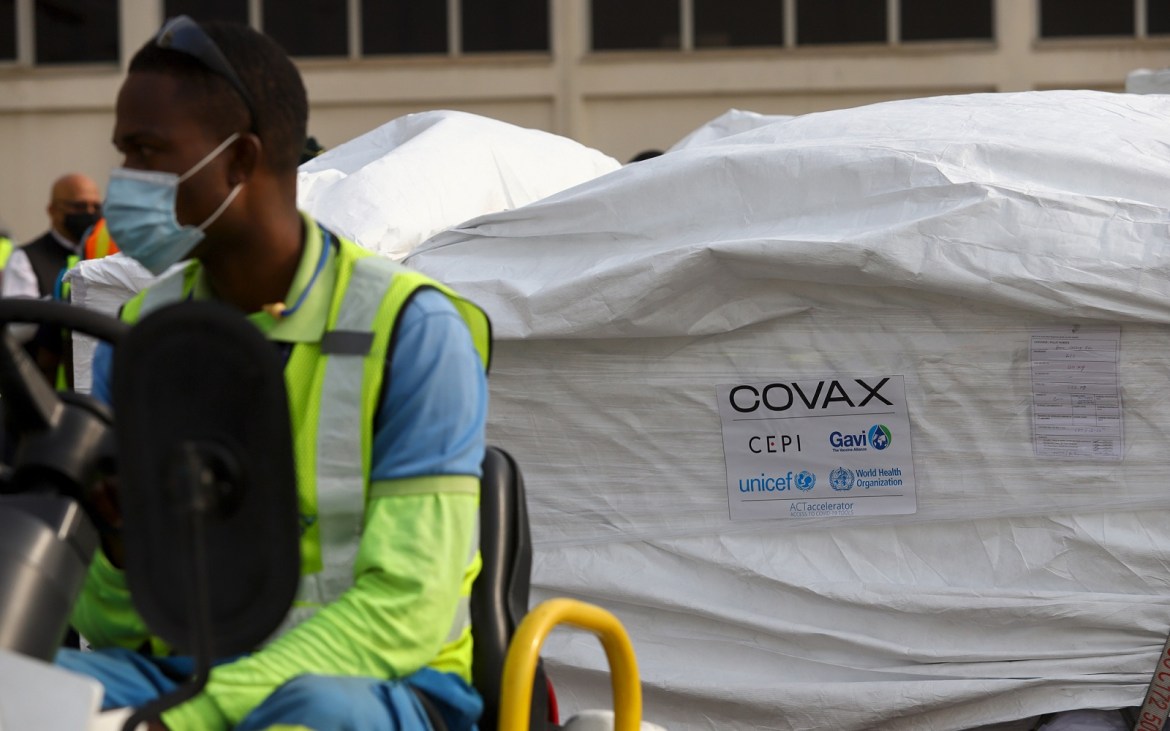
Bilateral agreements have also kept early doses concentrated in a few nations. It’s true that many wealthier nations stepped up to fund the Access to COVID-19 Tools (ACT) Accelerator partnership, putting its vaccine initiative, COVAX, on a path to delivering more than 2 billion doses of COVID-19 vaccine this year. But the hard truth is that by the time COVAX received funding, many of those same nations had already pre-purchased most of the supply.
Going forward, we need to pursue approaches that encourage rather than deter collaboration, with the ultimate goal of saving as many lives as possible, as quickly as possible. That means closing the gap in the availability of life-saving technologies between the poorest nations and their wealthier counterparts.
Companies should continue pursuing tech transfers to partners with the requisite expertise and capacity and find ways to reserve vaccine doses for lower-income countries. (It’s unclear how much unused capacity currently exists, but identifying and using it should be a top priority and governments can help coordinate and fund that effort.) Companies should also commit to tiered pricing systems that allow affordable rates for poorer nations—a strategy that has helped Gavi, the Vaccine Alliance, successfully expand access to lifesaving vaccines against hepatitis B, rotavirus, and other deadly diseases, including immunizing more than 467 million children with the five-in-one pentavalent vaccine. African countries should not be paying two and a half times more per vaccine dose than European countries.
Every bilateral deal involves two parties. Countries and companies should resist the urge to sign these deals and instead recommit to a global response and continue funding doses through COVAX. (Last week’s G7 commitment of $4.3 billion is the type of news we need to build on.) They should also share doses as they vaccinate their own people, as some countries have said they will.
Philanthropy has its own part to play in filling gaps, bringing partners together, and creating incentives for industry to focus on the poorest among us. In September, our foundation signed a joint communique with 16 drug companies to encourage equitable access to COVID-19 tests, therapies, and vaccines. We will continue working with these companies to turn those pledges into concrete actions. We have also financed vaccine manufacturing reserved for poorer countries and are funding next-generation vaccines that will be easier and cheaper to manufacture on a large scale.
This pandemic has reminded us that we are all connected. In 2020, we saw the fastest-ever development of vaccines. Let’s work together to make 2021 the year the world expanded access to those vaccines in record time.