Ensuring AI speaks everyone’s language: A joint commitment
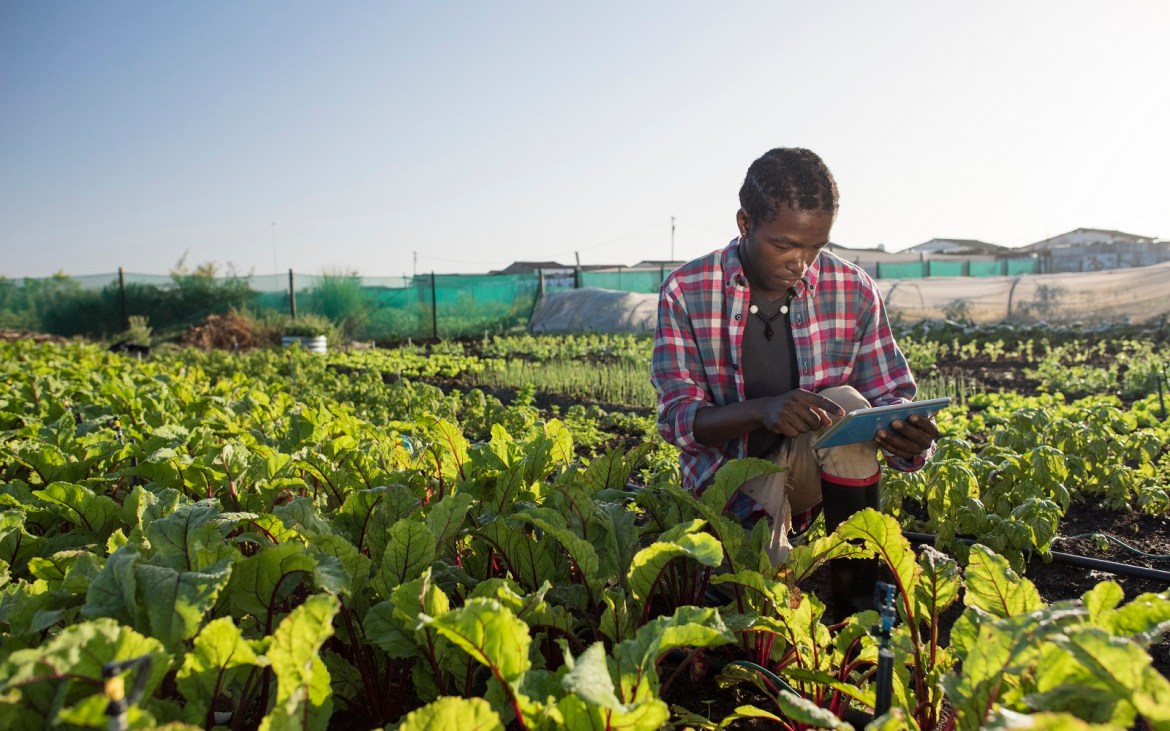
We are living through the fastest expansion of capability in human history. Artificial intelligence can now advise, diagnose, tutor, and translate at a level that would have seemed impossible just a few years ago. But billions of people are not currently benefitting from this revolution in intelligence. Across the Global South, the information farmers, educators, students, and health workers need already exists—but it often does not reach them because the tools that carry it do not speak their languages. As a result, critical knowledge cannot flow in, or out, across a world rich in linguistic diversity.
Artificial intelligence could change this. But today, leading AI models effectively serve a small percentage of the 7,000 languages spoken across the world. AI needs to work well enough for speakers to accomplish what matters to them, whatever language they speak. Low-resource languages are under-represented in the data, tools, and benchmarks used to build and test AI and AI-enabled systems. As a result, people who speak them are often underserved by systems that may be less accurate, less useful, or less able to understand how they communicate. This presents risks, including the potential for inaccurate translation of content and context, which could lead to misunderstanding, exclusion, or poor decision-making.
The barrier is no longer the technology, which will only continue to improve. It requires a decision — to treat the world’s languages as a shared foundation worth building, together, for everyone. We need to gather quality data responsibly and with consent, make non-proprietary data open to every builder, set benchmarks, and ensure model-makers use them. We should build within, and invest in, local ecosystems, so value flows back to participating communities through local ownership, capacity building, and support for local research, enabling communities to lead.
None of this requires a technological breakthrough, though connectivity, availability of electricity, and access to low-cost devices must also be addressed to ensure advances in voice and language reach everyone who would benefit.
No single company, country, or foundation can do this alone. It takes the AI labs that build models, the researchers who understand the languages, the organizations that serve communities, and the governments and funders willing to invest in a public good.
Our shared goal
Within the next five years, an estimated 3.4 billion people who speak languages currently under-represented in today’s AI models will be able to use AI tools in their own language and voice.
Where we start
We intend to build a coalition of partners bound by this shared goal. Partners will contribute in fundamentally different ways. Some create open datasets, some build benchmarks and scorecards that track progress, some integrate open data into models, some fund the work, some build and deploy the applications, and some carry lessons from one language to the next.
We invite community organizations, labs, researchers, companies, governments, and funders to join us and bring their individual resources and expertise to this work. Within the next year we will come together to accelerate:
Building the open language layer: the shared, safe data infrastructure that every builder can draw on using open licenses
Tracking progress honestly: assessments and benchmarks that measure real gains against the global goal
Turning language data into working tools: models and applications usable by any AI builder, not just those with the most resources
Reaching people safely: guided throughout by responsible practices that protect privacy, consent, and data sovereignty
We will continue to report on our progress as we achieve milestones on the path to our goal.
Quotes from signatories
“African languages are not a niche. They are how hundreds of millions of people learn, work, and get care. At Digital Umuganda, we have spent ten years building open language data and tools for Kinyarwanda and other African languages. We are proud to join this coalition so AI works for people in their own language and voice.”
Audace Niyonkuru, CEO, Digital Umuganda
“True digital inclusion in India requires AI that respects the distinct context, culture, and dialects of local communities. BharatGEN is building open, India-centric language solutions to ensure advanced AI empowers every citizen in their own voice and language.”
Rishi Bai, CEO, BharatGen
Explore quotes from AI leaders by region:
Cassava Technologies
“Our goal is to give Africa the infrastructure to write its own future, using its own languages starting with Swahili, then expanding to languages such as Zulu, Afrikaans and Arabic to better serve local users and markets – and data to build a digital legacy on its own terms.”
Ahmed El Beheiry, EVP – Group Chief Technology & AI Officer
Crane AI Labs
“AI will only be an equalizer if it can hear people in the language they actually speak. In Uganda a health worker describes a patient’s symptoms in Luganda, and the systems arriving in her clinic were not built to hear her. We build systems that can and what makes that possible is open language data, benchmarks that no single lab can produce alone. That is why this coalition matters: language is infrastructure, and infrastructure gets built together.”
Kato Steven Mubiru & Bronson Bakunga, Co-Founders
Digital Umuganda
“African languages are not a niche. They are how hundreds of millions of people learn, work, and get care. At Digital Umuganda, we have spent ten years building open language data and tools for Kinyarwanda and other African languages. We are proud to join this coalition so AI works for people in their own language and voice.”
Audace Niyonkuru, CEO
EqualyzAI
“The true promise of AI is fulfilled at the last mile, when it reaches people in their own language and voice and improves the lives of those who need it most. This initiative strengthens our resolve and inspires us to move faster, reach further and do even more for those still left behind.”
Dr. Olubayo Adekanmbi, CEO / Co-Founder
Irembo
“At Irembo, we experience firsthand how voice interfaces have the potential to transform access to public services. True inclusion means citizens can interact seamlessly with technology in their native language. We are proud to join this commitment to build reliable language infrastructure, ensuring AI delivers measurable equity and practical impact for communities across Rwanda and beyond.”
Israel Bimpe, CEO
KERA Health Platforms
“Open data and shared benchmarks matter, but a dataset does not speak. The models must be built by the people who live inside these languages. If this commitment leads there, the limits of a machine’s language will no longer be the limits of a billion people’s world.”
Moustapha Cisse, Founder and Chief Executive Officer
Qhala
“Our research at Qhala has shown that for some African languages, AI can be three to thirty times more expensive to process than English because of how language is represented by today’s models. This is more than a language gap; it is an infrastructure and equity problem. If AI is to serve humanity, it must work for humanity’s languages.”
Dr. Shikoh Gitau, Chief Executive Officer
Viamo
“The benefits of AI shouldn’t stop at the edge of the internet. For AI to serve everyone, it must speak to people in their own languages and on the devices and networks they already use. We’re proud to join this commitment and help make AI accessible by voice through a simple phone call.”
Kellen Eilerts, Chief Partnerships Officer
BharatGen
“True digital inclusion in India requires AI that respects the distinct context, culture, and dialects of local communities. BharatGen is building open, India-centric language solutions to ensure advanced AI empowers every citizen in their own voice and language.”
Rishi Bai, CEO
EkaCare
“Healthcare is the sharpest test of whether AI speaks everyone’s language—a misheard symptom or a mistranslated dosage isn’t an inconvenience, it’s a safety failure. At Eka Care we’ve open-sourced our speech models, medical knowledge graph and evaluation kits because the language layer for health should belong to everyone who builds on it. We’re proud to join this coalition and bring our work across Indian languages and towards the entire global south to a shared goal: that 3.4 billion people can be understood by the systems meant to care for them.”
Vikalp Sahni, Founder and Chief Executive Officer
Karya
“At Karya, we are truly delighted to be a part of this coalition. The coalition represents a once-in-a-lifetime opportunity for us to bridge the AI divide. The billions of people whose languages are missing from AI are the only ones who can supply what is missing. At Karya, we have always believed that if we want to build inclusive AI, we have to directly engage with the communities we want to include.”
Manu Chopra, CEO
Sarvam
“AI should expand human capability for every individual. Language and economic circumstances should never determine who gets to benefit from it. With 1.4 billion people and extraordinary linguistic diversity, India is the clearest test of that promise. At Sarvam, we are committed to doing the research-led innovation required to build models that understand our voices, read our documents, and serve intelligence at a cost that works at population scale.”
Dr. Pratyush Kumar, CEO and Co-Founder
ElevenLabs
“One of the most exciting prospects for voice AI is breaking down language barriers, and improving access to information and services. Our models can speak and listen in more than 90 languages, spoken natively by 5.5 billion people, and we’re working with governments to train models to preserve endangered dialects. Still, there is more work to do, and we’re committed to expanding our language coverage to serve more people around the world.”
Mati Staniszewski, Co-founder and CEO
FabAI
“We know from our leader boards that the best models now have nearly perfect knowledge of pedagogy – in English. Swap to low frequency languages, and we see models struggle to even know the rules of the language, never mind teach in it. At Fab AI we are committed to making education AI systems work for all – which means they work in the mother tongues children need to learn in.”
Dr. Paul Atherton, Executive Director
Amazon
“The promise of AI shouldn’t be limited to those who speak the world’s most common languages. Amazon is proud to support this effort and to help develop the datasets, benchmarks, and expertise that can make AI more accessible across languages so that more people, in more places, can engage with it in their own words and voices.”
David Zapolsky, Chief Global Affairs and Legal Officer
NVIDIA
“AI should be open and accessible to everyone. NVIDIA is proud to collaborate with leading organizations across the AI ecosystem to expand access to open models, datasets and tools in native languages. This will empower communities everywhere to build, customize and shape AI for their own needs and futures.”
Calista Redmond, Vice President of Global AI Initiatives
Zoom
“Language is not a barrier we should accept. For the estimated 3.4 billion people who speak languages under-represented in today’s AI systems, this five-year commitment is a decision to act — with urgency, in coordination, and with a willingness to measure progress honestly.”
XD Huang, Chief Technology Officer
Viamo
“The benefits of AI shouldn’t stop at the edge of the internet. For AI to serve everyone, it must speak to people in their own languages and on the devices and networks they already use. We’re proud to join this commitment and help make AI accessible by voice through a simple phone call.”
Kellen Eilerts, Chief Partnerships Officer
Agentic AI Foundation
“Language is the foundation of agency. Breakthroughs in multilingual models matter because they unlock the agentic layer, the applications that reason and act on a person’s behalf. By building on open standards, we’re helping developers in the communities they serve deploy production agents that work in a farmer’s or a health worker’s own language and voice.”
Google and the Gates Foundation have directed more than $100M in combined funding and dedicated technical support from Google researchers to deploy real-time climate, agricultural, and language AI tools. MOUNTAIN…
We’re going to do all we can to ensure AI is designed with equity in mind, so that its benefits reach people who are too often left behind. Mark Suzman,…
The 2026 Goalkeepers Report explores how AI could close longstanding gaps in global health and well-being—or widen them. The choices we make now will determine what future we get.