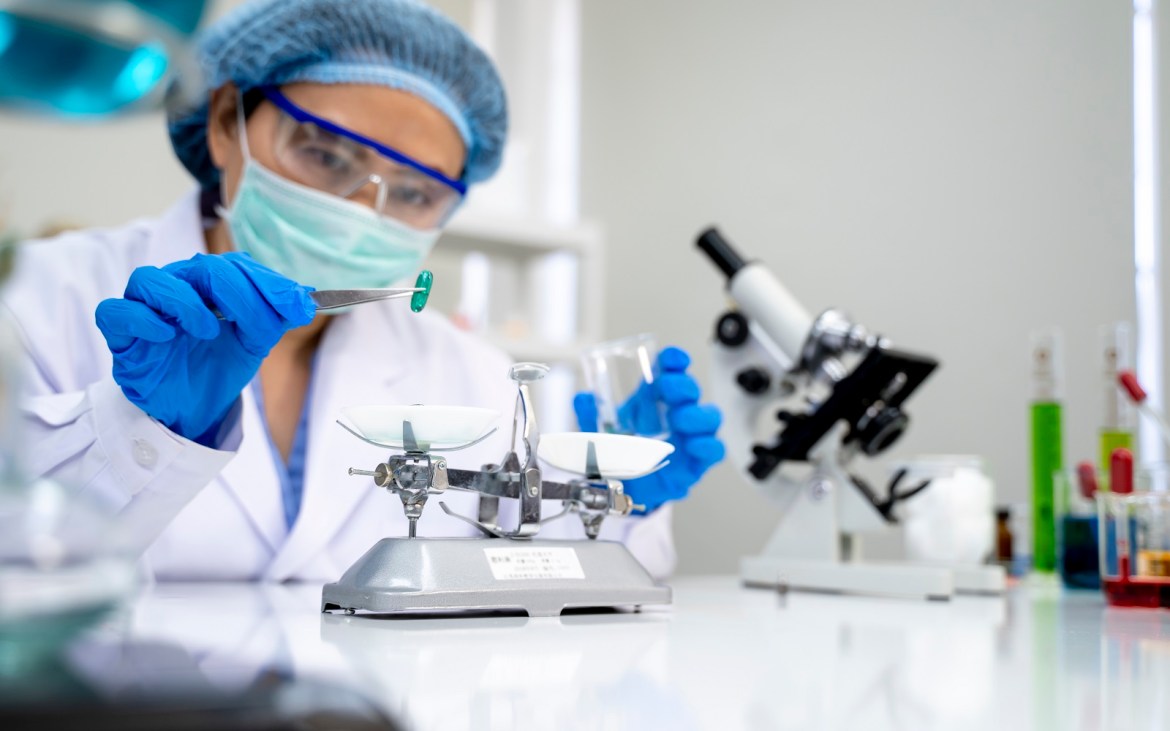

Earlier this month, the U.S. pharmaceutical company Merck announced that it was seeking emergency use authorization for a new drug, molnupiravir, to treat mild to moderate cases of COVID-19, after reporting positive results in a Phase III trial. It’s a milestone in the world’s ongoing fight against the virus because, if approved, it would be the first novel antiviral COVID-19 treatment in oral form.
If all goes well, a treatment like this could be a game-changer. For a variety of reasons, molnupiravir has the potential to become available in lower-income countries around the same time that it becomes available in high-income countries. That’s welcome news at a time when the pandemic has exacerbated so many global inequities. The foundation has committed up to US$120 million in new funding to help make equitable distribution of the drug possible, if or when Merck and the generic drug companies with voluntary licensing agreements gain the proper regulatory authorizations.
We asked Brad Wilken, the foundation’s deputy director of product development operations, to answer some questions about the drug and how the foundation and many others are working to make distribution of COVID-19 treatments more equitable.
It’s a repurposed drug with anti-viral properties that make it effective across different viruses. So far, 19 months into this pandemic, it’s the first novel oral antiviral COVID-19 drug to seek regulatory approval for use in the outpatient setting. Other COVID-19 outpatient therapeutics are given by IV or injection, which makes them more complicated to deliver. According to Merck, molnupiravir was tested in the Phase III trial on nearly 800 unvaccinated people who weren’t yet seriously ill but who had comorbidities that put them at high risk of serious illness. The patients started taking the drug shortly after being diagnosed, and Merck says it reduced the risk of hospitalization by half compared to the placebo group. It works by disrupting the life cycle of the virus, essentially preventing the virus from replicating. Data from the clinical trials hasn’t been peer reviewed yet, but it sounds very promising.
[Molnupiravir] works by disrupting the life cycle of the virus, essentially preventing the virus from replicating.
Brad Wilken
Deputy Director, Global Health
It’s not just that this is a promising new drug. It’s because it could be affordable and scalable in lower-income countries. In an effort to ensure equitable access to COVID-19 tests, drugs, and vaccines, the Access to COVID-19 Tools Accelerator (ACT-A) developed a target product profile for a treatment that would make broad geographic distribution possible. In addition to meeting efficacy and safety standards, it would have to be administered in oral form so patients could take a course of treatment at home before they became seriously ill. Other antivirals are given at clinics or when the patient has already been hospitalized. It also would have to cost less than US$10 to produce, and it couldn’t require cold storage, which can be challenging to maintain. In other words, they were looking to identify a treatment that would be effective, cheap, and easy to use. But for more than a year, that goal has been elusive. Molnupiravir looks like it could hit all those targets.
Our goal is to help low- and middle-income countries gain an equal footing with high-income countries in this ongoing fight against the virus. Putting funding on the table early helps lay the groundwork for that. The standard rollout for global health products can be 12 months or more, but we hope to reduce that lag time significantly. The goal is to avoid what’s happened with vaccine distribution. In high-income countries, 65% of the eligible population received at least one vaccine dose as of September, but in low-income countries, 3% or fewer had been vaccinated.
This has been a cooperative effort between industry, academia, government, and philanthropy. The drug is licensed by Merck and a smaller biotech company called Ridgeback Biotherapeutics. It was developed, with some government funding, as an antiviral before the pandemic at a nonprofit company affiliated with Emory University and tested against coronaviruses at Vanderbilt University. More recently, we provided some funding to the Medicines for All Institute at Virginia Commonwealth University and to the University of Manchester to work on improving the manufacturing process for some of the ingredients that go into the drug, to help reduce the number of steps required in manufacturing and to increase the yield.
Early in the pandemic, we launched the COVID-19 Therapeutics Accelerator in partnership with Wellcome Trust, Mastercard, and several other government and philanthropic funders, to support efforts to research, develop, and bring to market effective treatments against COVID-19 quickly and accessibly. With the aim of streamlining the manufacturing process to help lower costs, we’ve provided technical expertise, connected manufacturers with grantees that know how to optimize drugs for low-cost and high-yield scenarios, and explored the use of our financing tools to guarantee supplies for lower-income countries. We’ve also provided some funding to generics manufactures for advance preparations so that if and when a drug is approved, they can speed up the timeline for delivery.
The standard rollout for global health products can be 12 months or more, but we hope to reduce that lag time significantly. The goal is to avoid what’s happened with vaccine distribution.
Brad Wilken
Deputy Director, Global Health
The World Health Organization and each country’s regulatory authority will decide whether to authorize and approve use of the drug for treatment of COVID-19. None of that is guaranteed, of course, but the foundation decided to work with various partners early in the process to narrow the typical time lag between high- and low-income countries. This includes partners at the global level, via ACT-A, regional partners such as the Africa Medical Supplies Platform, and countries that will procure and deliver the drug to lower-income countries.
Merck has also been planning with an eye toward equitable distribution. Over a year ago, they approached generics manufacturers and began putting together licensing agreements so the drug could be produced quickly and economically. Essentially, they helped to set up a supply chain that could be dedicated to lower-income countries.
The foundation’s commitment will help, but there’s still a big gap in funding, and we urge other donors to join in this effort to make equitable distribution possible.
While scientists were able to develop effective vaccines for the virus in less than a year, it’s taken longer than we’d hoped to identity an effective treatment that would be scalable in lower-income countries. We’re all hopeful that other treatments will be developed, too. We’re also seeing Merck’s actions in this—developing these licensing agreements early—as a model moving forward. Through actions like these, the gap in access to COVID-19 tools between high-income and low-income countries will continue to be reduced.