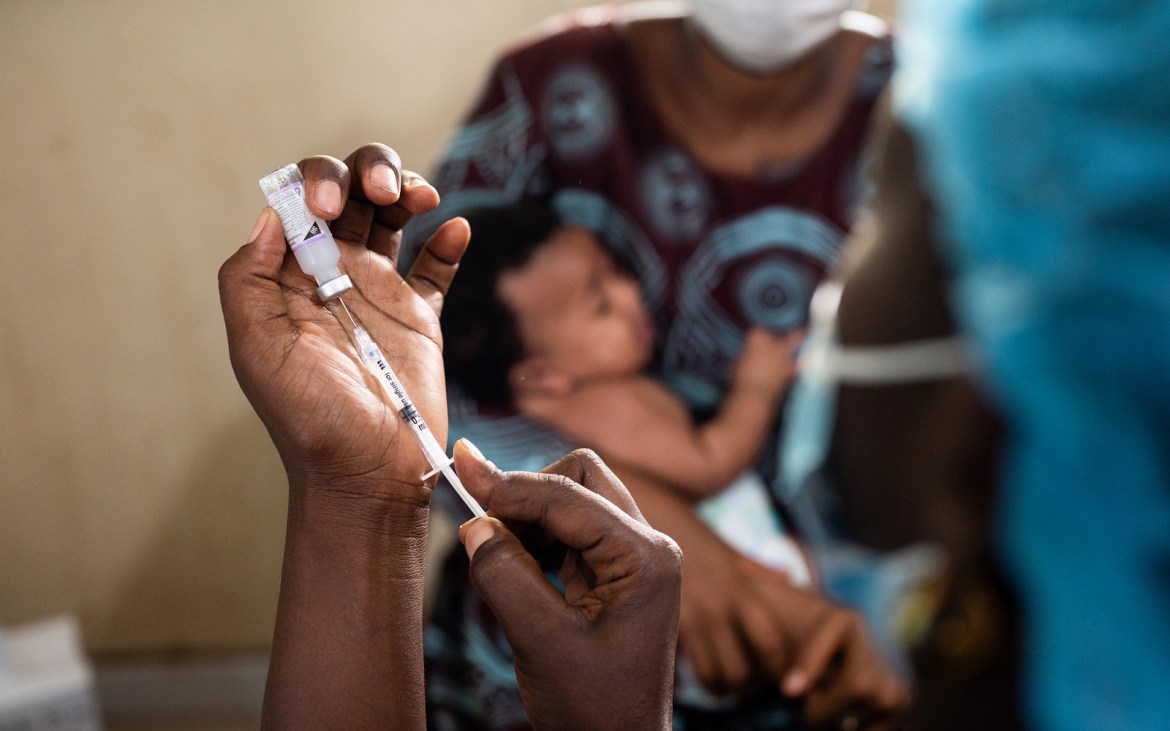

Over the past decade, predicting the demand for syringes was relatively straightforward. After accounting for population growth and routine childhood immunization needs, new orders were placed and millions of syringes arrived at their destinations with little fanfare. That all changed with COVID-19 vaccines. Suddenly, demand for syringes skyrocketed. Meanwhile, the need for routine immunizations—for diseases such as measles, whooping cough, polio, and more—didn’t stop. Syringe shortages are looming.
Make Me Care About…
Syringe shortfalls in low- and middle-income countries (LMICs) could exceed 1 billion in 2022. It has become clear that syringe manufacturing needs to be ramped up—but where, and how?
Before joining the foundation’s Global Delivery Programs team as a program officer, Surabhi Rajaram spent several years working in the unheralded, yet vitally important, world of syringe manufacturing and safety. That experience gave her insight into the supply chain challenges spurred by COVID-19. Here, she shares details of a new US$3.9 million grant to a Kenyan syringe manufacturer that will address some of this shortfall while simultaneously diversifying the supplier base. Her experience also touches on larger considerations in the global supply chain, and how thoughtful coordination can improve global health.
In a typical year, UNICEF needs around 800 million syringes for routine childhood vaccinations. So far, more than 441 million COVID-19 vaccine doses have been shipped to LMICs, each of which requires a syringe. That’s an enormous increase. How has this affected supplies in LMICs?
There are two considerations: The sheer number of syringes, and the logistics of getting them to the right place at the right time. In anticipation of COVID-19 vaccines last year, we worked alongside partners and industry to help boost manufacturing capacity to three times pre-pandemic levels. Even so, this isn’t enough to cover the sudden increase in demand.
Meanwhile, there are challenges with the supply chain. Most syringes used in LMICs are made in India or China, creating geographic reliance. Traditionally, syringes have been shipped by sea, arriving at their destination in a month or two. When demand was more predictable, this was manageable. But now, with the urgent rollout of COVID-19 vaccines, syringes are being flown to their destination to compress timelines. One boatload has become six or eight cargo planes. A nominal shipping cost has become five to 10 times more than the syringes themselves.
Most syringes used in LMICs are made in India or China, creating geographic reliance. When demand was more predictable, this was manageable.
How will this grant help?
This isn’t about COVID-19 vaccines alone. The strain on supply could negatively impact routine childhood immunizations too. This particular syringe, known as auto-disable (AD), is vital for safe injections in LMICs. We had these programmatic priorities in mind, as well as a goal of more equitable access. Here’s what I mean: The grantee, Revital Healthcare (EPZ) Limited, is located in Kenya, so that helps geographically diversify the supplier base. The company has committed to offering these syringes at an affordable price to UNICEF, which in turn supplies most of the vaccine syringes for LMICs.
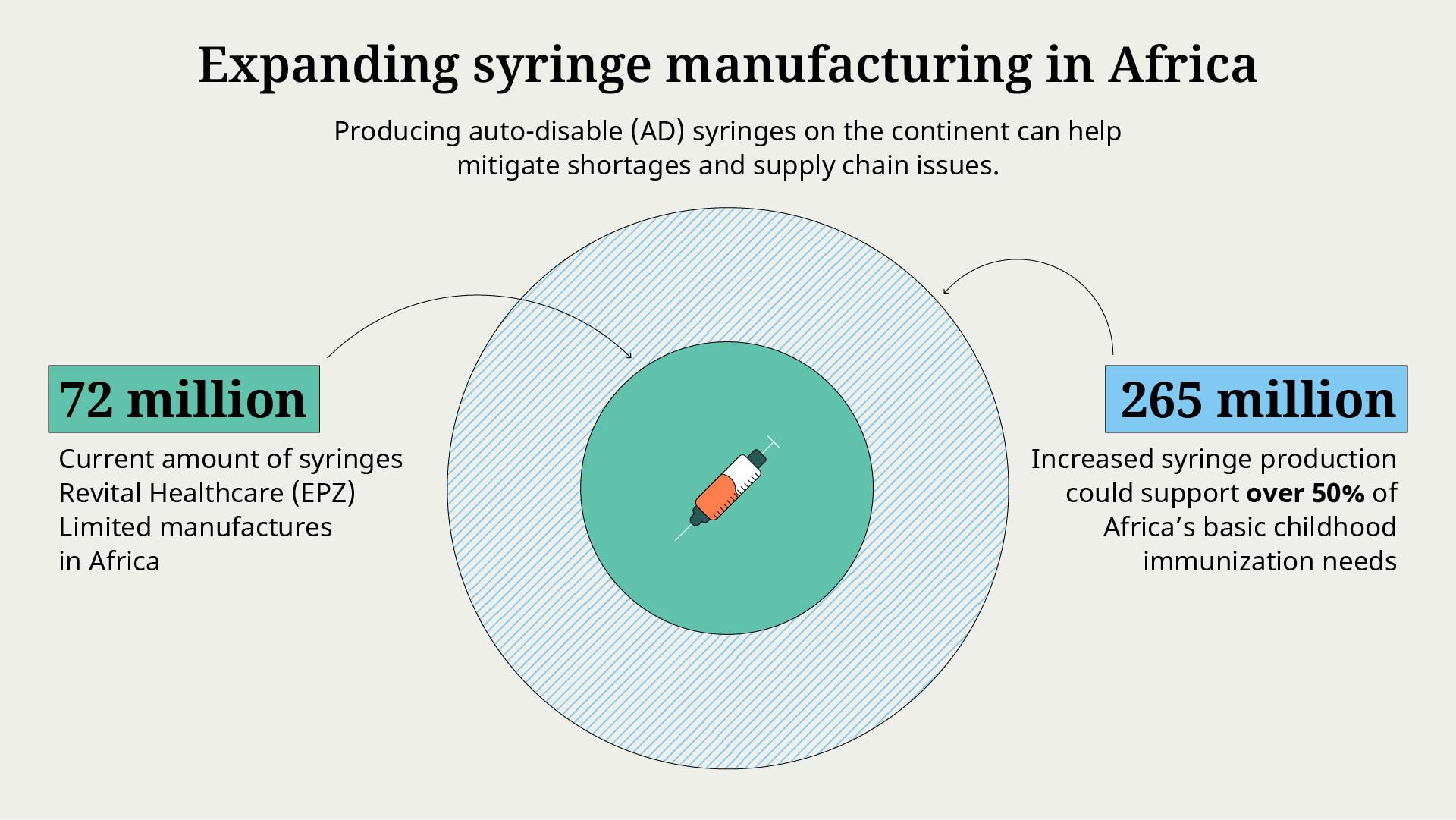
Its location will help reduce the costs and timelines of shipping to Africa. With our funding, Revital’s additional output should be enough to support more than half the routine immunization needs in Africa. Being able to produce these syringes in Africa offers supply security in the longer term.
What do you mean by “auto-disable” syringes?
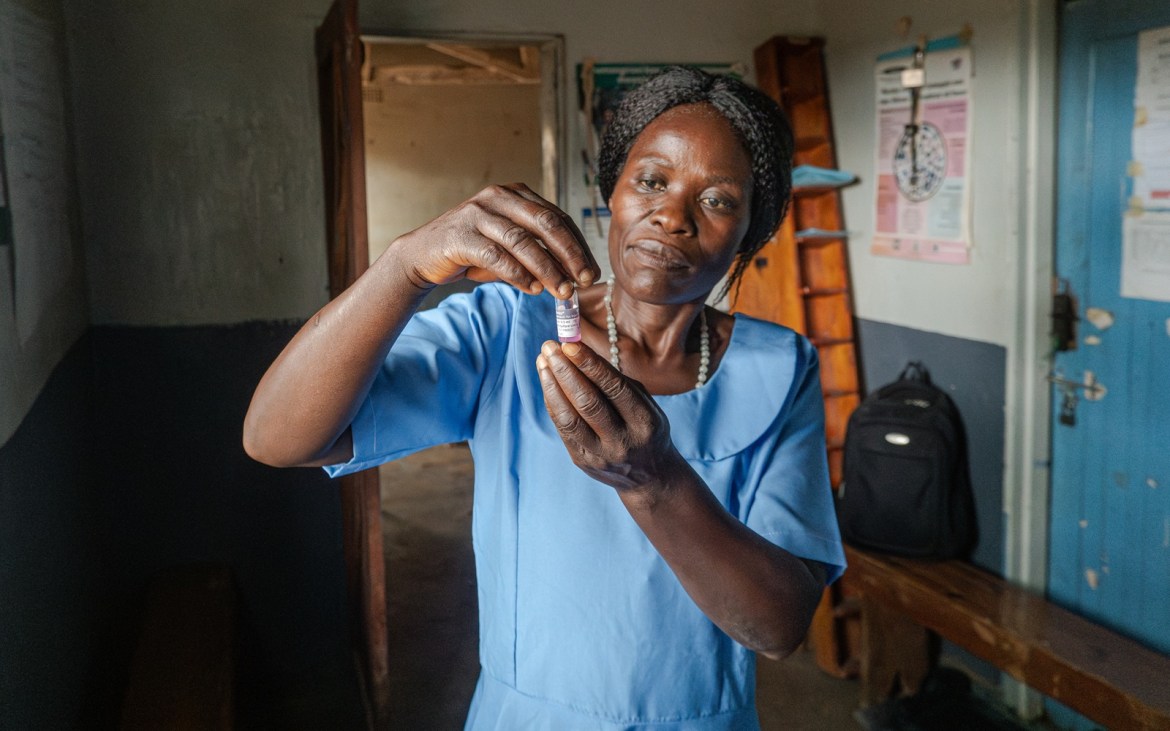
The auto-disable syringe dates back to the height of the HIV epidemic in the 1980s, when syringe reuse was a contributor to transmission. Hepatitis B and C can also be transmitted this way. Engineers designed a new syringe that would automatically lock after one use, to prevent reuse. It is a silent innovation, like air bags or potable water systems, that one doesn’t have to think about. Today, the World Health Organization, UNICEF, and Gavi, the Vaccine Alliance, all recommend AD syringes. As a result, infections due to syringe reuse in immunization programs have been reduced to almost zero in sub-Saharan Africa. But this progress must be maintained. When I was working in the syringe manufacturing field, part of my job entailed developing injection safety trainings to respond to reports of children contracting HIV, even with ample syringe supply. It was frightening. Now that demand for syringes threatens to outpace supply, it’s even more frightening.
Will this resolve the looming syringe shortfall?
This grant will help Revital increase output, pending regulatory approval, from around 72 million syringes per year to 265 million by the end of 2022. This will help, but it isn’t enough to stabilize the market and relieve other supply chain bottlenecks. In the future, it’s important to consider how to structure a global supply chain for resilience in the face of change. With syringes, manufacturer location has proved important. This journey has also been a lesson for products with historically stable demand. Before the pandemic, nobody had mapped the suppliers or had insight into true production capacity. Working with partners, we’re learning how to dynamically forecast for a volatile present and uncertain future. It has also reinforced the importance of coordinated planning across both vaccine and syringe manufacturing industries. And all this work is critical to helping preserve the lifesaving value of each vaccine that’s delivered to people around the world.