LETTER FROM THE CFO
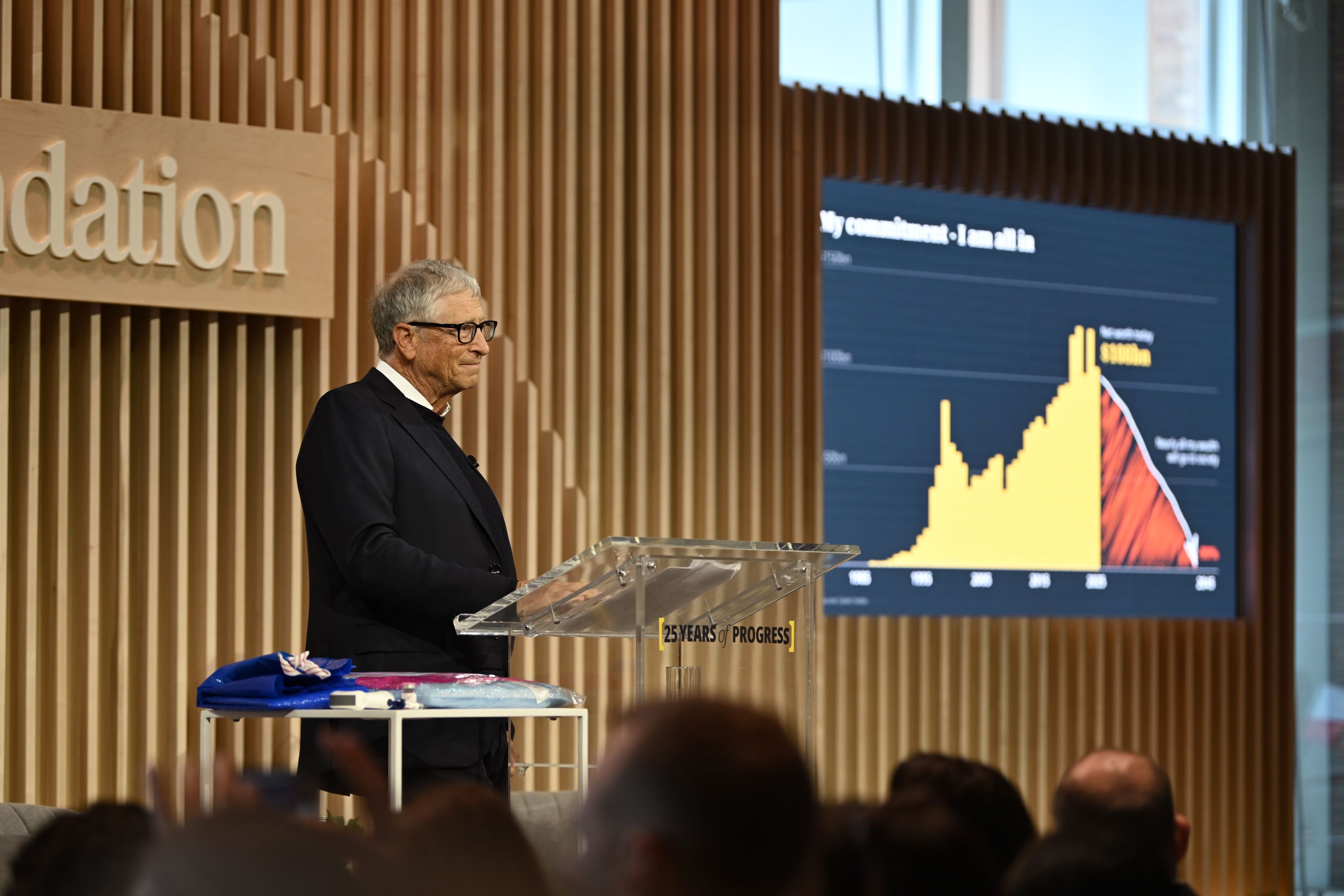
Bill Gates recently announced that the Gates Foundation would spend $200 billion in the next 20 years. Since we were created 25 years ago, we have spent $100 billion. I feel extraordinarily fortunate to work for an organization with the resources to deliver on the very audacious mission of global equity and opportunity, and those resources come from three people: Bill Gates and Melinda French Gates, of course, but also Warren Buffett, who in 2006 gave what Bill recently called “probably the most generous gift ever given by somebody to someone else's foundation.”
Last week, the Gates Foundation received the latest installment of Warren’s gift: $4.6 billion, which brings the total over the past 19 years to over $47 billion. You won’t see those contributions as unique line items in the foundation financial statements we publish every year with our annual report, but they make possible every single line item representing the grants and investments the Gates Foundation has made to improve lives around the world.
I vividly remember the first time I met Warren, at our annual foundation audit committee meeting in 2019, my first year as the foundation’s CFO. He didn’t have any papers in front of him—no notes—but right away he turned to me and asked a detailed question about our receivables with kindness and clarity. I thought, “Oh my gosh, he actually read the financial statements!” That blew me away, but what really sticks with me was the way he provided strong direction while simultaneously conveying a sense of trust and confidence in Bill, Melinda, and our team.
Warren has always insisted that the foundation’s role is to take big risks that others can’t or won’t—or, in his words, “swing for the fences.” In his work, he’s famous for saying that he doesn’t try to jump over seven-foot bars and looks for one-foot bars he can step over instead. But he urged us to seek out seven-foot bars and figure out how to clear them.
One bar I’m especially proud we always endeavor to jump over is making sure that access to lifesaving vaccines doesn’t depend on where you live. Last year, I was moved by our work to help our partners deliver millions of vaccines to protect against HPV, the leading cause of cervical cancer. It took breakthrough research and a vast array of partners around the world. It also took an innovative approach to financing, and that is the part I am best positioned to talk about as CFO.
Cervical cancer kills a woman every two minutes. The vaccine that protects against HPV, and therefore cervical cancer, has been available since 2006, but for years most girls in low- and middle-income countries didn’t get it, even though most of the deaths were in those countries. There were several reasons for this, including the facts that girls needed to receive three doses, that the vaccine was relatively expensive, and that it was in short supply.
In 2021, however, a Gates Foundation-funded study in Kenya demonstrated that the vaccine could be effective in just a single dose, which promised to make it much simpler to deliver and help solve the cost problem. That left the supply constraints, and the Gates Foundation started working with Xiamen Innovax Biotech to manufacture more vaccine. Before they could start production, though, they would need to wait 18 months for various approvals, contracts, and recommendations to come through.
We didn’t want to wait. That’s why Bill Gates decided the foundation would spend down all its resources in the next 20 years. Our goal is to spur innovation as fast as possible to save lives as soon as possible. When it came to HPV, every single day of delay cost the lives of 750 women. So we leveraged our strong balance sheet to provide a volume guarantee to reserve doses in advance, giving Innovax the confidence to get started on production while they worked to address administrative hurdles. As a result, 4 million girls who would have been unprotected from cervical cancer got vaccinated.
We have used volume guarantees many times to encourage the manufacture of lifesaving products ranging from contraceptive implants and COVID-19 vaccines to HIV drugs and insecticide-treated bed nets. We will continue to do so, because very few organizations in the world have both the assets and the mission to do it.
As Bill Gates and Warren Buffett have said many times, markets do not automatically reward saving lives in low- and middle-income countries. The Gates Foundation has the resources to create market tools that realign incentives. It’s one way we steward our resources while taking smart risks to save lives.
Sincerely,
Carolyn Ainslie
Chief Financial Officer
Gates Foundation