Gates Foundation COVID-19 Response FAQ
FAQ
Our foundation has committed more than $2 billion to support the global response to COVID-19. This includes:
- More than $770 million in newly allocated funding to help slow COVID-19 transmission; support responses in sub-Saharan Africa and South Asia; fund the development and procurement of new tests, treatments, and vaccines; alleviate the social and economic effects of the pandemic; and ensure equitable, timely, and scaled-up delivery of proven interventions.
- Up to $920 million in guarantees, forgivable loans, and other financing from our Strategic Investment Fund, which uses financial tools other than grants to help address market challenges and stimulate private-sector innovation. The financing enables the rapid procurement of essential medical supplies, such as tests, and helps companies fund the production of COVID-19 products for low- and middle-income countries. Any financial returns generated by the Strategic Investment Fund are reinvested in Gates Foundation philanthropic programs.
- More than $315 million from other foundation programs whose grantees are uniquely positioned to direct their efforts and expertise toward COVID-19 response while continuing to support existing priorities.
Many organizations have received funding from us for COVID-19 response since the announcement of our first pandemic-related funding commitment in January 2020. For example, in February 2020 we provided a grant to help the Africa Centres for Disease Control and Prevention scale up testing capacity across sub-Saharan Africa. We also provided fast and flexible funding to international organizations—including the World Health Organization (WHO) and its regional offices in Africa, Asia, and the Middle East—to support preparations to help COVID-19 patients around the world.
To support the development of COVID-19 vaccines, we have provided grants to the Coalition for Epidemic Preparedness Innovations (CEPI) for research into additional COVID-19 vaccine candidates that could be less expensive or easier to deliver—such as vaccines that do not need to be kept extremely cold. We have also provided more than $200 million to the Gavi COVAX Advance Market Commitment to help ensure that COVID-19 vaccines are accessible and affordable in low- and middle-income countries.
In Seattle, where we are headquartered, we provided a grant to the local public health department to support public information efforts about appropriate measures to help prevent further spread of the disease. We also contributed to six regional COVID-19 response funds to support efforts by community-based organizations to help groups at higher risk of contracting the disease (such as health care and service industry workers) or low-income families who have lost their income due to social distancing and closures.
You can find more information about our grants in our grants database.
Governments play the most critical role in protecting people from COVID-19. Many organizations, including the foundation, are also funding efforts to fight this pandemic because of the great danger it presents to so many people. One of the advantages of foundation grants is the ability to deliver fast and flexible funding to help countries and organizations take rapid action and fill resource gaps.
Philanthropy doesn’t—and shouldn’t—take the place of government. Philanthropy complements government by playing a unique role in driving progress. Philanthropy is best at testing out ideas that might not otherwise get tried. This approach is known as “catalytic philanthropy,” where foundations like ours put wind in the sails of innovations and initiatives with the potential to save and transform lives.
In the face of this collective threat, we believe working together with governments and other organizations is our most effective tool.
We are in contact with our partners to identify urgent areas of need, and we will continue to explore where our resources and expertise can be of most value in the fight against COVID-19. This global crisis will require more resources than any one organization or country can provide.
COVID-19 is gender blind but not gender neutral. Before the pandemic began, poverty levels among women had fallen continuously for 20 years. Those levels are now rising rapidly. The virus exposed how fragile and superficial the economic gains for women have been in many countries.
To document the impacts of the COVID-19 pandemic on women in the economy and to identify evidence-based solutions, we have collaborated with grantees and partners to produce a series of evidence reviews that highlight key issues in the economic crisis facing women and girls. We’re working to understand how and why women are more vulnerable to the economic shocks of this pandemic.
To respond to the global COVID-19 recession, which has affected women’s livelihoods most drastically, recovery plans must put women and girls at the center. We are working with civil society organizations, academia, national governments, and international financing institutions to ensure that economic recovery efforts prioritize gender equality rather than reinforce old inequalities. Countries that get this right will recover faster and be more resilient to future crises. Those that do not will merely be building their recovery on top of the same social cracks and economic fault lines as before. Equality cannot wait until this crisis has passed.
A portion of our total COVID-19 commitments is going toward strengthening health systems and supporting regional and country-specific responses in sub-Saharan Africa and South Asia. Starting in the earliest days of this global emergency, we have focused on equitable and sustainable solutions that place the needs of lower-income countries and vulnerable populations at the center. We believe that everyone deserves access to vaccines and therapeutics, and this commitment to health equity is at the core of our foundation’s values and our funding during the pandemic.
Our support for pandemic response in Africa and South Asia has included helping governments and regional agencies improve disease detection, increase capacity to diagnose COVID-19, and set up infrastructure to safely isolate and care for people with confirmed infections. We have also worked with partners to help stabilize the market for medical supplies that COVID-19 patients need, such as oxygen, and we have supported partnerships with private companies to devise new ways to distribute food and essential medicines. These measures are helping to address immediate needs while also strengthening regional coordination and capacity for the future and maintaining progress in the fight against other infectious diseases such as malaria, tuberculosis, and HIV.
We also know that COVID-19 is much more than a health crisis; many countries are feeling immense economic pressure, so we are helping our partners develop ways to support the livelihoods of people experiencing extreme poverty. You can read more about our approach to COVID-19 in Africa in an Ideas post by Cheikh Oumar Seydi, our Africa director, and Dr. Ibrahim Assane Mayaki, CEO of the African Union Development Agency-NEPAD. You can also read a post by Solomon Zewdu, who is coordinating our COVID-19 Africa response. The following two questions address how we are supporting India’s pandemic response.
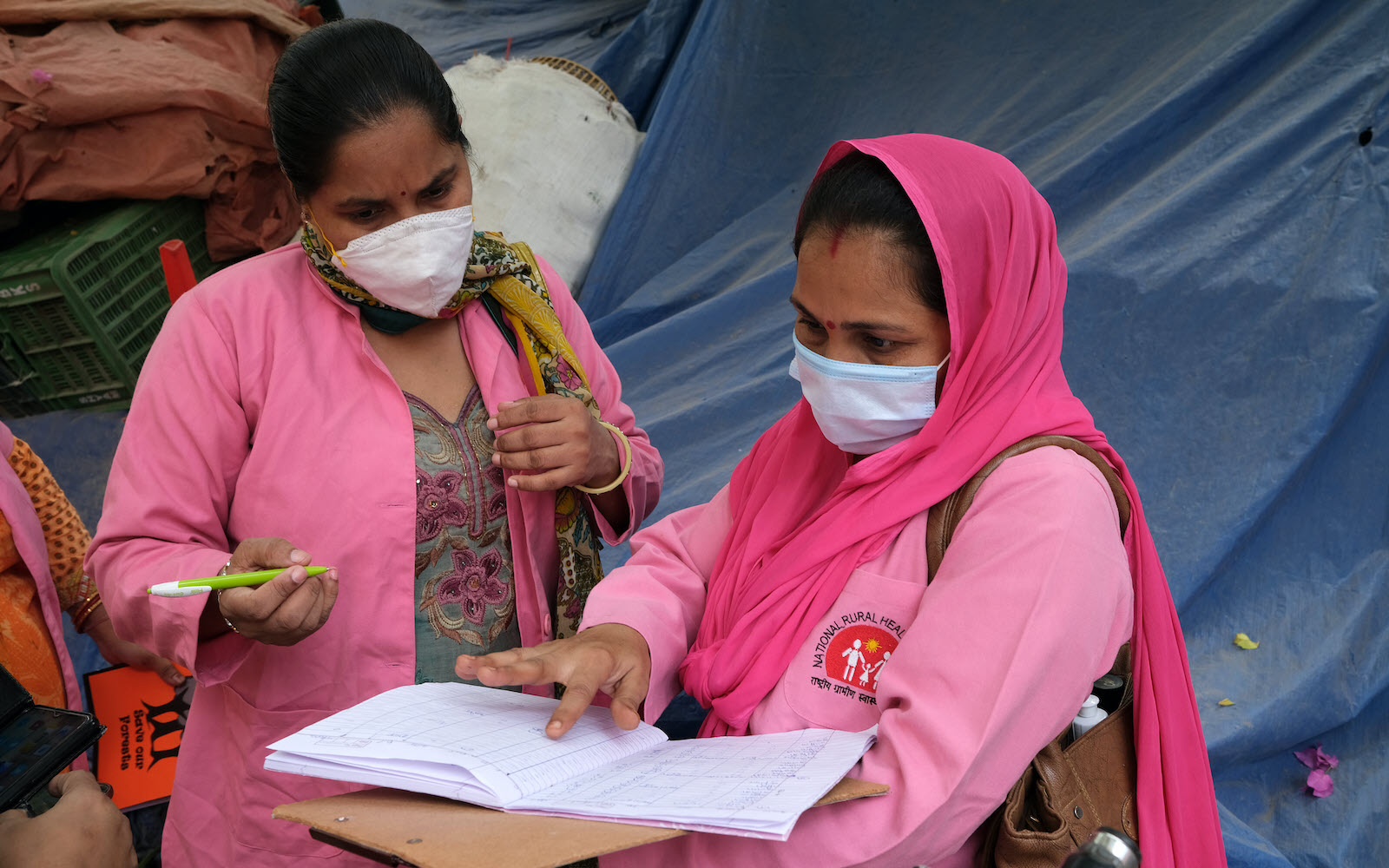
Over the past two years, we have worked to support the Indian government’s pandemic response, with a focus on plugging gaps in crucial areas—such as by expanding COVID-19 testing, sewage surveillance, and vaccine development and manufacturing. We have supported the Ministry of Health and Family Welfare (MoHFW), NITI Aayog, the Indian Council of Medical Research, the Department of Biotechnology, and the Office of the Principal Scientific Adviser to strengthen India’s COVID-19 response.
Working with our partners, we have provided technical assistance to the states of Uttar Pradesh and Bihar to fortify their pandemic response through rapid tracking in command centers, facility preparation, training of medical personnel, and support for telemedicine call centers. Working under the guidance of the MoHFW, our technical support partners have aided training and capacity building efforts and strengthened vaccine logistics in those two states.
We have worked closely with the Department of Biotechnology to support its PAN-INDIA 1000 SARS-CoV-2 RNA Genome Sequencing Consortium, which launched in May 2020. The program has played a crucial role in the development of diagnostic testing, kit validation, and antiviral testing, as well as identification of new strains of the virus.
In addition to supporting India’s COVID-19 vaccination drive (see the next question), we have worked closely with development partners such as UNICEF and WHO to help set up a Rapid Response Room to promote accurate messaging and timely response and combat misinformation on the pandemic and on COVID-19 vaccination efforts.
You can read more about our support for India’s COVID-19 response during the first and second waves of the pandemic in the country in an Ideas post by Hari Menon, the director of our India office.
Even before the pandemic, we provided support to Indian vaccine companies to develop and manufacture low-cost vaccines for various infectious diseases. This contributed to India becoming a global leader in vaccine manufacturing. In 2020, we facilitated a second-source agreement between AstraZeneca and Serum Institute of India to ensure timely COVID-19 immunization access in India as well as in other low- and middle-income countries through the Gavi-led COVAX initiative. We also provided at-risk funding to Serum Institute for large-scale manufacturing of the AstraZeneca vaccine, which was still in development at the time. This support ensured timely scale-up of the vaccine, known as CoviShield in India, which has been the most-used COVID-19 vaccine in India.
Through CEPI, we provided $5 million in assistance to Biological E. Limited to scale up its vaccine manufacturing capabilities. We also supported Bharat Biotech in its COVID-19 vaccine development efforts and the scaling up of its manufacturing capabilities to meet not only India’s domestic requirements but also global demand for safe, effective, and low-cost COVID-19 vaccines.
Through our partners, we have also worked to disseminate accurate information about COVID-19 vaccines and to counter misinformation.
In March 2020, we committed up to $5 million to help public health agencies in the greater Seattle area respond to COVID-19 and meet the immediate needs of people in the area who are economically or medically at risk, such as service industry and gig workers, health care workers, people with limited English proficiency, people experiencing homelessness, and communities of color.
Our U.S. Program has been focusing on the needs of our education system, both within the context of the pandemic and as we look toward recovery. Within that program, we redirected $4 million in our K-12 and Postsecondary strategies to support emergency pandemic-related aid efforts. This funding supported states as they expanded K-12 online learning and coordinated meals and other support for students. We also funded emergency aid to postsecondary institutions to help lessen the financial shocks disproportionately experienced by low-income students due to lost housing, food, and wages. Because the pandemic has been especially devastating for communities of color, we gave $15 million to 10 historically black colleges and universities (HBCUs) to enable them to serve as COVID-19 diagnostic testing hubs—with enough supplies, equipment, and personnel to support diagnostic testing of students, faculty and staff, and people from surrounding communities.
Given the challenges faced by colleges in pivoting to remote learning, we have partnered with Complete College America to engage six HBCUs in designing ways to strengthen digital learning within these institutions. The selected colleges and universities are helping to create a framework for evaluating—and changing—policies, practices, and perspectives to promote student success through digital learning that can be shared broadly throughout higher education. These efforts can help ensure that educational institutions are better prepared for future disruptions.
The funding our foundation is providing to speed the development of and expand access to diagnostics, therapeutics, and vaccines benefits everyone worldwide—including people in the U.S.
No. While the pandemic is affecting all areas of our work and we cannot deliver on our mission without addressing it, we remain fully committed to our core priorities.
Vaccines
Providing countries with access to safe and effective vaccines is crucial to exiting the acute phase of the pandemic.
As a not-for-profit, 501(c)(3) organization, we are organized and operated exclusively for charitable, tax-exempt purposes. Any of our grantees or partners who develop vaccines with funding from our foundation must adhere to our Global Access principles, which require them to make those vaccines widely available at an affordable price and in sufficient volume, at a level of quality, and in a time frame that benefits people in need.
That decision is best made by individual governments. Vaccines are a powerful tool to fight disease. We’ve seen how COVID-19 vaccines have helped prevent severe illness and save lives. Vaccines have been responsible for eradicating smallpox and preventing people from getting diseases such as polio, meningitis, and measles. In some cases, the rate of disease spread has been reduced by more than 90%. Safe and effective vaccines are crucial to controlling COVID-19. Our priority is ensuring that these tools are accessible to and affordable for all.
No. This is a false rumor. You can read more here about where it originated.
Vaccines have proven to be among the most powerful tools for combating infectious diseases. Vaccines have been responsible for the eradication of smallpox and dramatic reductions in the number of people falling ill from diseases such as polio, meningitis, and measles—for some diseases, by more than 90%.
In a pandemic, it’s essential to study vaccines and other interventions in places where they have the potential to be used and to ensure that they work in various populations and settings. COVID-19 vaccine trials have taken place at many sites around the world, in countries including the UK, Brazil, the U.S., South Africa, and many others.
No. Billions of doses of COVID-19 vaccines have been administered globally, and regulatory bodies such as the U.S. Food and Drug Administration have reviewed significant safety data and determined that the vaccines are safe and effective. These safety reviews use rigorous criteria in evaluating information from large-scale clinical trials and ongoing vaccine rollouts.
The COVID-19 response should be guided by science, and new COVID-19 vaccines must go through rigorous clinical trials to evaluate their safety and efficacy. While the current pandemic has created urgency to work as quickly as possible to develop safe and effective vaccines, speed and science should never be at odds, especially where safety is concerned.
No barriers should stand in the way of equitable access to vaccines, including intellectual property protections, which is why we support a narrow waiver during the pandemic. However, an IP waiver alone would not be sufficient to ensure the supply of safe and effective vaccines globally. You can read more about our view in this statement from our CEO, Mark Suzman.
Treatments
Along with Wellcome and Mastercard, we are a founding funder of the COVID-19 Therapeutics Accelerator (CTA), which was launched in March 2020 to evaluate new and repurposed drugs to respond to COVID-19. It has funded research and development at various stages, including:
- Rapid screening of millions of molecular compounds for potential use against COVID-19
- Clinical trials to determine whether any existing drugs can prevent or reduce the severity of COVID-19
- Data-sharing platforms to streamline global research collaboration on COVID-19 and build the foundation for better collaboration during potential future pandemics
- Expansion of the Randomised Evaluation of COVID-19 Therapy (RECOVERY) Trial, the world’s largest clinical trial for COVID-19 treatments, into more countries
In October 2021, we announced a commitment of up to $120 million to accelerate the availability of the novel antiviral therapy molnupiravir to lower-income countries, pending its authorization by regulatory authorities. A call-to-action for government donors to step up resources to scale up supply and delivery of the drug was included in the announcement.
We’ve also committed funds to support low-cost availability of other COVID-19 treatments, pending approval from regulators. This has included:
- A $40 million backstop guarantee to UNICEF to issue at-risk awards to manufacturers of novel COVID-19 oral antivirals
- Funding to the Africa Medical Supplies Platform to help purchase about 1 million courses of dexamethasone
- A partnership with Pfizer and Medicines for All Institute to help expedite the availability of Pfizer’s Paxlovid™ through generic manufacturers for use in low- and middle-income countries
In March 2020, we announced that up to $50 million of our COVID-19 commitments would go toward supporting the COVID-19 Therapeutics Accelerator.
The Gates Foundation, Wellcome, and Mastercard are the founding funders of the COVID-19 Therapeutics Accelerator. Since the launch of the CTA, many other donors have joined the initiative, including the Chan Zuckerberg Initiative, the UK government, the Michael & Susan Dell Foundation, Avast, Alwaleed Philanthropies, and EQT.
A number of life science companies have also made available their proprietary compounds to help identify potential drug candidates against COVID-19.
Testing
In early 2020, we helped dozens of countries in sub-Saharan Africa acquire and scale up their capacity to test for COVID-19. This work was carried out in partnership with Africa CDC and with the African Field Epidemiology Network (AFENET), which provided lab training to teams representing 15 countries across the continent. Because of this work, nearly all African nations have the capacity to analyze COVID-19 tests.
We also provided two separate volume guarantees to Abbott and SD Biosensor to make antigen rapid diagnostic tests available in low- and middle-income countries for no more than $5 each, and we joined with other partners to fund the rollout of 5,000 LumiraDx COVID-19 diagnostic instruments and associated antigen rapid diagnostic tests in Africa.
Miscellaneous
In addition to our contributions to the COVID-19 response, we have provided about $235 million in grants over the past five years to fund epidemic preparedness and response. This figure does not include our grants for infectious disease prevention and health systems strengthening more generally, which have also contributed to pandemic preparedness.
For the past 20 years, a major focus of the foundation has been on reducing infectious diseases among vulnerable populations. Many of the funds we have provided over the years have helped strengthen health systems and improve countries’ ability to respond to disease outbreaks.
After the West Africa Ebola outbreak of 2014–2015, we felt, with increased urgency, that the greatest risk to global security would be a new pandemic capable of spreading quickly across the globe. As a result, we dramatically increased our funding to strengthen global pandemic preparedness, including funding to help governments and international agencies improve coordination and take a leading role as funders and implementers of preparedness efforts.
We provide grants to organizations to help them respond to pandemics more quickly and in a more coordinated way. Examples of organizations that have received such grants from the foundation include:
- Coalition for Epidemic Preparedness Innovations (CEPI), to help develop new vaccines for emerging infectious diseases
- WHO R&D Blueprint, to ensure that safe diagnostics, vaccines, and medicines can be developed and delivered quickly when a new disease emerges
- Global Research Collaboration for Infectious Disease Preparedness (GloPID-R) and the International Severe Acute Respiratory and Emerging Infection Consortium (ISARIC), to help coordinate research on emerging infectious diseases such as coronaviruses, influenza viruses, and other pathogens that could cause future pandemics
- The Global Preparedness Monitoring Board (GPMB) and the Johns Hopkins University Center for Health Security, to encourage governments and organizations around the world to share resources and knowledge
We’ve also funded organizations that have a history of preventing and responding to disease outbreaks, including the Global Polio Eradication Initiative (GPEI). Early in the COVID-19 outbreak, the GPEI quickly repurposed its existing structure for fighting polio to identify new cases of COVID-19, educate the public, and better coordinate the response in the countries it serves. Many of our grants have also strengthened health systems, improved lab capacity, and improved how health services are delivered to vulnerable populations, all of which can help countries prepare for and respond to future pandemics.
It’s deeply troubling that some people are spreading misinformation when everyone should be working together to save lives. We work every day to help people understand the facts. We encourage people to consult reliable sources of information such as medical professionals and the scientific community.
As a specialized agency of the United Nations, WHO is solely accountable to its 194 member states, and it should be solely guided by the priorities set by its member states through the World Health Assembly. We provide funding to WHO only for initiatives that have been authorized by the member states and also closely align with our foundation’s global health priorities.
No. No one could have predicted that a novel coronavirus would emerge in late 2019. Scientists did realize that if a new virus, especially a respiratory virus, were to emerge, the world would likely be unprepared. This was increasingly clear after the West African Ebola outbreak of 2014–2015. Since then, our foundation has been engaged with an array of researchers, international agencies, and governments in efforts to strengthen global pandemic preparedness and help prepare leaders to respond to serious public health crises.
Revised June 2, 2022