
At a glance
- Poor nutrition contributes to nearly half of all child deaths under age 5 and impairs the physical and mental development of millions of children.
- More than 1 billion women and children do not have access to the nutrition and healthy diets they need to survive and thrive.
- We work to broaden the use of proven interventions, ranging from breastfeeding to large-scale food fortification, and we support the development and testing of new solutions.
- We integrate our work across teams at the foundation—including Nutrition; Agricultural Development; Maternal, Newborn & Child Health; and Maternal, Newborn & Child Health Discovery & Tools—to broaden our collective learning and impact.
The latest updates on nutrition

Agricultural innovation and improved nutrition are necessary for a climate-stressed world

Nutrition as an engine for economic recovery

Doubling down on food fortification to fortify the future
Our strategy
We invest in nutrition to reduce preventable deaths and improve maternal and child health, with a particular focus on the 1,000-day window of opportunity from the onset of pregnancy to the child’s second birthday. Nutrition is the key to ensuring that individuals not only survive, but that they can truly thrive with optimal physical growth and cognitive development. Key program areas include large-scale food fortification; nutritious food systems; maternal, infant, and young child nutrition; and upstream research and innovation to identify new approaches and game-changing interventions.
Across our areas of focus, we work closely with governments, the United Nations, bilateral agencies, nongovernmental organizations, and the private sector. Internally, we collaborate across foundation teams— including Nutrition; Agricultural Development; Maternal, Newborn & Child Health; and Maternal, Newborn & Child Health Discovery & Tools—to broaden our collective learning and impact.

Areas of focus
Vitamins and minerals are critical to improving the immune systems, and cognition, and to promoting optimal growth and development.
Vitamins and minerals are critical to improving the immune systems, and cognition, and to promoting optimal growth and development.
Food fortification—adding essential vitamins and minerals to everyday food staples such as salt, flour, and cooking oil—is one of the most scalable, sustainable, and cost-effective tools to reduce micronutrient deficiencies worldwide.
Despite its clear benefits, large-scale food fortification has yet to reach its full potential. We invest in game-changing solutions to produce actionable data; deliver high-quality technical assistance to millers and food producers; achieve innovations in micronutrients, food vehicles, and devices; increase industry self-monitoring and transparency; and promote the adoption of more and better standards for large-scale food fortification.
Investments in the agricultural sector can improve nutrition outcomes when they are designed from the outset with these objectives, but the current food system is not delivering good nutrition for all.
Investments in the agricultural sector can improve nutrition outcomes when they are designed from the outset with these objectives, but the current food system is not delivering good nutrition for all.
Improving nutrition and diets requires changes across the entire food chain—from how food is produced to how it is sold and consumed.
We work with national governments to strengthen food systems by increasing collaboration between the agriculture and nutrition sectors, improving the production and delivery of nutritious foods, ensuring the safety and affordability of nutritious foods, and empowering women to expand their control of resources in the home.
Good nutrition fuels the lives of women and children, empowering them to grow, learn, and thrive.
Good nutrition fuels the lives of women and children, empowering them to grow, learn, and thrive.
But each year, millions of children die and many more suffer physical and mental impairments due to poor nutrition. More than 1 billion women and children do not have access to adequate nutrition and healthy diets.
Our partnerships focus on developing service delivery and product innovations to improve maternal nutrition and prevent and treat malnutrition in infants and young children. This work includes studying novel delivery channels for nutrition products and services, as well as supporting the research, policy reforms, and commercialization that are required to implement these innovations on a broad scale.
Our upstream nutrition research and innovation work focuses on addressing nutritional vulnerability from the pre-pregnancy through post-partum periods and during the earliest stages of a child’s life.
Our upstream nutrition research and innovation work focuses on addressing nutritional vulnerability from the pre-pregnancy through post-partum periods and during the earliest stages of a child’s life.
Across our research and product development efforts, we focus on optimizing maternal health and nutrition outcomes and on supporting the physical growth and neurodevelopment of young children.
Our grant portfolio includes proof-of-concept trials and upstream discovery research to inform intervention targeting and next-generation products. Efforts we support include developing evidence for nutritional products during pregnancy and lactation, such as multiple micronutrient supplements and balanced energy protein, and developing new approaches to anemia prevention and treatment.
Despite poor nutrition being the underlying cause of nearly half of all child deaths, less than 1 percent of global foreign aid is currently directed toward nutrition.
Despite poor nutrition being the underlying cause of nearly half of all child deaths, less than 1 percent of global foreign aid is currently directed toward nutrition.
National budgets in high-burden countries are similarly low. We work to increase domestic and donor resources for nutrition, ensure that these resources are being allocated toward high-impact interventions, and improve multi-stakeholder coordination to achieve long-term impact.
Working with leading organizations—including the Scaling Up Nutrition (SUN) Movement, the Global Nutrition Report, 1,000 Days, Save the Children, and Action Contre La Faim (Action Against Hunger)—we aim to build the evidence, advocacy, and political will that are needed to reduce malnutrition globally.
Why focus on nutrition?
Each year, millions of children die and many more suffer from physical and mental impairments due to poor nutrition during the critical 1,000-day period from the onset of their mother’s pregnancy to their second birthday. Many children who live in poverty simply don’t get enough food—or the right kind of food—to support normal growth and development. Millions also suffer from illnesses such as diarrhea that sap the nutrients they consume.
Nutrition-related factors contribute to about 45 percent of child deaths under age 5. Among undernourished children who survive, more than one quarter suffer from stunted growth, which can impair neurological development and learning.
Nutrition has been a neglected area of global health and development, accounting for less than 1 percent of global foreign aid. This is largely due to its underlying and often hidden role in child illnesses and deaths.
The problem starts before pregnancy. Women and girls who are not healthy and well-nourished are more likely to have malnourished children. Because poor nutrition compromises the immune system, children who are malnourished are more vulnerable to life-threatening infectious diseases as well as physical and cognitive impairments. This limits their ability to learn in school and reduces their productivity as adults, creating a vicious cycle that prevents families, communities, and countries from lifting themselves out of poverty.
Most undernourished people live in South Asia and sub-Saharan Africa. Ten countries in those regions account for two-thirds of global deaths attributable to poor nutrition. But even in those countries, most people who are undernourished do not show symptoms of extreme hunger or starvation. This “hidden hunger” is invisible to families, communities, and policymakers, which means that nutrition does not get enough attention and national nutrition programs are often underfunded.
Other challenges that contribute to malnutrition include inconsistent access to safe and affordable nutritious food, lack of awareness and understanding of healthy diets among those most at risk, low agricultural productivity (made worse by climate change), and poor sanitation and hygiene.
Over the past decade, research has dramatically expanded our understanding of how to improve nutrition for women and children. We now know, for example, that it is critical to reach children within the 1,000-day period and reach women and adolescent girls before, during, and after pregnancy.

A number of nutrition interventions have been shown to significantly improve child health and survival. They include exclusive breastfeeding during the first six months of life, fortifying staple foods such as cereal flours and cooking oil, iodizing salt, breeding crops for improved nutritional content, providing micronutrient supplements (such as vitamin A and zinc) to children, and providing micronutrient supplements to mothers before and during pregnancy and while breastfeeding.
In places where these interventions have been broadly used, the results have been striking. In Brazil, efforts to improve and align nutrition and agriculture interventions reduced stunting by 80 percent within a generation. In Vietnam, rates of exclusive breastfeeding have tripled since 2009 as a result of focused efforts to support mothers. Vitamin A supplementation, which helps reduce blindness and childhood death, is now reaching more than 70 percent of children in high-risk countries.
These tools must be scaled up to reach all mothers and children. At the same time, new solutions are also needed. Evidence suggests that fully scaling up current interventions would address only about half of the burden of malnutrition because of its complex causes.


Our partners
Related programs
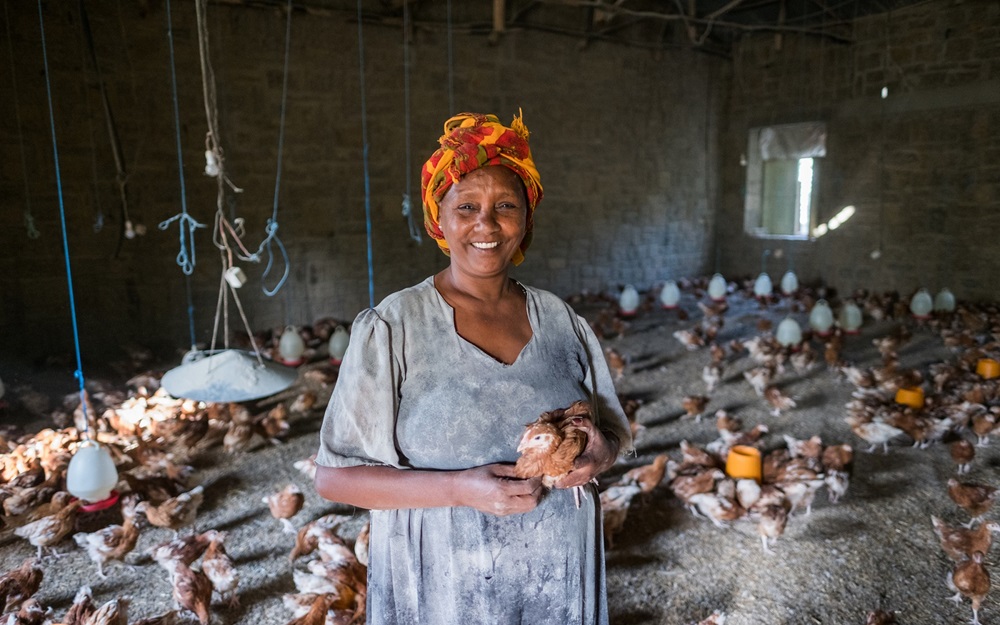
The Agricultural Development team supports efforts to help smallholder farmers in sub-Saharan Africa and South Asia improve the productivity of their crops and livestock, find new markets, and adapt to the challenges of climate change.

The Family Planning team works with partners to expand access to high-quality contraceptive information, services, and supplies for women and girls in the world’s poorest countries.

The Maternal, Newborn, Child Nutrition & Health team addresses the major drivers of maternal and newborn mortality to ensure that women and newborns in low- and middle-income countries survive and remain healthy before, during, and after childbirth.